Muzeul Național de Etnografie și Istorie Naturală
National Museum of Ethnography and Natural History
Moldova's oldest museum, in a building that looks like a Moorish castle
47.0235° N · 28.8208° E3 km from Chișinău
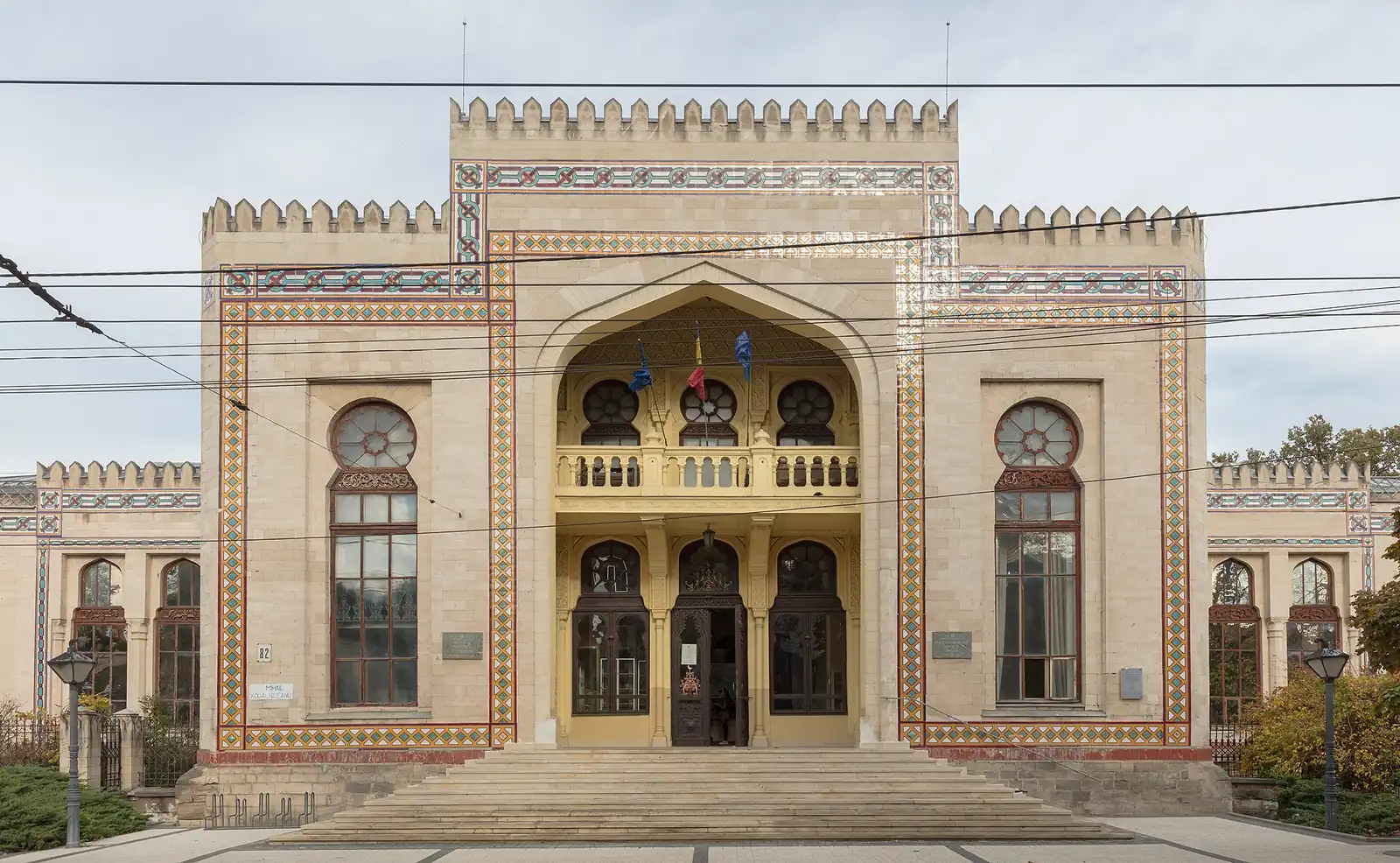
Photo: Diego Delso, CC BY-SA 4.0, via Wikimedia Commons
The National Museum of Ethnography and Natural History is Moldova's oldest public museum, which grew out of an agricultural exhibition in 1889. It combines nature and folk culture in a single story about people and landscape. The pseudo-Moorish building by the architect Vladimir Țîganco is itself one of the most striking monuments in Chișinău.
What you see
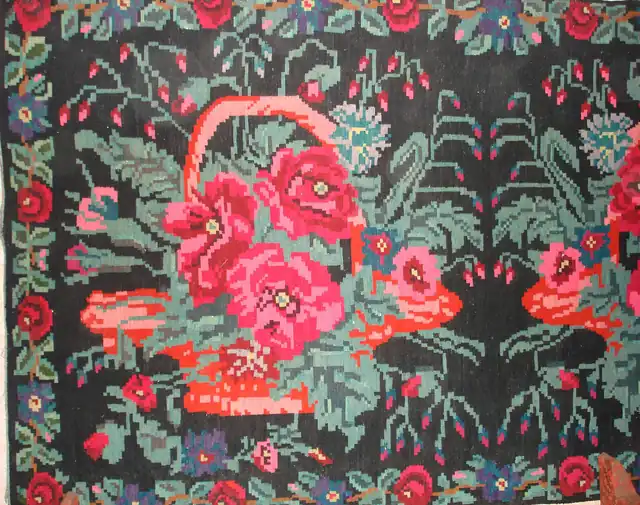
According to the Ministry of Culture, the museum holds more than 200,000 objects, spread across natural history, archaeology, palaeontology, numismatics and the traditional culture of Bessarabia and Moldova. The permanent exhibition Natura. Omul. Cultura (Nature, people, culture) covers about 2,000 m² and follows the relationship between people and their surroundings, from soil and farming to folk costume and carpets.
The best-known exhibit is the skeleton of a Deinotherium, an extinct relative of the elephant that lived in this region millions of years ago. Children usually linger at the dioramas of prehistoric and present-day animals. In the courtyard there is a small botanical garden with a vivarium.
History
In 1889 the zemstvo (the provincial self-governing council) of Bessarabia organised the first agricultural and industrial exhibition. This gave rise to an agricultural museum that soon began documenting the province's nature and culture as well. The present building was put up specially for the museum between 1903 and 1905 to a design by Vladimir Țîganco and opened in June 1906.
The architecture stands out at once: colourful galleries, mosaics and windows that recall a mosque or a Moorish castle, while the entrance has a triangular pediment on Doric columns. The complex is registered as a monument of national importance. Since 1926 the museum has published a scientific bulletin, and in 1991 it received its present name. In 2005 it was recognised as a scientific institution; its own library holds more than 41,500 books, including rare editions.
Tips for your visit
- Allow at least an hour and a half; with children you can easily spend more time at the dioramas.
- The museum is closed on Mondays and on public holidays.
- It is at Strada Mihail Kogălniceanu no. 82, within walking distance of the Art Museum and the Pushkin House.
- Take time for the façade and the courtyard: even without a ticket, the building is worth a photo stop.
For more background, see the Ministry of Culture overview.
Highlights
- Moldova's oldest public museum (1889)
- Pseudo-Moorish building by Vladimir Țîganco, opened in 1906
- Skeleton of a Deinotherium
- Permanent exhibition Nature, people, culture across 2,000 m²