The history of Moldova, from Cucuteni to Brussels
Moldova is a country on a fault line: the land between the Prut and the Dniester belonged in turn to a medieval principality, the Russian Empire, the Kingdom of Romania and the Soviet Union before it became independent in 1991. Those shifts explain much of what you see today, from the debate over what to call the language to the frozen conflict in Transnistria. This page follows the thread from the first farming villages of the Cucuteni culture to the accession negotiations with the European Union in 2026.
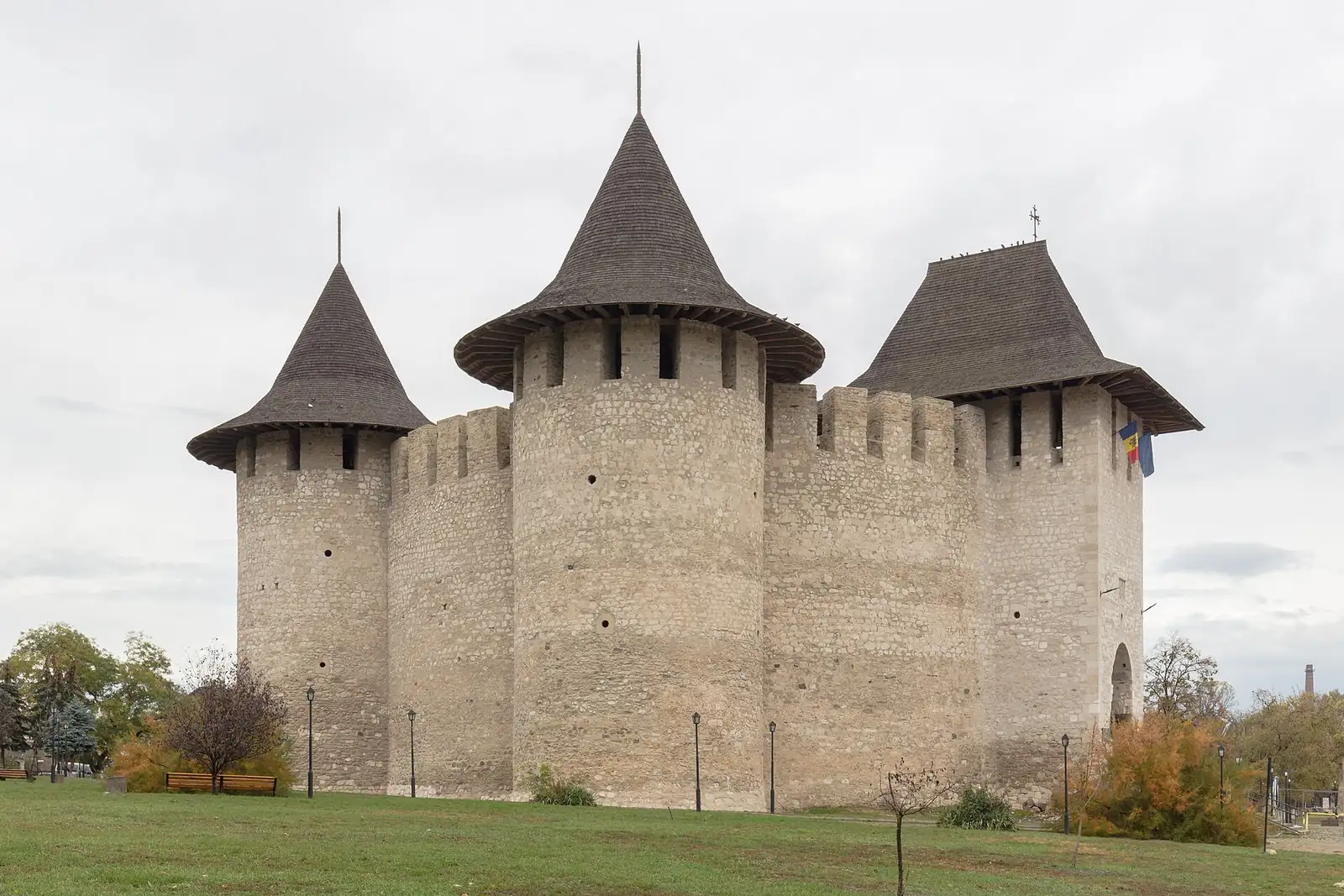
Photo: Diego Delso, CC BY-SA 4.0, via Wikimedia Commons

- Vote on union with Romania
- 86 for, 3 against, 36 abstentions 1918 · Sfatul Țării, 9 April 1918 (27 March Old Style).
- People deported in July 1949
- c. 35,000 1949 · The largest wave of deportations, preceded by some 19,000 in June 1941.
Read the transcript EN
A land on the fault line
Between two rivers, the Prut and the Dniester, lies a country that in less than two hundred years belonged to an empire, a kingdom and a Soviet republic. Only in nineteen ninety-one did it belong to itself. The people barely moved. The borders moved over them. Visit the country today and you see those layers everywhere. This is the story of Moldova.
Pots and princes
Seven thousand years ago, farmers here made pottery painted with red and black spirals. Archaeologists call it the Cucuteni culture. Much later, the Getae built a fortress above the Răut, near Orheiul Vechi. In thirteen fifty-nine, the Principality of Moldavia came into being. Its most famous ruler, Ștefan cel Mare, reigned for almost fifty years and defeated an Ottoman army at Vaslui in fourteen seventy-five. Yet after his death, Moldavia became a vassal of the sultan.
Bessarabia
In eighteen twelve, the Peace of Bucharest cut the principality in two. The east went to the Russian tsars and became Bessarabia. Russian became the language of school and government. Settlers filled the empty south: Germans, Bulgarians and Gagauz. Chișinău grew from market town to provincial capital, with a cathedral and a triumphal arch. The poet Pushkin spent three years of exile here. In nineteen eighteen, a regional council, the Sfatul Țării, voted for union with Romania.
The Soviet years
In June nineteen forty, the Red Army marched in. Then came war, the Holocaust, famine and deportations. In a single July night in nineteen forty-nine, about thirty-five thousand people were sent in cattle wagons to the Soviet east. The Moldavian Soviet Republic was given its own language in Cyrillic script. Russian became the language of getting ahead. Factories and the large power station were built mainly on the left bank of the Dniester. Russian-speaking workers moved to the cities. Those choices would later weigh heavily.
Our language
On the twenty-seventh of August nineteen eighty-nine, hundreds of thousands of people filled the centre of Chișinău. Four days later, the Latin alphabet returned. Exactly two years later, Moldova became independent. But on the left bank, Transnistria rose up. After a short, bloody war in nineteen ninety-two, it remained a state that no United Nations member recognises. The Gagauz south was granted peaceful autonomy in nineteen ninety-four.
Towards Europe
Since then, the country has steered a course between Moscow and Brussels. In twenty fourteen, it signed an association agreement with the European Union, and Moldovans have travelled visa-free to the Schengen area ever since. In twenty twenty-two, Moldova was made a candidate for membership. In summer twenty twenty-six, the first negotiating chapters opened. On the boulevard in Chișinău, Ștefan cel Mare still stands with the cross in his hand. His principality vanished long ago. The direction of the land between the two rivers is now decided by its voters.
Photos: Wikimedia Commons (CC BY-SA 3.0), Julian Nyča (CC BY-SA 4.0), Guttorm Flatabø from Sogndal, Norway (CC BY 2.0), Julian Nyča (CC BY-SA 4.0), Alexey M (CC BY-SA 4.0), Ismoon (CC BY-SA 4.0), Photobank MD from Chisinau, Moldova (CC0), Photobank MD from Chisinau, Moldova (CC0), Ivo Kruusamägi (CC BY-SA 3.0), Helgie12 (CC BY-SA 4.0), Iurieph (CC0), Pudelek (CC BY-SA 4.0), Tomasz Bladyniec (CC BY 4.0), Adam Jones from Kelowna, BC, Canada (CC BY-SA 2.0), Mirek237 (Public domain), Keith Ruffles (CC BY 3.0), Pudelek (CC BY-SA 4.0), Tolea93 (CC BY-SA 4.0), WikiLies (CC BY-SA 4.0), Post of USSR (Public domain), Photobank MD from Chisinau, Moldova (CC0), Pudelek (CC BY-SA 4.0), Rob from United Kingdom (CC BY 2.0), Harold (CC BY-SA 4.0), Донор (CC BY-SA 3.0), Ivo Kruusamägi (CC BY-SA 3.0), Злодей Андрей (CC BY-SA 4.0), Klearchos Kapoutsis from Santorini, Greece (CC BY 2.0), Alexander Murvanidze (CC BY-SA 3.0), Diego Delso (CC BY-SA 4.0), Jekader (CC0). Voice: synthetic voice (AI).


IFrom Cucuteni to the Golden Horde
Long before anyone spoke of Moldova, the land between the Carpathians and the Dniester was home to farmers who ranked among the most skilled potters of the European Neolithic. The Cucuteni-Trypillia culture, named after sites in Romania and Ukraine, flourished roughly between 5500 and 2750 BC. Its settlements sometimes numbered hundreds of houses, which were burned down at intervals for reasons that remain unclear. What survives is pottery painted with spirals in red, white and black, which you will come across in Moldovan and Romanian museums.
In the last millennium BC this was the land of Thracian tribes whom the Greeks called Getae and the Romans Dacians. At Butuceni, in the bend of the Răut near Orheiul Vechi, lie the remains of a Getic fortress. When Emperor Trajan conquered the Dacian kingdom in AD 106, most of present-day Moldova stayed outside the province proper, but Roman influence reached as far as the Black Sea coast. The earthen ramparts in the south are popularly known as Valul lui Traian, Trajan's Wall; who actually built them, and when, is still debated among archaeologists.
After the Romans, one people after another crossed the steppe for centuries: Goths, Huns, Slavs, Pechenegs and Cumans. From 1241 the area was under Mongol and later Tatar rule. In the 14th century a Golden Horde town stood near Orheiul Vechi, and archaeologists have uncovered its foundations. These early layers explain why the landscape of central Moldova is dotted with burial mounds, earthworks and the remains of fortresses.
IIThe Principality of Moldavia (1359-1812)
The Principality of Moldavia came into being in 1359, when Bogdan I broke away from Hungarian rule and founded a state of his own east of the Carpathians. The name comes from the river Moldova, in present-day Romania, which is why the early capitals, Siret and later Suceava, lie in Romania today. The territory of the present republic formed the eastern half of the principality, up to the Dniester.
The best-known ruler is Ștefan cel Mare (Stephen the Great), who reigned from 1457 to 1504. In 1475 he defeated a much larger Ottoman army at Vaslui, one of the most striking European victories over the sultan in that century. Even so, in 1484 he lost the port towns of Chilia and Cetatea Albă to the Ottomans and their Crimean Tatar allies. During his reign dozens of stone churches and monasteries went up in a distinctive Moldavian style. The Romanian Orthodox Church canonised him in 1992; his statue, cross in hand, stands at the entrance to the park in Chișinău that bears his name.
After Ștefan's death the Ottoman grip tightened. In 1538 Sultan Süleyman the Magnificent invaded the country. The fortress of Tighina became an Ottoman stronghold under the name Bender, and Moldavia became a vassal state paying annual tribute. The principality kept its own princes, its own church and its own nobility, but Istanbul had a say in who sat on the throne.
One attempt to break free came from Dimitrie Cantemir, prince in 1710-1711, who formed an alliance with Tsar Peter the Great. After the defeat of the Russian-Moldavian army on the Prut in 1711 he fled to Russia, where he wrote the Descriptio Moldaviae, the first detailed account of the country. For the following century the sultan mostly appointed Greek princes from the Phanar district of Istanbul, known as the Phanariots. Between 1711 and 1812 Russian armies occupied Moldavia five times.
IIIBessarabia under the tsars (1812-1917)
Under the Treaty of Bucharest of 28 May 1812, the Ottoman Empire ceded the eastern half of Moldavia, the land between the Prut and the Dniester, to Russia. St Petersburg named the new territory Bessarabia, a name that had originally applied only to the south. In 1859 the western part of the principality joined Wallachia to form the state that would later be called Romania. From then on, the two halves of old Moldavia went their separate ways.
At first the tsarist empire granted the province a degree of autonomy, but it soon took it back. Romanian disappeared from schools and public offices in 1834, and in 1854 Russian became the official language. In the 1897 census only 15.4% of the population could read and write, and among Moldavians just 6%.
At the same time the population changed. Russia offered land to settlers in the sparsely populated south: Germans, Bulgarians and Gagauz, a Turkic-speaking Orthodox people who settled in Comrat and elsewhere between 1820 and 1846. Ukrainians, Russians and Jews moved to the province too. Chișinău grew from a market town into a provincial capital with straight streets, a cathedral (1836) and a triumphal arch (1840). The Russian poet Alexander Pushkin spent his exile there between 1820 and 1823.
The darker side came to light in 1903. On Easter Sunday a pogrom broke out in Chișinău, then known as Kishinev, in which 49 Jews were killed and hundreds injured. The Hebrew poet Chaim Nachman Bialik wrote In the City of Slaughter about it, and the events made headlines around the world. After the Russian revolution of 1905 a modest Moldavian national movement took shape, with the lawyer and writer Constantin Stere among its pioneers.
IVUnion with Romania and a republic across the Dniester (1917-1940)
The collapse of the tsarist empire in 1917 opened a brief window. On 15 December 1917 a regional council, the Sfatul Țării, proclaimed an autonomous Moldavian Democratic Republic within a Russian federation. After a short Bolshevik occupation of Chișinău and the arrival of Romanian troops, independence followed on 6 February 1918. On 9 April 1918 (27 March in the old calendar) the council voted by 86 to 3, with 36 abstentions, for a conditional union with Romania. In December 1918 the conditions were dropped.
The Treaty of Paris of 28 October 1920 recognised the union, but Japan never ratified it and Moscow refused to accept the new border. Between the wars Bessarabia was a largely agricultural province of Romania, with land reform, new schools and Romanian as the language of education and administration.
The Soviet Union responded in its own way. In 1924 it set up a Moldavian Autonomous Soviet Socialist Republic on the left bank of the Dniester, within Soviet Ukraine, with Balta as its capital and, from 1929, Tiraspol. There a separate 'Moldavian' language in Cyrillic script was promoted as a counterweight to Romanian. That script was in use in 1924-1932 and again from 1938. This autonomous republic is one of the historical roots of present-day Transnistria.
VWar, Holocaust and deportations (1940-1953)
The secret protocol to the Molotov-Ribbentrop Pact of August 1939 assigned Bessarabia to the Soviet sphere of influence. After an ultimatum, the Red Army marched in on 28 June 1940. On 2 August 1940 the Moldavian SSR was created from the central part of Bessarabia and a strip of the old autonomous republic on the left bank. The north and south of Bessarabia went to Soviet Ukraine, which is why the old ports on the Danube and the Black Sea are in Ukraine today.
The first mass deportation came on the night of 12 to 13 June 1941, when some 19,000 people were sent to the east of the Soviet Union. Shortly afterwards Germany and Romania attacked the Soviet Union, and in July 1941 Bessarabia came under Romanian rule once more. For the Jewish population this meant the Holocaust. In Chișinău more than 11,000 people were confined to a ghetto, and tens of thousands of Jews from Bessarabia were deported to camps in Transnistria, the area between the Dniester and the Southern Bug that Romania then governed. Yad Vashem has recorded the names of 60,732 murdered Bessarabian Jews.
In August 1944 the Red Army retook the region in the Iași-Chișinău offensive. The war was followed by drought, compulsory grain deliveries and a famine in 1946-1947 that, by common estimates, killed at least 115,000 peasants. On the night of 5 to 6 July 1949 the secret police deported around 35,000 people, mostly farming families branded as kulaks (Europa Liberă). The operation took 4,000 lorries and 1,570 cattle wagons. A third wave in 1951 targeted mainly religious groups. That cleared the way for the collectivisation of agriculture.
VISoviet republic and the language movement (1953-1991)
After Stalin, the Moldavian SSR became an agricultural republic that supplied wine, tobacco, fruit and vegetables to the whole Soviet Union. Leonid Brezhnev, later party leader in Moscow, was its first party secretary from 1950 to 1952. Heavy industry and the large power station ended up mainly on the left bank of the Dniester, while Russian-speaking specialists and workers moved to the cities. Chișinău, badly damaged in the war, was rebuilt with broad avenues, housing blocks and modernist landmarks.
Officially there was a separate Moldavian nation with its own language in Cyrillic script; Russian was the language of careers and administration. Under Gorbachev's perestroika, resistance grew. Writers and intellectuals demanded recognition that Moldavian and Romanian are one and the same language, and a return to the Latin alphabet. On 27 August 1989 hundreds of thousands of people gathered in Chișinău for the Marea Adunare Națională, the Great National Assembly. On 31 August 1989 the republic's parliament made Moldavian in Latin script the state language. That day is still celebrated every year as Limba noastră, 'our language'.
In the Russian-speaking towns on the left bank and in the Gagauz south, the language law was seen as a threat. Strikes and counter-movements followed. In August 1990 Comrat proclaimed a Gagauz republic, and on 2 September 1990 Tiraspol followed with a Transnistrian Moldavian Soviet Republic. Chișinău recognised neither. After the failed coup in Moscow, Moldova declared independence on 27 August 1991; Mircea Snegur became its first president.
VIITransnistria and Gagauzia: the 1990s
The tensions on the left bank escalated into armed conflict. The first deaths came in November 1990 in Dubăsari. The war is officially dated from 2 March 1992, the day Moldova joined the United Nations. The bloodiest fighting took place in June 1992 over Bender (Tighina), a town on the right bank that the separatists were determined to hold. The Russian 14th Army, stationed in the region, backed the separatists with weapons and men, and its artillery fire tipped the balance in early July.
On 21 July 1992 Presidents Boris Yeltsin and Mircea Snegur signed a ceasefire in Moscow. A peacekeeping force of Russian, Moldovan and Transnistrian battalions was placed under a joint control commission. In all, an estimated 1,000 or so people were killed (Veridica). Since then Transnistria has been a de facto state recognised by no UN member, with its own currency, the Transnistrian rouble, its own border controls and Russian troops on its territory. Talks with the OSCE as mediator, Russia and Ukraine as mediating countries and the EU and the United States as observers have failed to resolve the conflict. If you want to visit the region, check the latest travel advice from the Belgian FPS Foreign Affairs before you go.
The south took a different course. The constitution of 29 July 1994 declared Moldova permanently neutral and named the state language 'Moldovan'; that same year Alexei Mateevici's poem Limba noastră became the national anthem. On 23 December 1994 parliament passed the law on the special status of Gagauzia. After a referendum in 1995 the autonomous territorial unit of Gagauzia (Gagauz Yeri) was established, with Comrat as its capital, its own people's assembly and a directly elected governor, the başkan. The model is often cited as a peaceful settlement of an ethnic conflict, although relations between Comrat and Chișinău remain tense. Meanwhile the economy shrank sharply in the 1990s and a wave of emigration began whose effects are still felt today.
VIIIBetween Moscow and Brussels (2001-2026)
In 2001 the Party of Communists won 71 of the 101 seats and Vladimir Voronin became president. His government first sought closer ties with Russia, but in 2003 it rejected a Russian plan to federalise the country and then turned cautiously towards the European Union. After the elections of April 2009, protests in Chișinău turned into riots and the storming of parliament. In early elections in July 2009 a coalition of pro-European parties came to power.
Moldova signed an association agreement with the EU, including a free trade area, on 27 June 2014, and since 28 April 2014 Moldovans with a biometric passport have been able to travel to the Schengen area without a visa. That same year around a billion dollars vanished from three Moldovan banks, a fraud case that badly shook public trust in politics.
In 2020 Maia Sandu was elected president, and her party, PAS, won an absolute majority in 2021. After Russia's invasion of Ukraine, Moldova applied for EU membership on 3 March 2022. It became a candidate country on 23 June 2022, and accession negotiations formally opened in Luxembourg on 25 June 2024. In March 2023 parliament replaced the term 'Moldovan language' with 'Romanian language' in all legislation, including the constitution.
On 20 October 2024, 50.35% of voters in a referendum approved a constitutional amendment that enshrines EU accession as a strategic goal. Sandu was re-elected on 3 November 2024 with 55.35% of the vote in the second round. Both votes were overshadowed by allegations of Russian interference. In the parliamentary elections of 28 September 2025, PAS kept its majority with 55 of the 101 seats.
In 2026 the negotiations properly got under way. On 15 June 2026 the EU opened the first cluster in Luxembourg, Fundamentals, which covers the rule of law, justice and fundamental rights among other areas. The external relations cluster followed on 14 July 2026. That brought the total to 7 of the 33 chapters open, with none yet closed (Radio Moldova, July 2026). The government is aiming to wrap up the negotiations in 2028; observers see accession around 2030 as ambitious but not impossible.
IXWhere to see the history
Moldova has few grand monuments, but it does have places where the layers of its history visibly sit on top of one another. A selection, in roughly chronological order:
- Orheiul Vechi: a Getic fortress, the remains of a Golden Horde town and a cave monastery in the limestone cliff above the Răut.
- Cetatea Soroca: the round fortress on the Dniester, a link in the defences of the medieval principality.
- Cetatea Tighina in Bender: an Ottoman fortress and later a Russian stronghold, now on territory controlled by Transnistria.
- Mănăstirea Căpriana: one of the oldest monasteries in the country, first mentioned in 1429.
- Muzeul Național de Istorie a Moldovei in Chișinău: from prehistoric pottery to the Soviet period.
- Complexul Memorial Eternitate in Chișinău: a Soviet memorial to those who fell in the Second World War.
To understand the Holocaust and the deportations better, also visit the old Jewish cemetery in Chișinău and the memorial to the deportees by the railway station. Together these places show how a single stretch of land went from principality to province, Soviet republic and finally independent state over six centuries.
Timeline
- c. 5500-2750 BC
The Cucuteni-Trypillia culture flourishes, with large settlements and painted pottery.
- 106
Emperor Trajan conquers Dacia; most of present-day Moldova remains outside the Roman province.
- 1241
Start of Mongol and later Tatar rule over the area.
- 1359
Bogdan I founds the Principality of Moldavia.
- 1457
Ștefan cel Mare takes the throne; he reigns until 1504.
- 1475
Ștefan cel Mare defeats an Ottoman army at Vaslui.
- 1538
Sultan Süleyman takes Tighina (Bender); Moldavia becomes an Ottoman vassal state.
- 1711
Dimitrie Cantemir and Peter the Great are defeated on the Prut; Cantemir flees to Russia.
- 1812
Treaty of Bucharest: the land between the Prut and the Dniester becomes Russian as Bessarabia.
- 1820
Alexander Pushkin is exiled to Chișinău, where he stays until 1823.
- 1903
Kishinev pogrom: 49 Jews killed.
- 1917
The Sfatul Țării proclaims an autonomous Moldavian Democratic Republic.
- 1918
The Sfatul Țării votes for union with Romania.
- 1924
The Moldavian ASSR is set up on the left bank, within Soviet Ukraine.
- 1940
The Red Army occupies Bessarabia; the Moldavian SSR is created on 2 August.
- 1941
First mass deportation (12-13 June); Romanian rule and the Holocaust.
- 1944
Iași-Chișinău offensive; the region becomes Soviet territory again.
- 1946
Famine of 1946-1947, with at least 115,000 deaths.
- 1949
Some 35,000 people deported on the night of 5 to 6 July.
- 1989
Language law of 31 August: Moldavian in Latin script becomes the state language.
- 1990
A Gagauz republic and a Transnistrian republic are proclaimed.
- 1991
Independence on 27 August.
- 1992
War over Transnistria; ceasefire on 21 July.
- 1994
Constitution of 29 July; law on Gagauz autonomy on 23 December.
- 2009
Protests in April; a pro-European coalition takes power.
- 2014
Association agreement with the EU and visa-free travel to the Schengen area.
- 2022
Moldova becomes an EU candidate country on 23 June.
- 2023
'Romanian language' replaces 'Moldovan language' in legislation and the constitution.
- 2024
Accession negotiations open (25 June) and an EU referendum is held (20 October).
- 2026
The first negotiating clusters are opened on 15 June and 14 July.
Frequently asked questions
Is the Republic of Moldova the same as the historical Principality of Moldavia?
Not quite. The medieval Principality of Moldavia stretched from the Carpathians to the Dniester. It has been split since 1812: the western part now belongs to Romania (including Iași and Suceava), while the eastern part between the Prut and the Dniester forms the core of today's republic.
Was Moldova ever part of Romania?
Yes. From 1918 to 1940 Bessarabia, which covers most of present-day Moldova, was a province of Romania, and from 1941 to 1944 it came under Romanian rule again. The left bank of the Dniester (today's Transnistria), however, belonged to the Soviet Union between the wars.
Why do people in Moldova speak Romanian rather than Moldovan?
The 'Moldovan' that the Soviet Union presented as a separate language was essentially Romanian written in Cyrillic script. The 1989 language law brought back the Latin alphabet, and since March 2023 all legislation and the constitution use the term 'Romanian language'.
What is Transnistria and why did it break away?
Transnistria is the narrow strip along the left bank of the Dniester. Fearing the language law and a possible union with Romania, it proclaimed its own republic in 1990. After a short war in 1992 it became a de facto state that no UN member recognises, with Russian troops on its territory.
What is Gagauzia?
Gagauzia is an autonomous region in the south, with Comrat as its capital. The Gagauz are a Turkic-speaking Orthodox people. Their autonomy was set out in law in December 1994 and its borders were defined by referendum in 1995.
When did Moldova become independent?
On 27 August 1991, shortly after the failed coup in Moscow. That day is the national holiday. In March 1992 the country joined the United Nations.
How far has Moldova got with joining the European Union?
Moldova has been a candidate country since June 2022 and has been formally negotiating its accession since June 2024. The first two clusters, covering 7 of the 33 chapters, were opened in June and July 2026. The government is aiming to complete the negotiations in 2028; no accession date has been set.
Who was Ștefan cel Mare?
Ștefan cel Mare (Stephen the Great) ruled Moldavia from 1457 to 1504, defeated an Ottoman army at Vaslui in 1475 and had dozens of churches and monasteries built. He is the central figure in how both Moldovans and Romanians see their history, and he was canonised in 1992.
Sources
- Britannica, Moldova: History
- Wikipedia, History of Moldova
- Europa Liberă, 70 de ani de la al doilea val de deportări staliniste din Basarabia
- Wikipedia, History of the Jews in Chișinău
- Veridica, 30 years since the war in Transnistria
- Wikipedia, Moldovan language
- Moldpres, CEC approved final results of 28 September parliamentary elections
- Radio Moldova, EU accession: cluster 6 opened (juli 2026)
- European Western Balkans, Ukraine and Moldova open cluster 6
See also
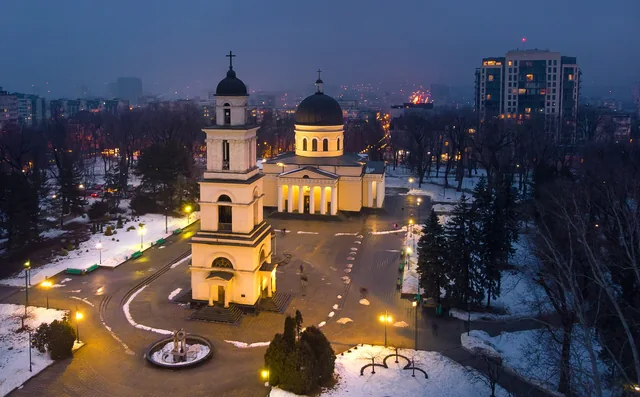 Video
Chișinău
A capital of white limestone, wide avenues and parks, with the wine cellars round the corner
47.0245° N · 28.8323° E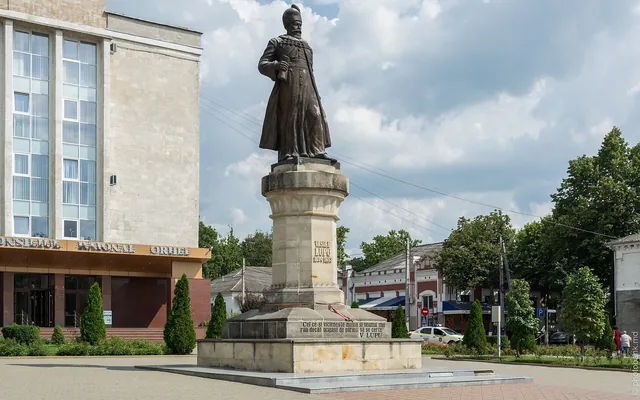
Orhei
District town on the Răut and gateway to Orheiul Vechi
47.3681° N · 28.8271° E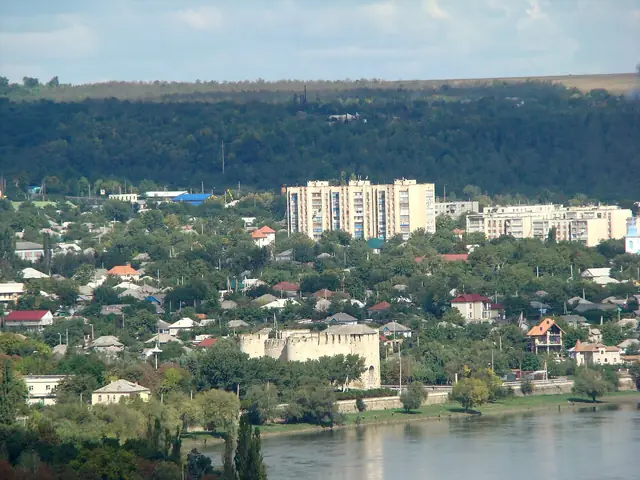 Video
Soroca
A round fortress on the Dniester, a candle of stone and the houses of Roma Hill
48.1543° N · 28.2883° E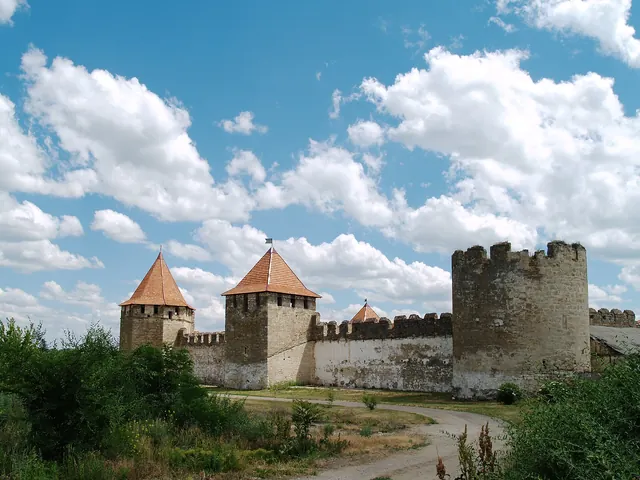
Bender (Tighina)
Fortress town on the right bank of the Dniester, under Transnistrian administration
46.8218° N · 29.4819° E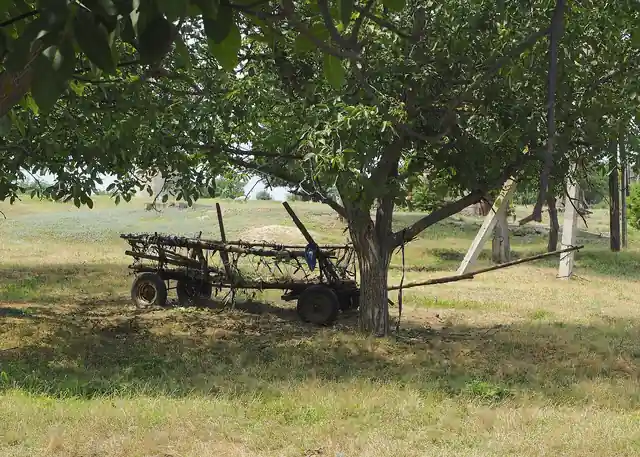
Transnistria
Unrecognised breakaway region on the left bank of the Dniester
47.2700° N · 29.1600° E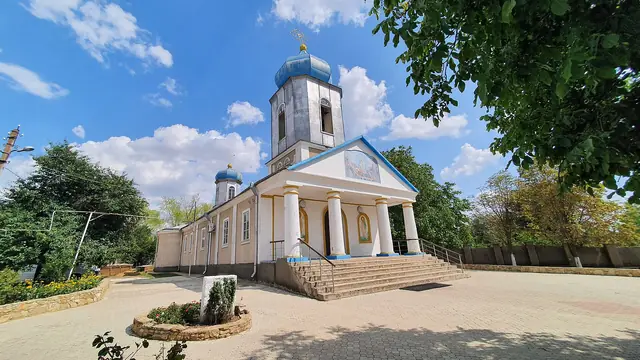 Video
Găgăuzia
Autonomous region of the Gagauz, Orthodox Christians with a Turkic language
46.3011° N · 28.6559° E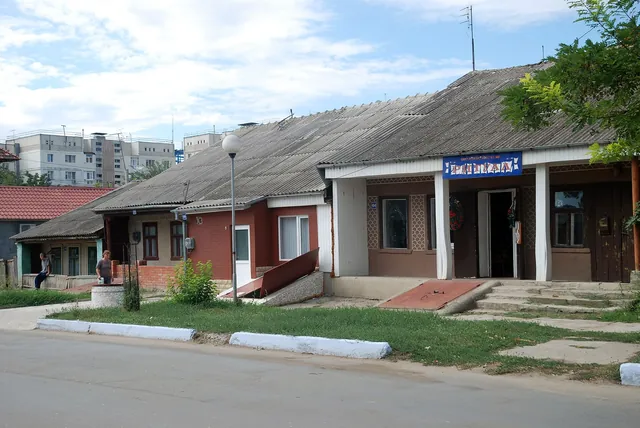
Comrat
Capital of Gagauzia, the autonomous region of the Turkic-speaking Orthodox Gagauz
46.3011° N · 28.6559° E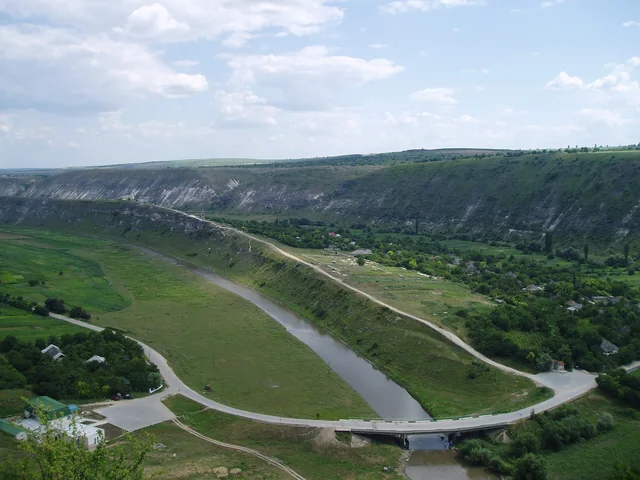 Video
Orheiul Vechi
A limestone river loop with cave monasteries, Getic strongholds and a Golden Horde town
47.3056° N · 28.9750° E