Soroca
A round fortress on the Dniester, a candle of stone and the houses of Roma Hill
48.1543° N · 28.2883° E154 km from Chișinău
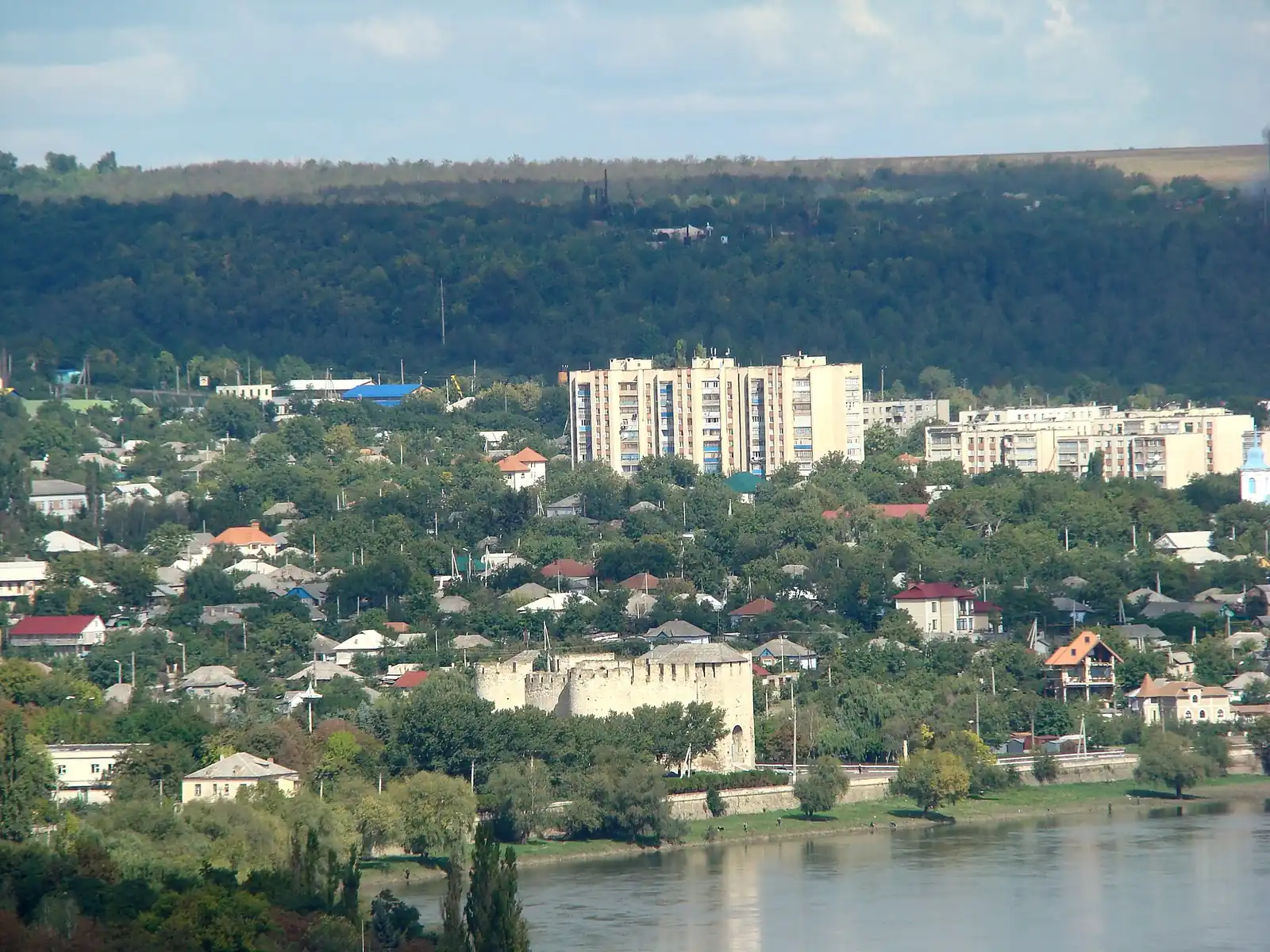
Photo: Criss90kf, CC BY-SA 4.0, via Wikimedia Commons
Read the transcript EN
A circle of stone
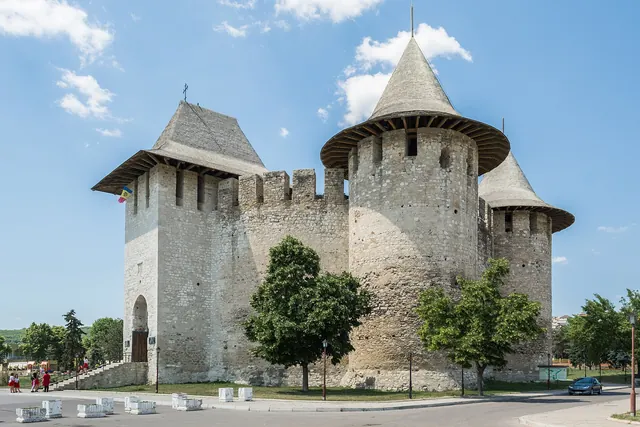
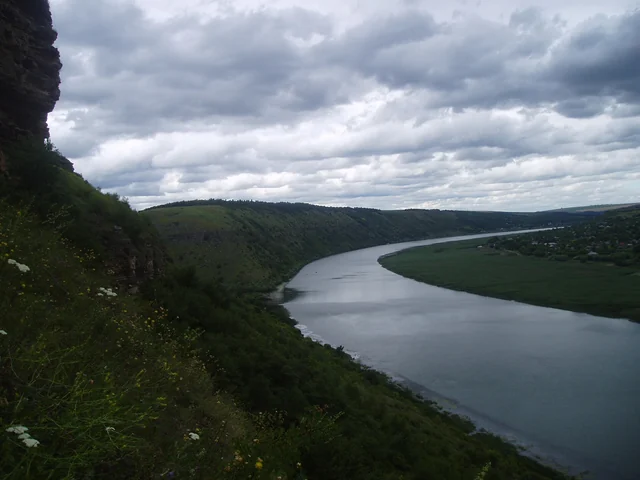
On the bank of the Dniester, in the north of Moldova, stands a fortress that forms a perfect circle when seen from above. Five towers, walls more than three metres thick, and across the water lies Ukraine. This is Soroca, a town of about twenty-one thousand people. For more than five centuries, it has looked out over the same river.
Ștefan cel Mare and his son
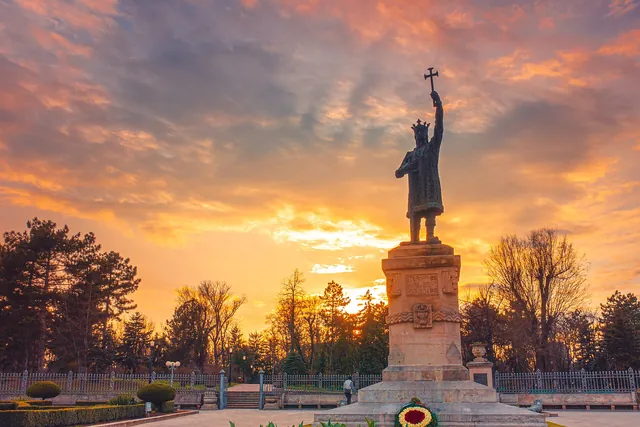
In fourteen ninety-nine, Prince Ștefan cel Mare had a wooden fort built here. It was meant to guard a ford in the river, a place where enemy horsemen could cross the Dniester. His son Petru Rareș had the fort rebuilt in stone between fifteen forty-three and fifteen forty-six. He chose a round plan with five evenly spaced towers. In seventeen eleven, the fortress still played a part in the campaign of Tsar Peter the Great. It was recently restored with support from the European Union.
The candle on the rock
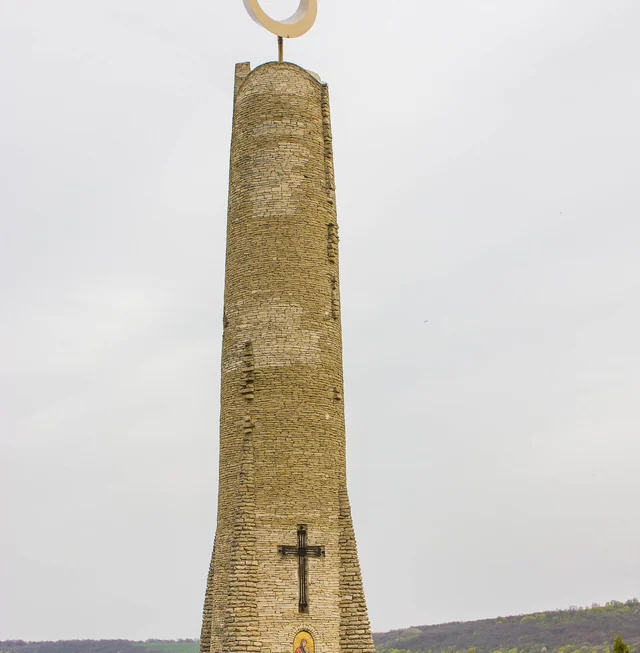
High above the town, on a limestone cliff, stands a monument shaped like a candle. It is called Lumânarea Recunoștinței, the Candle of Gratitude. The idea came from the writer Ion Druță, and it was unveiled in two thousand and four. It is almost thirty metres high and built of stone from nearby Cosăuți. To reach the top, you climb six hundred and fifty-seven steps. The monument honours the nameless people who preserved the language, the culture and the history of the country.
The hill of the Roma
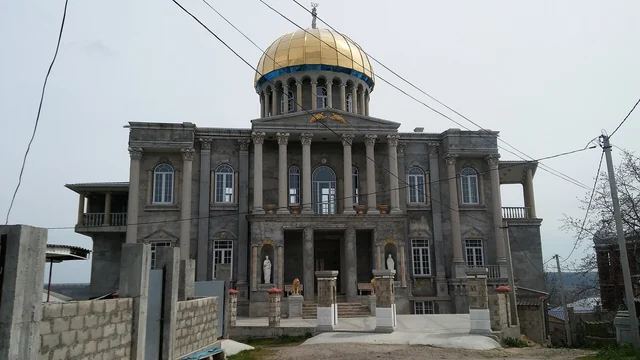
Behind the town lies a hill unlike any other. Roma families live here, and their houses are big, ornate and sometimes unfinished. Some façades echo the Bolshoi Theatre in Moscow, others the Capitol in Washington or the Hagia Sophia in Istanbul. Many houses were left unfinished after the fall of the Soviet Union. Officially, just over two thousand Roma live in Soroca, though in reality probably more. The community has a traditional leader with the title of baron. That is why Soroca is called the unofficial capital of the Roma.
Light over the river
When darkness falls, the light in the candle comes on. According to descriptions, it can be seen from Otaci in the north to Camenca in the south. Below, the Dniester flows on, past the silent fortress. On the far bank, Ukraine begins. The town has fewer people than it once did, but visitors still come for the same things: a fort, a candle and a hill full of stories.
Five centuries on watch
The fortress of Soroca was built to guard a single ford in a river. Since then, the borders in this region have shifted many times. Principalities, empires and republics came and went. Yet the stone circle of Petru Rareș still stands exactly where its builders placed it, with its five towers facing the water.
Photos: Photobank MD from Chisinau, Moldova (CC0), akk_rus (CC BY 2.0), akk_rus (CC BY 2.0), Baptiste Dauphin (CC BY-SA 4.0), see above (Public domain), Andrey from Russia (CC BY 2.0), photobankmd (CC0), SergheyZ (CC BY-SA 4.0), Criss90kf (CC BY-SA 4.0), Gikü (CC0), VadimS (CC BY-SA 4.0), Bertramz (CC BY-SA 3.0), Mafo (CC BY-SA 4.0), Nicolai Cebotari (CC BY-SA 4.0), Микола Василечко (CC BY-SA 4.0), Michaila vnuk (CC BY-SA 4.0), Diego Delso (CC BY-SA 4.0), Popușoi Radu Cornel (CC0). Voice: synthetic voice (AI).
Soroca is a town of about 21,000 inhabitants (2024 census) on the Dniester, which forms the border with Ukraine here. It is known for its round sixteenth-century stone fortress, for the Lumânarea Recunoștinței monument on the hill and for the striking houses of the Roma community. A long day trip or one night from Chișinău is enough.
Why go
Few places in Moldova pack so many layers into such a small area. A medieval fortress stands by the river, a post-independence monument on the rocks above it, and on the hill behind the town a district full of extravagant villas. Its position on the broad Dniester, with Ukraine on the far bank, gives the town a distinct border feel.
History and character
In 1499 Prince Ștefan cel Mare had a wooden fort built here to guard a ford across the Dniester. Between 1543 and 1546 his son Petru Rareș replaced it with a stone fortress on a perfectly circular plan, with five towers and walls more than three metres thick. In 1711 the fort played a part in Tsar Peter the Great's campaign on the Prut. It was recently restored with support from the European Union.
Soroca is also regarded as the informal capital of Moldova's Roma. Officially just over 2,000 Roma live here, in reality probably more. Their traditional leader holds the title of baron.
What to see and do
- Cetatea Soroca, the round fortress on the riverbank, with its courtyard and wall walks.
- Lumânarea Recunoștinței, the Candle of Gratitude: a chapel almost 30 metres tall dating from 2004, built with stone from Cosăuți. A staircase of 657 steps leads up to it.
- Roma Hill (Dealul Romilor), with houses modelled on the Bolshoi Theatre, the Capitol in Washington or Hagia Sophia; many were never finished.
- The walk along the Dniester, with views of the Ukrainian bank.
Eating, drinking and sleeping
Soroca has simple restaurants and cafés in the centre and a few hotels and guesthouses. Expect hearty Moldovan food: sarmale (stuffed cabbage or vine leaves), mămăligă and grilled meat. If you stay the night, you can see the illuminated monument on the hill in the evening and carry on to Cosăuți or Rudi the next morning.
Practical information and tips
The town lies about 154 kilometres north of Chișinău, roughly two and a half hours' drive via the R6 and the R14. Buses leave from Gara de Nord. The fortress may be closed in the cold season, so ideally come between May and October. On Roma Hill, respect the residents: these are private homes, so ask permission before you photograph people.
Highlights
- Round fortress of Cetatea Soroca (1543-1546)
- Lumânarea Recunoștinței with its 657 steps
- The houses of Roma Hill
- Views across the Dniester to Ukraine
- Excursions to Cosăuți and Rudi