Mănăstirea Călărășăuca
Călărășăuca Monastery
A convent between cliffs and forest on the Dniester, with a hermit's cave in the rock
48.4204° N · 27.8143° E208 km from Chișinău
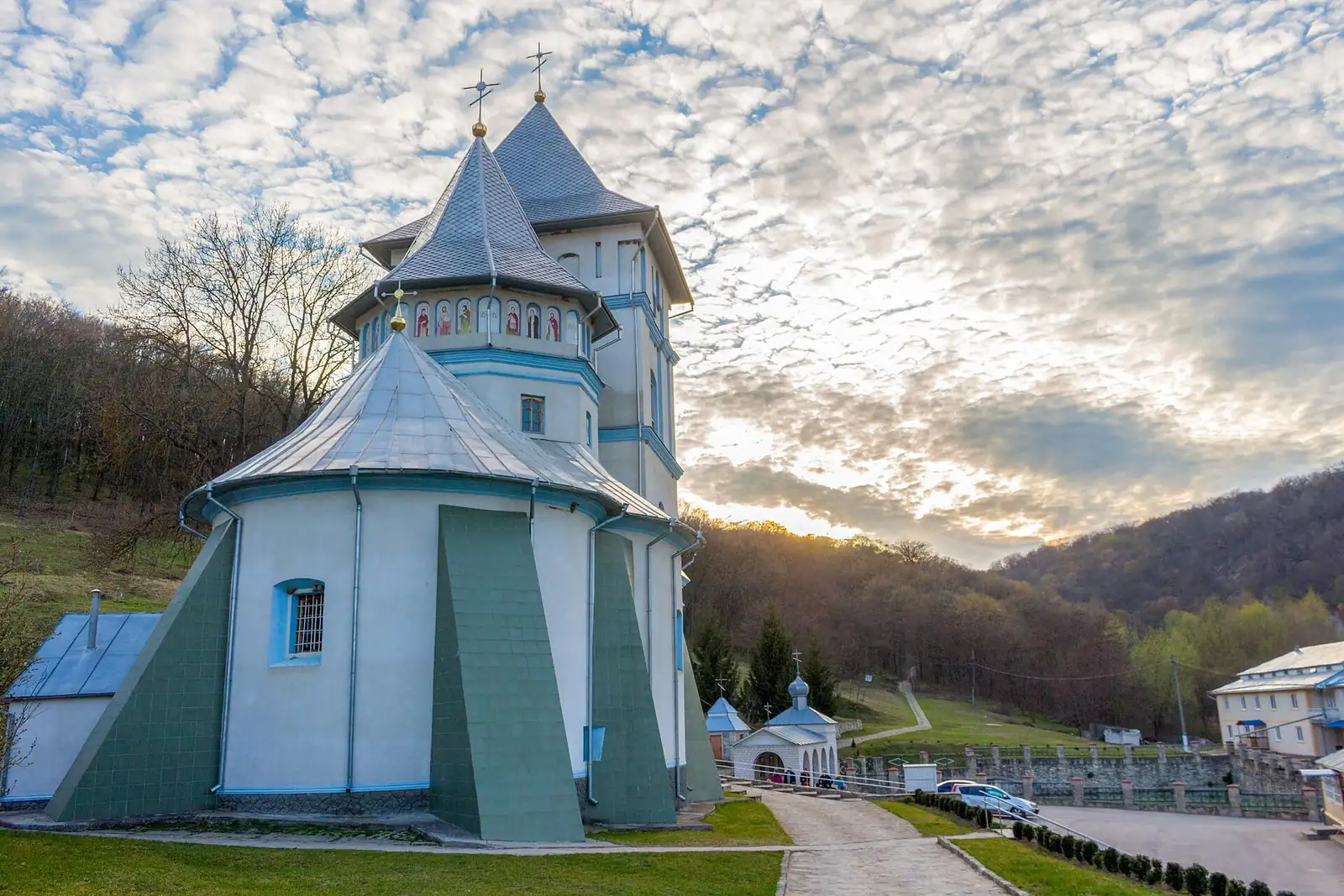
Photo: IurieSvet, CC BY-SA 4.0, via Wikimedia Commons
Mănăstirea Călărășăuca is an Orthodox convent on the right bank of the Dniester near the village of Călărășăuca, Ocnița district, close to Otaci. It began as a hermitage in the rocks and in 1782 gained a stone church dedicated to the Dormition of the Mother of God. It was closed from 1961 to 1991.
What you see
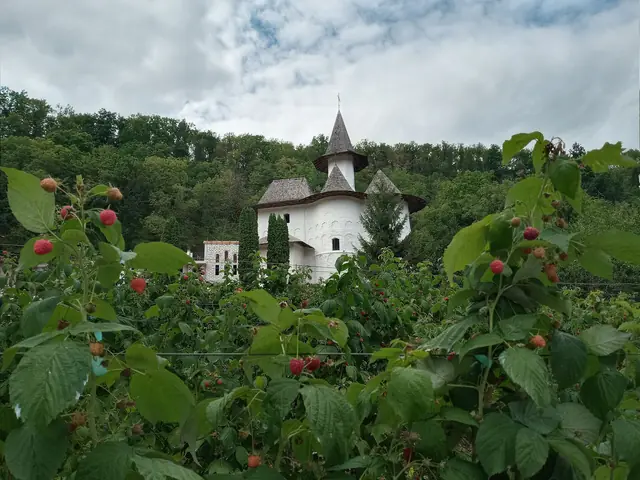
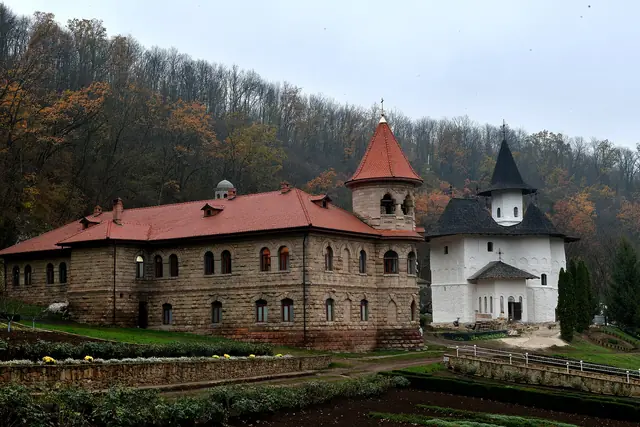
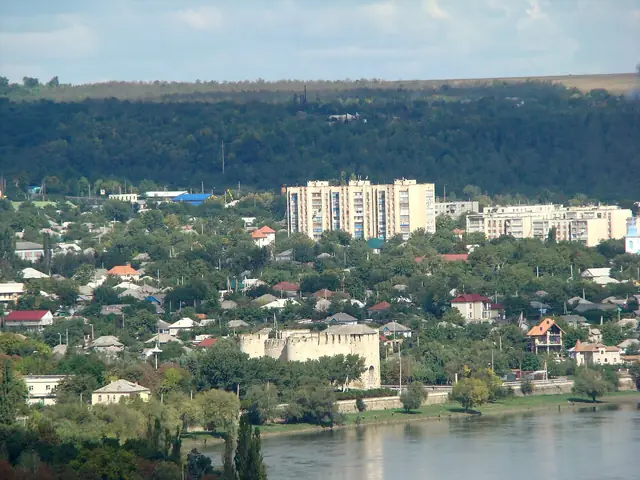
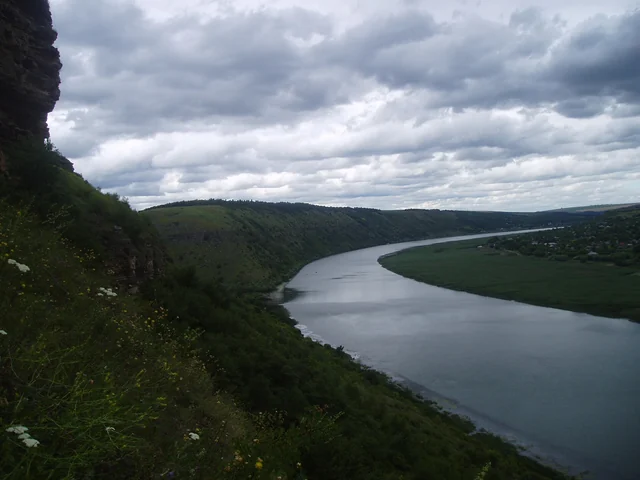
The monastery lies in a green hollow surrounded by cliffs and forest, with the Ukrainian town of Mohyliv-Podilskyi, formerly Movilău, across the river. Two churches form its heart: the Church of the Dormition from 1782 and the Church of Saint Mitrophan of Voronezh from 1852. On one of the cliffs above the monastery is a hermit's cave, and a cross marks the spot where rock monasteries once stood.
History
Nobody knows when the first hermit came here. Tradition has it that a monk turned one of his caves into a place of prayer. Documents from the early 18th century mention a hermitage here that depended on the Monastery of Saint Sava in Iași and was dedicated to the Holy Sepulchre. Maria Cantacuzino is regarded as its founder; according to the monastery, she donated land for the sanctuary in 1747.
By around 1780 the old wooden church had become unusable. Hagi Marcu Donici from Movilău had a stone church and a bell tower built, which were consecrated in 1782. In 1813 the monastery became independent, and in the 19th century nuns took the place of the monks. A second church was added in 1852.
After the closure in 1961 the Soviet regime set up a hospital for children with intellectual disabilities here. The winter church became a club, the summer church a storehouse. In 1989 the hospital left the dilapidated buildings, after which a farming enterprise took them over. On 3 May 1991 the monastery reopened as a convent.
Tips for your visit
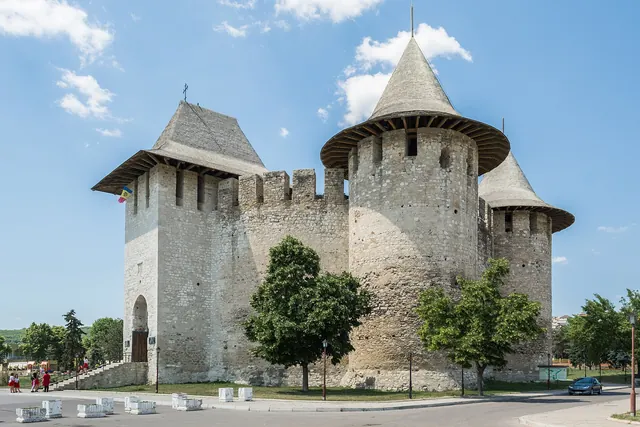
Călărășăuca is just over 200 kilometres from Chișinău, about a three-and-a-half-hour drive. It fits into a tour of the north along the Dniester: Soroca Fortress, Rudi Monastery and the Struve Geodetic Arc survey point lie on the same route. You can stay overnight in Soroca. It is a working convent: a skirt and headscarf for women, long trousers for men, and no photos during services. If you want to go up to the cave on the cliff, ask the sisters first whether that is possible, and wear shoes with a good tread.
Highlights
- Cliffs and forest on the Dniester
- Stone church from 1782
- Hermit's cave on the cliff
- View of Mohyliv-Podilskyi across the river