Moldovan culture, from lăutari to Mărțișor
At its core, Moldovan culture is Romanian-speaking and Orthodox, but it has been coloured by two centuries of Russian and Soviet influence and by minorities such as the Gagauz, Ukrainians and Bulgarians. You will recognise it in the cave monasteries along the Dniester, the music of the lăutari, the woven scoarțe and the red and white cord that everyone wears on 1 March. Five Moldovan traditions are on the UNESCO list of intangible heritage, each shared with Romania or other neighbouring countries. This page sets out the main layers.
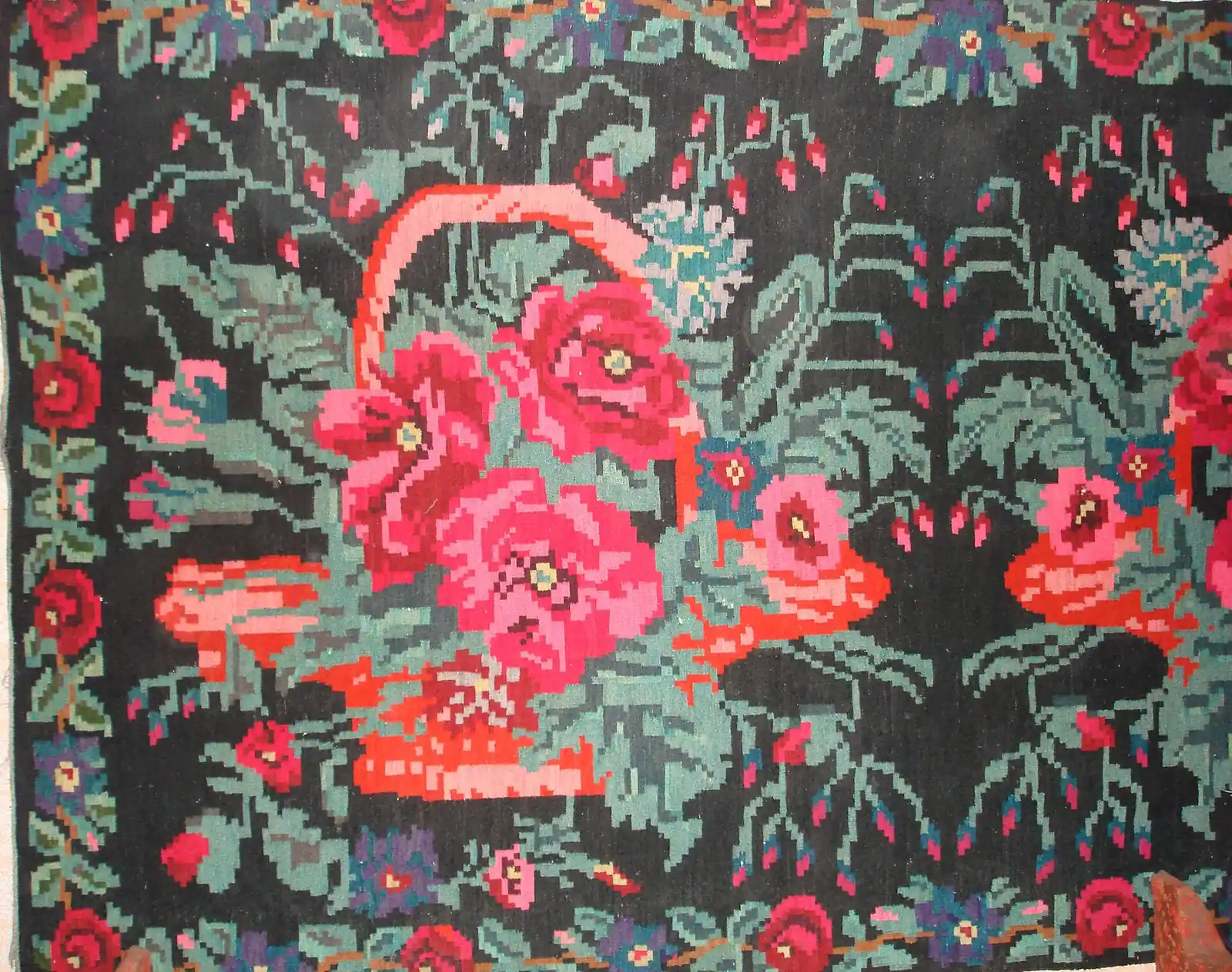
Photo: Onbekend, Public domain, via Wikimedia Commons

- Elements on the UNESCO intangible heritage list
- 5 2025 · All shared with neighbouring countries; the latest is the cobza (2025).
- Parishes under the Romanian Patriarchate
- c. 300 (against c. 1,000 under Moscow) 2026 · Reuters estimate, February 2026.
ILanguage and identity
The official language of Moldova is Romanian. Since March 2023 the constitution has said so too, after parliament replaced the term 'Moldovan language' in all legislation. As early as 2013 the Constitutional Court had ruled that the 1991 declaration of independence, which refers to Romanian, takes precedence over the text of the constitution. The 'Moldovan' that the Soviet Union promoted as a separate language was essentially Romanian in Cyrillic script. In Transnistria that script is still in use today.
Language and identity do not automatically go hand in hand. In the 2024 census, 76.7% of residents described themselves as Moldovan and 8% as Romanian. As their mother tongue, 49.2% gave 'Moldovan' and 31.3% 'Romanian', even though it is the same language (2024 census). The debate over the name, so-called Moldovenism versus a Romanian identity, cuts right through families and parties, and it is less a linguistic question than a political one.
Russian remains an important second language. It is the mother tongue of 11.1%, but 15.3% speak it most often at home, especially in the cities. Many Gagauz, Bulgarians and Ukrainians use it as a lingua franca. For visitors this means that in Chișinău you will often get a long way with English among younger people, while elsewhere a few words of Romanian open doors. One caveat applies to all these figures: the census did not cover Transnistria or the city of Bender.
IIOrthodox faith and monasteries
In the 2024 census, 95% of residents described themselves as Orthodox. In church terms, though, the country is divided. The largest church, the Metropolis of Chișinău and All Moldova, comes under the Moscow Patriarchate. Alongside it is the Metropolis of Bessarabia, which comes under the Romanian Patriarchate and was only registered by the state after a ruling by the European Court of Human Rights. Since the Russian invasion of Ukraine in 2022, dozens of priests and their parishes have switched to the Romanian church. In early 2026 Reuters counted around 300 parishes under Bucharest against some 1,000 under Moscow.
For visitors, the monasteries are the most tangible expression of that faith. They often lie in woodland or against limestone cliffs along the Răut and the Dniester. Căpriana, first mentioned in 1429, stands in the Codri forests. At Orheiul Vechi, Țipova and Saharna, cells and chapels have been carved out of the rock. Other monasteries, such as Curchi and Hîncu, are large complexes with churches, gardens and guest quarters. Many were closed or put to other uses in the Soviet era and were taken over again by monks or nuns after 1989.
Enter a church with your shoulders and knees covered; in monasteries women usually wear a headscarf, and there are often some ready at the entrance. During the service the congregation stands, as there are hardly any pews. Photography inside is not allowed everywhere, so ask first.
IIIMusic: lăutari, nai and Eurovision
Moldovan folk music revolves around the lăutari, professional musicians who have traditionally played at weddings, christenings and markets. The trade was often passed down from father to son, and many musician families have Roma roots. The classic line-up consists of violin, țambal (hammered dulcimer), double bass, accordion and the nai, a curved panpipe with a clear, slightly plaintive sound. Then there is the cobza, a short-necked lute that UNESCO recognised as intangible heritage together with Romania in 2025 (UNESCO). The repertoire ranges from the slow, free-rhythm doina to fast dance tunes such as the hora and the sârba.
The director Emil Loteanu brought this world to the big screen with Lăutarii (1971), which won a Silver Shell at the San Sebastián festival. The composer Eugen Doga, born in 1937, wrote a waltz for a later Loteanu film, My Sweet and Tender Beast (1978), that became one of the best-known melodies in Soviet cinema. In Chișinău the national opera and ballet theatre is named after the soprano Maria Bieșu.
Elsewhere in Europe, Moldovan pop music is noticed mainly through the Eurovision Song Contest. The country made its debut in 2005 with Zdob și Zdub, a folk punk band formed in 1994, which came sixth with 'Boonika bate toba'. The band returned in 2011 and again in 2022, when it finished seventh with 'Trenulețul'. The best result is still SunStroke Project's third place with 'Hey, Mamma!' in 2017. After sitting out 2025, Moldova took part again in 2026, when Satoshi finished eighth with 'Viva, Moldova!'.
IVDance, weaving and crafts
The hora is the dance everyone knows: a large circle, hands joined or arms on shoulders, that turns slowly and that guests of every age join in without needing an explanation. At weddings it alternates with faster dances such as the sârba. Professional companies such as the national dance ensemble Joc have taken these dances to stages abroad.
The place where all these traditions come together is the wedding. A long evening with lăutari or a band, hours of hora and sârba, and tables laden with sarmale, răcituri and cozonac: for many families it is the biggest party they will ever throw, and emigrants often travel back to the village for it.
The best-known textile art is the scoarțe, flat-woven woollen rugs with geometric motifs or tendrils of flowers and trees. They hung on walls or were draped over benches and chests, and formed part of a bride's dowry. In 2016 UNESCO recognised the traditional wall-carpet craftsmanship of Romania and Moldova as intangible heritage. In 2022 the ie followed, the traditional blouse with an embroidered band on the shoulder, the altiță, again together with Romania.
Pottery is still alive too, although it is under pressure. The village of Hoginești in Călărași district is known nationwide for its earthenware; the potter Vasile Gonciar organises an international potters' fair there with workshops, folk music and stalls. In the countryside you will also see carved wooden gates and well covers, painted Easter eggs and basketwork. The ethnographic museum and the open-air museum Muzeul Satului in Chișinău give a good overview of these crafts.
VFestivals through the year
The Moldovan year follows the Orthodox church calendar and the rhythm of rural life. The main fixed occasions:
| When | Festival | What happens |
|---|---|---|
| 25 December and 7 January | Christmas | Both dates are public holidays. Groups of young men go from house to house singing colinde, a tradition UNESCO recognised in 2013. |
| 1 March | Mărțișor | Everyone gives or wears a red and white cord as a sign of spring. UNESCO heritage since 2017, together with Romania, Bulgaria and North Macedonia. |
| Spring, date varies | Easter and Paștele Blajinilor | After the midnight service, Easter bread and red eggs are blessed. On the second Monday after Easter comes Paștele Blajinilor, a day of remembrance when families visit the graves. |
| 31 August | Limba noastră | Language day, commemorating the language law of 1989. |
| First weekend of October | Ziua Națională a Vinului | National Wine Day in the centre of Chișinău; in 2026 on 3 and 4 October. |
| 14 October | Hramul Chișinăului | Festival of the capital and its patron saint. |
Around New Year, children and young people go from house to house with the Plugușorul, an old ritual of good wishes for the harvest with bells and cracking whips, and with masked figures such as the goat, the capra. If you are staying in a village at that time, you are almost certain to see it.
Every village and town also has its own hram, the feast of the saint to whom the church is dedicated. Relatives come back from far away, the tables are full and music plays until late. National Wine Day, which celebrated its 25th anniversary in 2026, has grown into one of the biggest public festivals in the country, with wineries from every wine region pouring tastings in the street (ONVV, 2026).
VILiterature
Moldovan literature begins with Dimitrie Cantemir, the prince and scholar whose Descriptio Moldaviae, written in exile in Russia, was the first systematic description of the country. In the 19th century Alexander Pushkin spent three years of his exile in Chișinău, where his house is now a museum. Bogdan Petriceicu Hasdeu, born in northern Bessarabia in 1838, became one of the great Romanian philologists. Constantin Stere portrayed tsarist-era Bessarabia in his cycle of novels În preajma revoluției.
Alexei Mateevici's 1917 poem Limba noastră (Our Language) has been the national anthem since 1994. In the Soviet era Ion Druță and Grigore Vieru wrote in Romanian, even though their work was published in Cyrillic script. Vieru's poems for children and his song lyrics in particular are known to almost everyone. Paul Goma, born in Mana near Orhei, became one of the best-known dissident writers of the Eastern Bloc from his base in Paris.
Among contemporary authors, Tatiana Țîbuleac is one of the most widely translated. In 2019 she won the European Union Prize for Literature for Grădina de sticlă (The Glass Garden), a novel about an orphan girl in 1990s Chișinău. If you want to get to know Moldova before a trip, her work and Druță's are a good way in.
VIIFilm and stage
In the Soviet era the Moldova-Film studio in Chișinău produced a small but distinctive body of cinema. Emil Loteanu worked there until 1973 and then made Tabor ukhodit v nebo at Mosfilm, known internationally as Queen of the Gypsies, which won the Golden Shell at San Sebastián in 1976 (Emil Loteanu). The actor Mihai Volontir became famous throughout the Soviet Union as Budulai, the Roma horse dealer in the television series Tsygan.
Two international names have their roots here. Lewis Milestone, born in Chișinău in 1895, won the Oscar for best director with All Quiet on the Western Front (1930). The soprano Maria Cebotari, born in the same city in 1910, sang at the opera houses of Dresden, Berlin and Vienna in the 1930s. Maria Bieșu, after whom the opera house in Chișinău is named, made her international name in the role of Cio-Cio-San in Madama Butterfly.
Today's stage scene is small but lively: Chișinău has several theatres performing in Romanian and Russian, as well as a philharmonic, an organ hall and a circus. Tickets are affordable and performances are often well attended, which makes an evening at the opera or theatre appealing for visitors too.
VIIIArchitecture: from tsarist town to Soviet modernism
Most of Chișinău's townscape took shape after 1812. The tsarist era left the neoclassical Catedrala Nașterea Domnului (1836) and the triumphal arch in front of it (1840), and the main boulevard is lined with mansions and public buildings from the late 19th century. The architect Alexey Shchusev, who later designed Lenin's Mausoleum in Moscow, was born in Chișinău in 1873.
After the devastation of the Second World War, the city was given a Soviet plan with broad avenues. From the 1960s onwards came a wave of Soviet modernism that now draws architecture lovers from all over Europe:
- Hotel Național (1978, designed by A. Gorbunțov and V. Șalaghinov), the former Intourist hotel above the main boulevard; it fell into disrepair after privatisation and its future is uncertain (The Calvert Journal).
- Porțile Orașului, two residential towers of about 70 metres that stand like a city gate on the road in from the airport.
- The State Circus (1981), with its striking round dome.
- Casa Romanița, a cylindrical 77-metre residential tower.
- Hotel Cosmos, opened in 1983.
In the countryside you will see a very different architecture: low houses with façades painted blue or green, wooden verandas, richly decorated metal gates and covered wells along the road.
IXMinorities and shared heritage
Moldova is home to several peoples. The 2024 census, excluding Transnistria, gave this picture:
| Group | Share | Mainly where |
|---|---|---|
| Moldovans | 76.7% | throughout the country |
| Romanians | 8.0% | throughout the country |
| Ukrainians | 5.1% | the north and Chișinău |
| Gagauz | 4.0% | Gagauzia, around Comrat |
| Russians | 3.4% | the larger cities |
| Bulgarians | 1.6% | Taraclia and the south |
| Roma | 0.4% | Soroca, among other places |
The Gagauz are Orthodox Christians who speak a Turkic language related to Turkish and Azerbaijani. They settled in what was then the sparsely populated south between 1820 and 1846. In Comrat and at the museum in Beșalma you can see how this blend of Turkic language and Orthodox tradition comes through in songs, dishes and folk dress. The Bulgarians around Taraclia arrived as settlers in the same period. In Transnistria, many Russians and Ukrainians live alongside Moldovans.
The Roma of Soroca are known for the eye-catching villas on the hill above the town, with turrets and columns that echo palaces elsewhere. Jewish heritage has largely disappeared, but it was once defining: Chișinău, Soroca, Orhei and many smaller towns had large Jewish communities. After the Holocaust and the emigration of the late Soviet period and the 1990s, little of this remained. In Chișinău the old Jewish cemetery and a memorial to the victims of the ghetto keep the memory alive. Another vanished group are the Bessarabian Germans, who were transferred to the German Reich in 1940, after the Soviet annexation.
Frequently asked questions
What language do people speak in Moldova?
The official language is Romanian, and since 2023 that name has also been used in the constitution. Russian is a widely used second language, especially in the cities. In Gagauzia people also speak Gagauz, around Taraclia Bulgarian, and in the north Ukrainian as well.
Is Moldovan culture the same as Romanian culture?
It shares the same language, the same Orthodox tradition and many customs, such as Mărțișor, the colinde and the scoarțe, which Moldova and Romania had inscribed on the UNESCO list together. Two centuries of Russian and Soviet influence and the country's minorities do give Moldova a character of its own, from the role of Russian to Gagauz culture in the south.
What is Mărțișor?
Mărțișor is the red and white cord, often with a small pendant, that people give each other on 1 March as a sign of spring. The custom has been on the UNESCO list of intangible heritage since 2017, together with Romania, Bulgaria and North Macedonia.
Which Moldovan traditions are on the UNESCO list?
In 2025 there were five, all shared with neighbouring countries: the men's group colindat carol singing at Christmas (2013), the craft of weaving wall carpets (2016), the customs around 1 March (2017), the blouse with altiță (2022) and the cobza (2025). In addition, Rudi has a survey point of the Struve Geodetic Arc, which is part of a World Heritage Site.
When are Christmas and Easter celebrated in Moldova?
Both 25 December and 7 January are official public holidays for Christmas. Easter follows the Orthodox calendar and therefore often falls later than in Belgium. On the second Monday after Easter comes Paștele Blajinilor, a day of remembrance when families visit the graves.
Who are the Gagauz?
The Gagauz are a Turkic-speaking Orthodox Christian people who settled in southern Bessarabia in the 19th century. In the 2024 census they made up 4.0% of the population. They have an autonomous region, Gagauzia, with Comrat as its capital.
What should I wear to visit a monastery?
Cover your shoulders and knees. In monasteries women usually wear a headscarf and often a skirt; there are frequently some at the entrance to borrow. Ask whether photography is allowed inside.
When is National Wine Day in Moldova?
Ziua Națională a Vinului falls on the first weekend of October and takes place in the centre of Chișinău. In 2026 it was held on 3 and 4 October, the festival's 25th anniversary. Many wineries also hold open days around that time.
Sources
- UNESCO, Republic of Moldova: elements on the lists
- UNESCO, Decision 20.COM 7.B.38 (cobza)
- Wikipedia, 2024 Moldovan census
- Wikipedia, Eastern Orthodoxy in Moldova
- Wikipedia, Moldovan language
- Wikipedia, Zdob și Zdub
- Wikipedia, Moldova in the Eurovision Song Contest 2026
- Wikipedia, Gagauz people
- The Calvert Journal, Moldova's socialist modernist National Hotel risks demolition
- ONVV via Kyodo/PR Newswire, Moldova celebrates 25 years of National Wine Day
- IPN, Craftsmen to meet at native place of potter Vasile Gonciar
See also
 Video
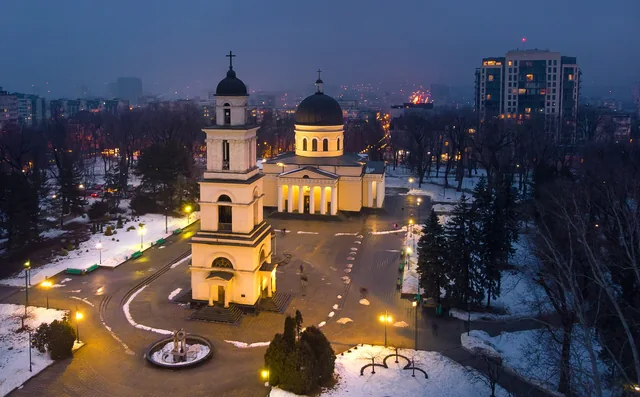
Chișinău
A capital of white limestone, wide avenues and parks, with the wine cellars round the corner
47.0245° N · 28.8323° E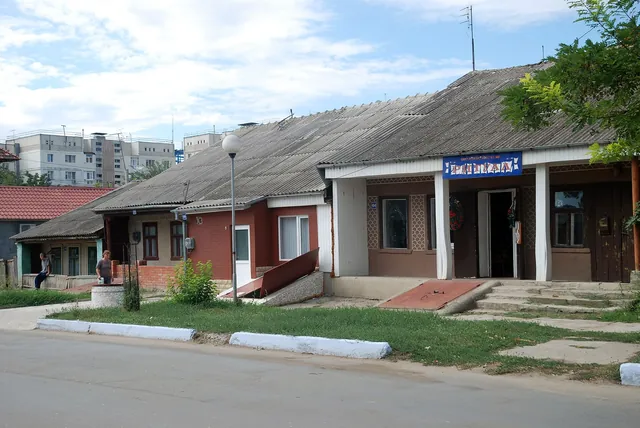
Comrat
Capital of Gagauzia, the autonomous region of the Turkic-speaking Orthodox Gagauz
46.3011° N · 28.6559° E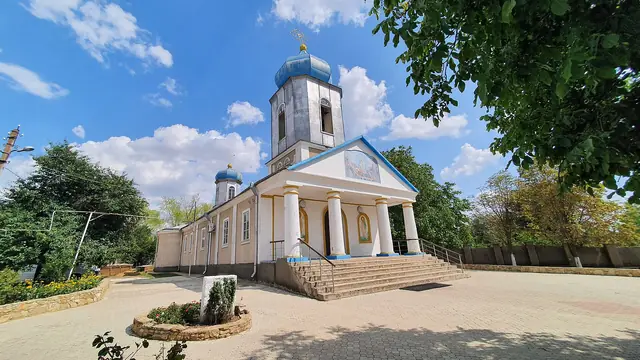 Video
Găgăuzia
Autonomous region of the Gagauz, Orthodox Christians with a Turkic language
46.3011° N · 28.6559° E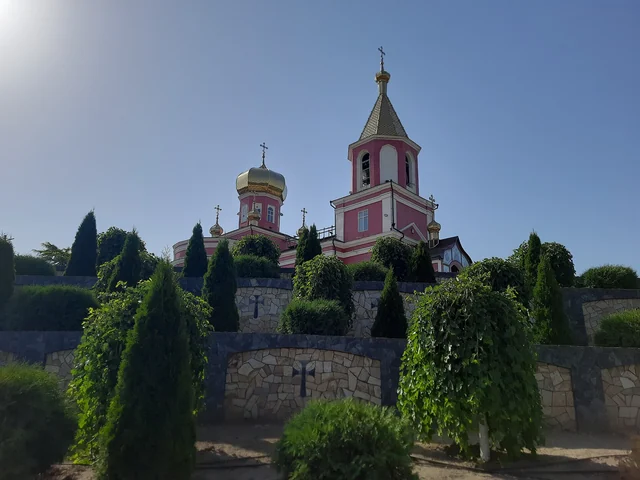
Taraclia
Bulgarian town in the south, with its own university and a church from 1817
45.8980° N · 28.6687° E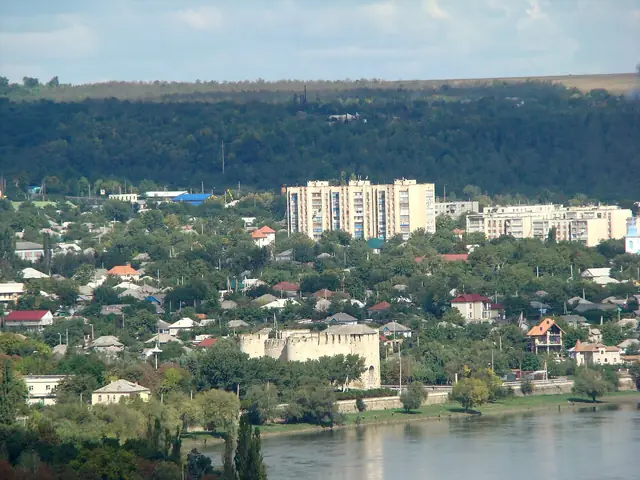 Video
Soroca
A round fortress on the Dniester, a candle of stone and the houses of Roma Hill
48.1543° N · 28.2883° E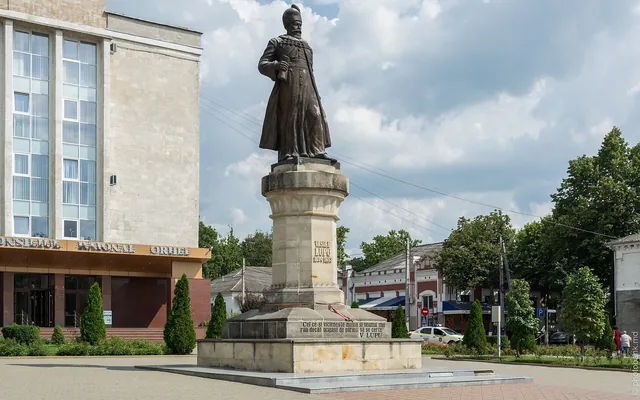
Orhei
District town on the Răut and gateway to Orheiul Vechi
47.3681° N · 28.8271° E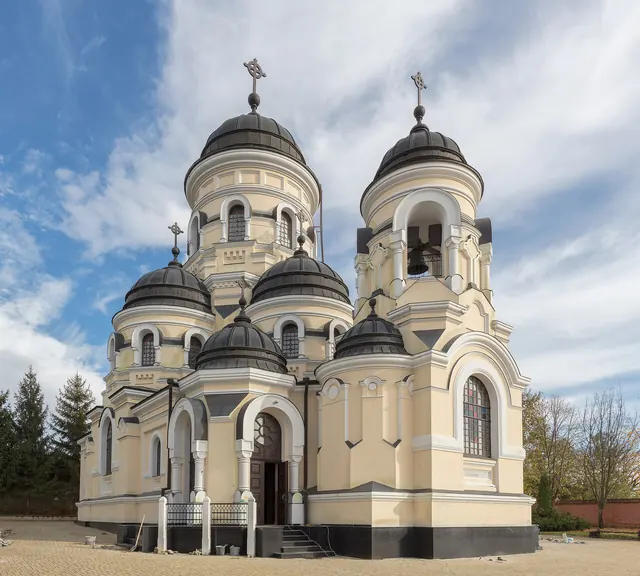 Video
Mănăstirea Căpriana
A princely monastery from 1429 in the Codri forests, with the oldest church in the country
47.1161° N · 28.5106° E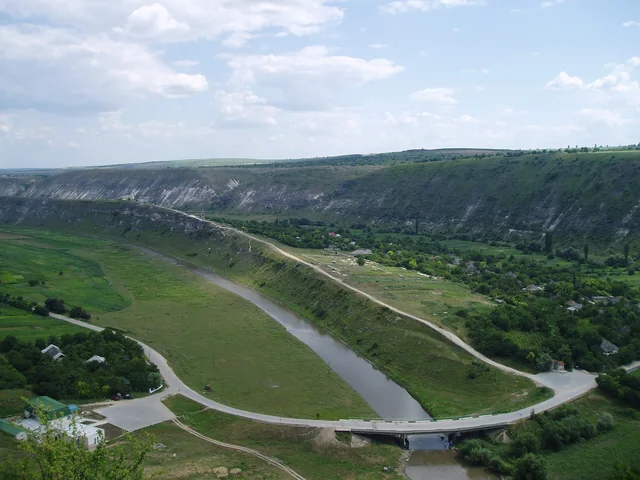 Video
Orheiul Vechi
A limestone river loop with cave monasteries, Getic strongholds and a Golden Horde town
47.3056° N · 28.9750° E