Practical information for your trip around Moldova
For Belgian travellers Moldova is an easy destination: no visa, no particular health risks and, since 1 January 2026, roaming at domestic rates. Outside Chișinău, though, you often pay cash in lei, in the countryside you get around by minibus on mediocre roads, and Transnistria is an area Belgian travel advice would rather you avoided. This page brings together what you need to know on the ground, from the exchange rate and language to insurance, climate and who to call if things go wrong.
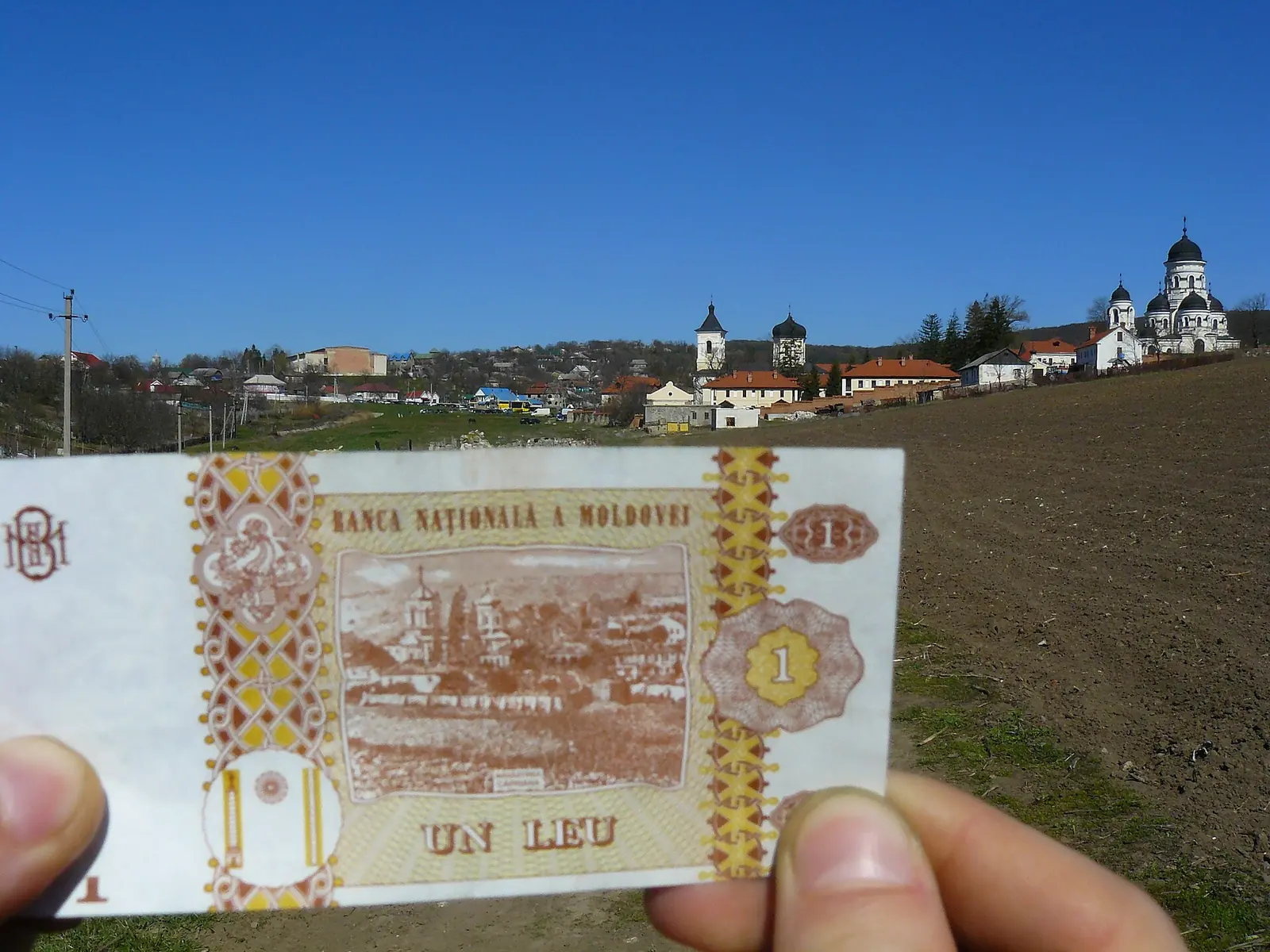
Photo: Jbuket, CC BY-SA 4.0, via Wikimedia Commons

- Euro-leu exchange rate
- €1 = 20.10 lei 2026 · Official rate of the National Bank of Moldova on 30 October 2026.
- Roaming at domestic rates
- Since 1 January 2026 2026 · Calls, texts and data at no extra charge, within fair-use rules.
- Belgian travel advice last updated
- 17 July 2026 2026 · Transnistria: all travel strongly advised against.
IMoney, cards and cash machines
Moldova's currency is the leu (plural lei, code MDL), divided into 100 bani. On 30 October 2026 one euro was worth 20.10 lei according to the National Bank of Moldova, so the maths is quick: 100 lei is about €5. You cannot get lei in Belgium, so you exchange or withdraw money once you arrive.
- Cards are accepted in Chișinău in restaurants, hotels, supermarkets and many shops. Outside the capital, at markets, in small village shops and on minibuses, cash is still the norm.
- Cash machines (bancomat) can be found in every town. With a foreign card, always choose to be charged in lei, not euros, to avoid an unfavourable conversion.
- Exchange offices (casă de schimb) are plentiful and display their rates on a board. Changing euros is easy; bring clean, undamaged notes.
- Cash of €10,000 or more must be declared to customs on arrival.
Always keep some small notes and coins to hand: a minibus driver, a market stall or a monastery shop can rarely break a large note. Change any leftover lei back before you leave, as they are hard to get rid of in Belgium. If a Belgian bank card is lost or stolen, call Card Stop straight away on +32 78 170 170.
IILanguage and useful words
The official language is Romanian; since 2023 the constitution has also explicitly referred to "limba română". Russian is still widely understood in Chișinău and Bălți and is the everyday language in much of Găgăuzia and Transnistria, where you also hear Gagauz and Ukrainian and the Cyrillic alphabet is common. Young people in the capital often speak English; in the countryside you will get furthest with gestures and a few words of Romanian. If you speak French, you will recognise many words, as Romanian is a Romance language.
| Romanian | Pronunciation (roughly) | Meaning |
|---|---|---|
| Bună ziua | BOO-nuh ZEE-wah | Good day |
| Mulțumesc | mool-tsoo-MESK | Thank you |
| Vă rog | vuh ROG | Please |
| Da / Nu | dah / noo | Yes / no |
| Cât costă? | kut KOS-tuh | How much is it? |
| Nu înțeleg | noo un-tseh-LEG | I don't understand |
| Nota, vă rog | NO-tah vuh rog | The bill, please |
| Noroc! | no-ROK | Cheers! (when raising a glass) |
| La revedere | lah reh-veh-DEH-reh | Goodbye |
IIISafety and Belgian travel advice
Belgian travel advice (last updated on 17 July 2026) is clear: with the usual precautions, you can in principle travel safely in Moldova. Chișinău is considered safe, although petty crime such as pickpocketing does occur. Demonstrations take place mainly in the capital; keep your distance from them.
Transnistria
For Transnistria, the unrecognised breakaway region east of the Dniester, the advice is different: all travel there is strongly advised against, including transit from Moldova to Ukraine. The Moldovan government has no control there, the border crossing is unpredictable and consular assistance cannot be guaranteed. In 2026 the Netherlands gives the region colour code red and the rest of Moldova yellow. If you go despite the advice, you pass checkpoints run by the Transnistrian authorities, pay in a separate currency (the Transnistrian rouble) and may not photograph the bridge over the Dniester. Your travel insurance and the Belgian consular services can do little to help you there.
The war in Ukraine
Because the situation in Ukraine can change quickly and affect Moldova, the travel advice calls for vigilance. There are no separate rules for the border area with Ukraine, but drones sometimes enter Moldovan airspace, and a temporary closure of the airspace can delay or cancel flights. Register your trip through Travellers Online so that the Belgian Foreign Affairs ministry can reach you.
Laws to be aware of
- Photography is prohibited wherever there is a sign saying so, and near military and security installations.
- Possession of drugs is severely punished.
- Homosexuality is not illegal, but it is not widely accepted.
IVHealth and insurance
Moldova has no particular health risks. Don't drink tap water; stick to bottled water. According to Belgian travel advice, doctors are generally well to very well trained; public hospitals do not always meet Belgian standards, but private hospitals in Chișinău do. For recommended vaccinations, see the Wanda website of the Institute of Tropical Medicine.
Moldova is not a member of the European Union or the European Economic Area, so the European Health Insurance Card (EHIC) is not valid there. Check with your health insurance fund what cover you have in Moldova; in any case that cover lapses after a stay of three months. Belgian travel advice calls travel insurance covering medical costs, legal assistance and repatriation "absolutely essential". Check that Moldova is explicitly included in your policy's area of cover.
Moldova lies in a seismic zone: there have been four major earthquakes since 1940. In summer the mercury can climb above 40 °C, so drink plenty and avoid the midday heat.
VMobile internet and roaming
Since 1 January 2026 Moldova has been part of the European roam-like-at-home zone (Council of the EU). With a Belgian or other European plan you can call, text and browse there at no extra charge, with the same network quality as at home and free access to the emergency services. The usual fair-use rules still apply: for a very long stay or mainly foreign use, your operator may, after warning you, charge a limited surcharge.
Before you leave, ask your own operator if your plan already lists Moldova as a roaming country on the same terms. If you are staying a long time or use a lot of data, buy a local SIM card or eSIM from one of the Moldovan operators; you can do so in shops in Chișinău and at the airport. Free Wi-Fi is common in hotels, cafés and restaurants.
VIGetting around the country
Moldova is small, but travel takes time: the country has no motorways and no domestic flights. Everything runs along national roads that pass through villages.
- Rutieră (maxi-taxi): minibuses are the backbone of public transport between Chișinău and the rest of the country. They leave from the capital's bus stations (among them Gara Centrală, Gara de Nord and Gara de Sud, each serving a different direction) and often set off as soon as they are full. Pay cash to the driver or at the ticket office.
- Buses and trolleybuses: Chișinău and Bălți have an extensive trolleybus network. Some vehicles are old, but the network is dense and cheap.
- Train: the railways (CFM) offer a limited domestic service that is not always punctual. Useful for the international connections with Bucharest and Iași, less so for day trips.
- Taxi: in towns, book a taxi through an app or a telephone dispatch service; ask your hotel which service is used locally. The quality of the cars varies enormously. If you hail a taxi in the street, agree the fare in advance.
- Hire car: handy for wineries and monasteries in the countryside. Your Belgian driving licence is valid. According to Belgian travel advice, roads are often in poor condition, driving is chaotic, police checks are frequent and there is zero tolerance for alcohol. Avoid driving at night: roads are poorly lit and you share them with slow tractors, horses and carts, and livestock.
So if you are going to a wine tasting, leave the car behind and take a driver or an organised trip. Many wineries around Chișinău, such as Cricova and Mileștii Mici, are less than an hour's drive away and can also be reached by taxi or on a booked excursion. For a tour of monasteries in the north or wineries in the south, a hire car with a spare day per region is the most relaxed choice, because distances look shorter on the map than they are on the road.
VIIClimate and best time to visit
Moldova has a continental climate with sharp contrasts: hot, dry summers when temperatures sometimes top 40 °C, and cold winters with frost and snow. Spring and early autumn are the most pleasant.
- May and June: green countryside, orchards in blossom, long days and still bearable temperatures. Ideal for monasteries and walks along the Dniester.
- July and August: hot; plan outdoor activities for the morning and retreat to the cool wine cellars in the afternoon.
- September and October: harvest time in the vineyards and the high point of the wine year, with National Wine Day (Ziua Națională a Vinului) in Chișinău on the first weekend of October.
- November to March: grey and cold, but quiet and good value; Christmas is celebrated on both 25 December and 7 January.
VIIITipping, opening hours and everyday customs
In restaurants and cafés a tip of about ten per cent is customary if you are satisfied; first check whether a service charge has already been added to the bill. In taxis, round up. Guides and drivers on a day trip appreciate a tip.
Opening hours are generous: supermarkets and many shops in Chișinău also open on Sundays, and the Piața Centrală starts early in the morning and is already much quieter by mid-afternoon. Many museums have a fixed weekly closing day, often Monday; check before you set off. In monasteries and churches modest dress is expected: covered shoulders and knees, and for women often a headscarf, which is sometimes available at the entrance.
Hospitality matters a great deal. If you are invited to someone's home, bring something (flowers in an odd number, something sweet or a bottle) and expect to be pressed to eat or drink a little more. When clinking glasses, look each other in the eye and say "Noroc!". You may decline a glass of wine, but do so politely and preferably straight away; a half-empty glass is quickly topped up.
Mains voltage is 230 volts with type C and F sockets, as in Belgium. Moldova is in the Eastern European time zone, one hour ahead of Brussels, all year round.
IXEmbassies and emergency numbers
The general emergency number is 112 for police, ambulance and fire service. Operators often speak little or no English; if possible, ask a Moldovan contact or your hotel to help.
- Belgian embassy: Belgium opened an embassy in Chișinău in September 2023, but it has no consular powers. For passports, emergency travel documents and consular assistance, the Belgian embassy in Bucharest is responsible; outside office hours you can reach it in emergencies on +40 723 202 026.
- Belgian honorary consulate in Chișinău: Str. Pușkin 26A (5th floor), tel. +373 69 414 041, BelgCons.MD@protonmail.com. An honorary consul has limited powers; if in doubt, contact Bucharest first.
- Embassy of Moldova in Belgium: Avenue Franklin Roosevelt 57, 1050 Brussels, tel. +32 2 626 00 80, bruxelles@mfa.gov.md, also responsible for Luxembourg. Dutch citizens can go to the Moldovan embassy in The Hague.
- Card Stop (lost or stolen Belgian bank card): +32 78 170 170.
Keep these numbers on paper and in your phone, and leave a copy of your ID with someone at home.
Frequently asked questions
Can I pay in euros in Moldova?
Rarely. The currency is the Moldovan leu (about 20 lei to €1 in October 2026). Euros are easy to change at exchange offices, and in Chișinău you can pay by card in many places, but elsewhere you need cash in lei.
Is Moldova safe to travel to?
According to Belgian travel advice of July 2026, you can in principle travel safely with the usual precautions. Only Transnistria is subject to a strong warning against all travel, and the war in Ukraine calls for vigilance.
Is my European Health Insurance Card valid in Moldova?
No. Moldova is not a member of the EU or the EEA, so the EHIC does not apply there. Take out travel insurance covering medical costs and repatriation, and ask your health insurance fund what cover you have.
Do I pay roaming charges in Moldova?
Not since 1 January 2026: Moldova is part of the European roam-like-at-home zone. You call and browse on your Belgian plan just as at home, within the usual fair-use rules.
What language do people speak in Moldova?
The official language is Romanian. Russian is widely understood, especially in Chișinău, Bălți, Găgăuzia and Transnistria, and young people in the capital often speak English.
Do I need a plug adapter in Moldova?
No. Moldova uses 230 volts and type C and F sockets, just like Belgium.
When is the best time to visit Moldova?
May and June, and September and October, are the most pleasant. Autumn also brings the grape harvest and National Wine Day on the first weekend of October; July and August are often very hot.
Where can Belgians turn for help if something goes wrong in Moldova?
Call 112 in an emergency. Consular assistance is handled by the Belgian embassy in Bucharest; in Chișinău there is a Belgian embassy without consular powers and an honorary consulate.
Sources
- Reisadvies Moldavië: laatste update (FOD Buitenlandse Zaken, 17 juli 2026)
- Reisadvies Moldavië: algemene veiligheid
- Reisadvies Moldavië: gezondheid en hygiëne
- Reisadvies Moldavië: praktische info
- Reisadvies Moldavië: vervoer
- Reisadvies Moldavië (Nederland Wereldwijd, september 2026)
- EU mobile roaming benefits extended to Moldova and Ukraine as of 2026 (Raad van de EU)
- Officiële wisselkoersen (Banca Națională a Moldovei)
- Honorary consulates Romania and Moldova (Belgische ambassade Boekarest)
- Misiunile diplomatice: Belgia (MAEIE Moldova)
- Belgium to open embassy in Chișinău (Radio Moldova, 2023)
See also
 Video
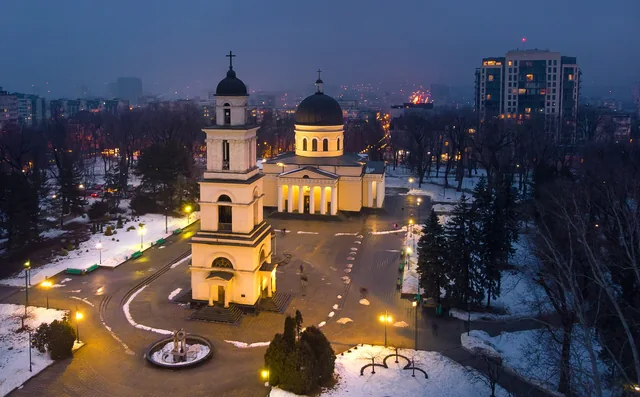
Chișinău
A capital of white limestone, wide avenues and parks, with the wine cellars round the corner
47.0245° N · 28.8323° E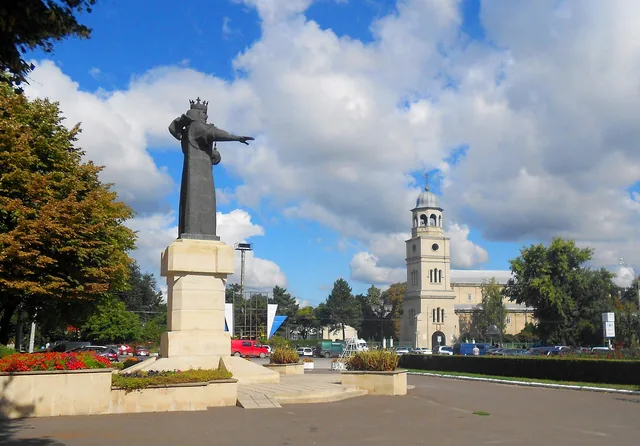
Bălți
Moldova's second city, the multilingual centre of the northern steppe
47.7624° N · 27.9286° E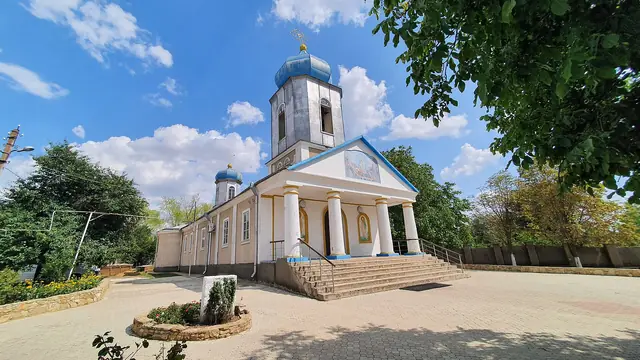 Video
Găgăuzia
Autonomous region of the Gagauz, Orthodox Christians with a Turkic language
46.3011° N · 28.6559° E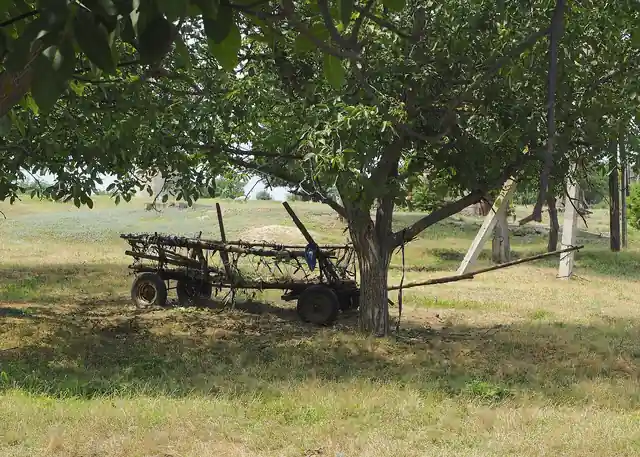
Transnistria
Unrecognised breakaway region on the left bank of the Dniester
47.2700° N · 29.1600° E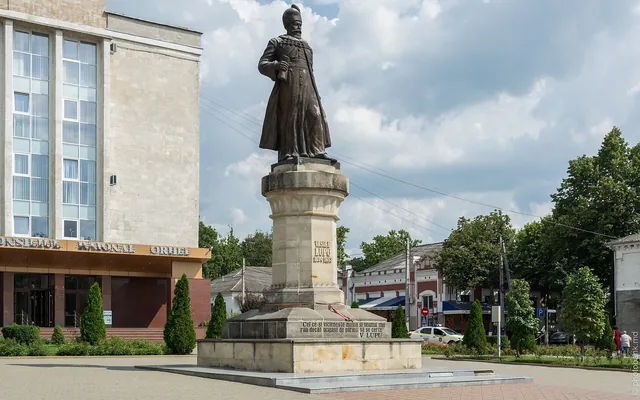
Orhei
District town on the Răut and gateway to Orheiul Vechi
47.3681° N · 28.8271° E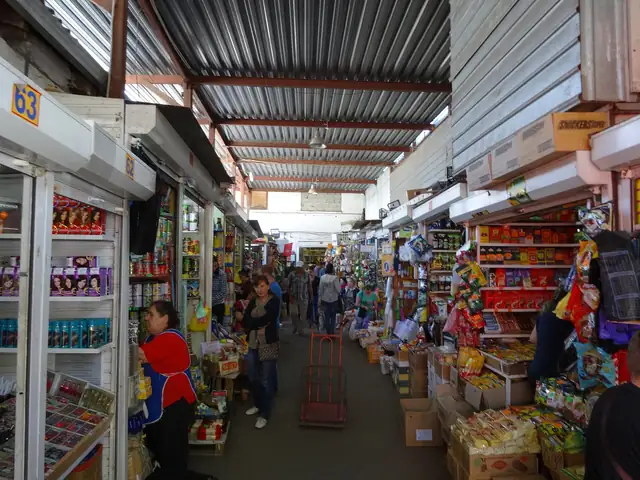
Piața Centrală
The capital's busiest market, where the countryside comes to town every day
47.0195° N · 28.8428° E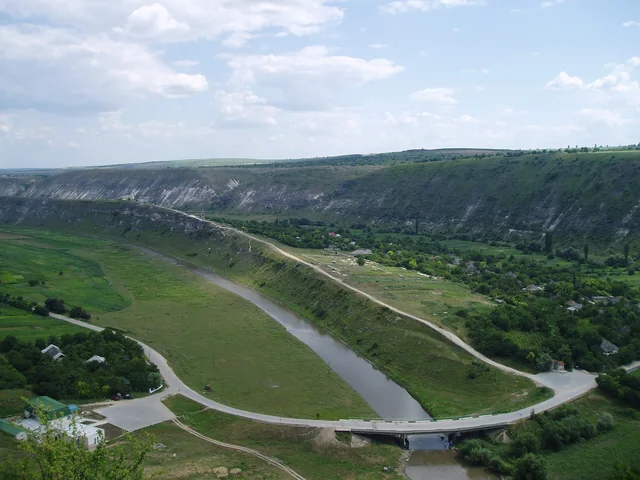 Video
Orheiul Vechi
A limestone river loop with cave monasteries, Getic strongholds and a Golden Horde town
47.3056° N · 28.9750° E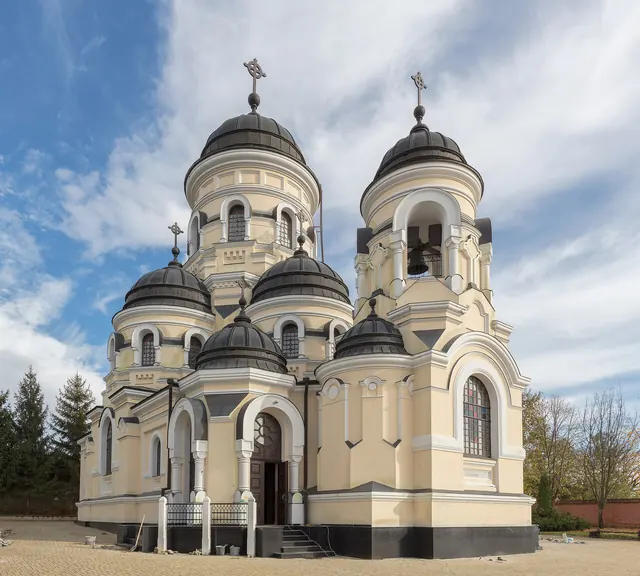 Video
Mănăstirea Căpriana
A princely monastery from 1429 in the Codri forests, with the oldest church in the country
47.1161° N · 28.5106° E