Chișinău
A capital of white limestone, wide avenues and parks, with the wine cellars round the corner
47.0245° N · 28.8323° E
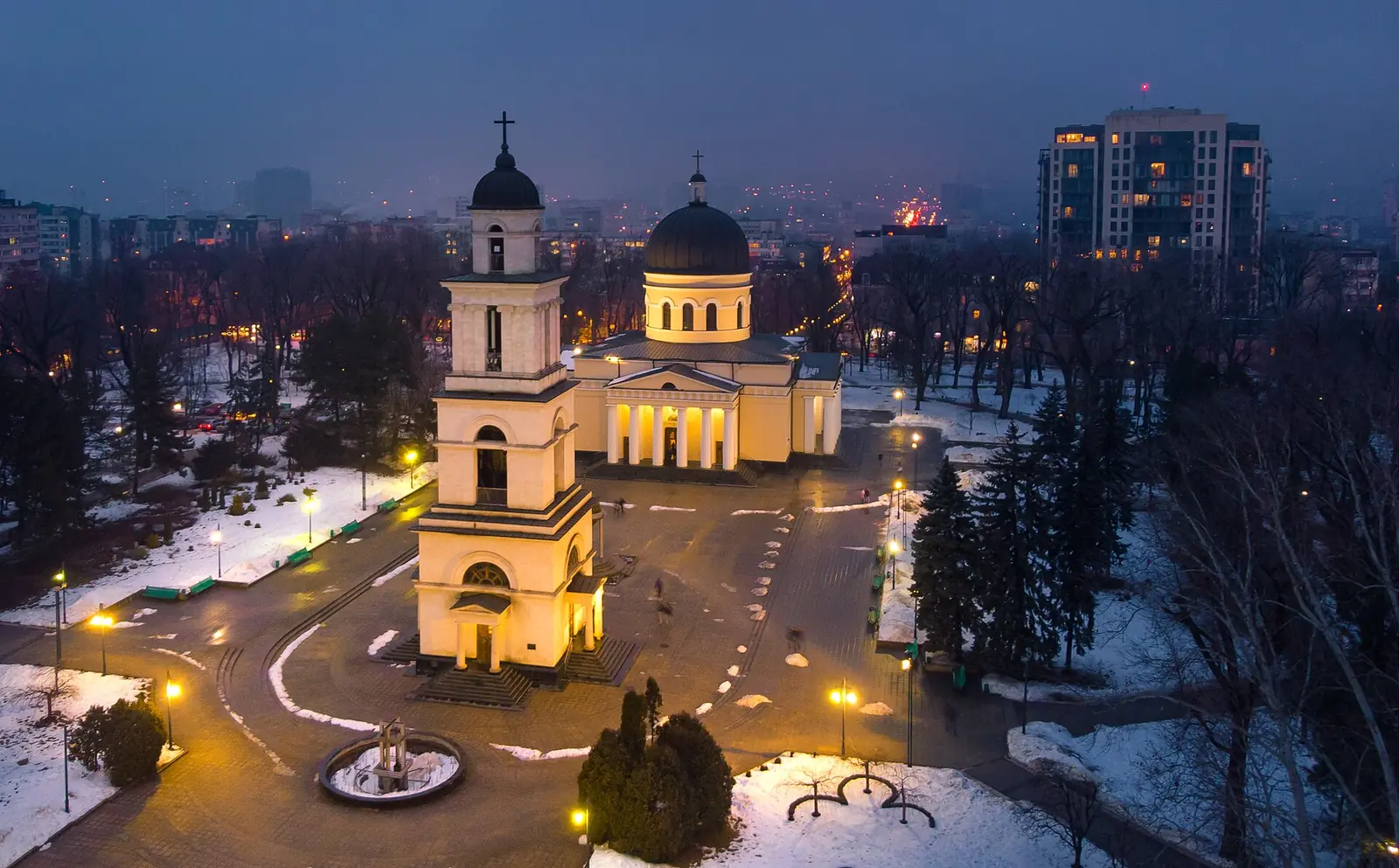
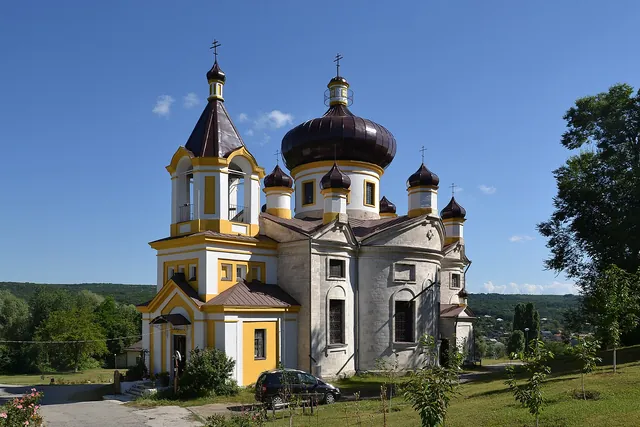
Photo: Pelin Oleg, CC BY-SA 4.0, via Wikimedia Commons
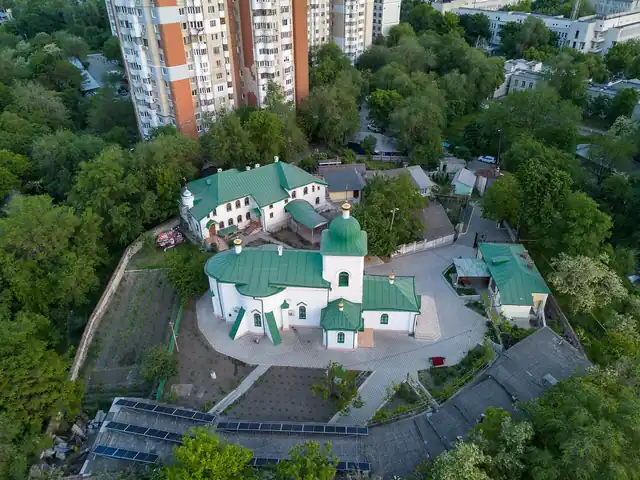
Photo: Photobank MD from Chisinau, Moldova, CC0, via Wikimedia Commons
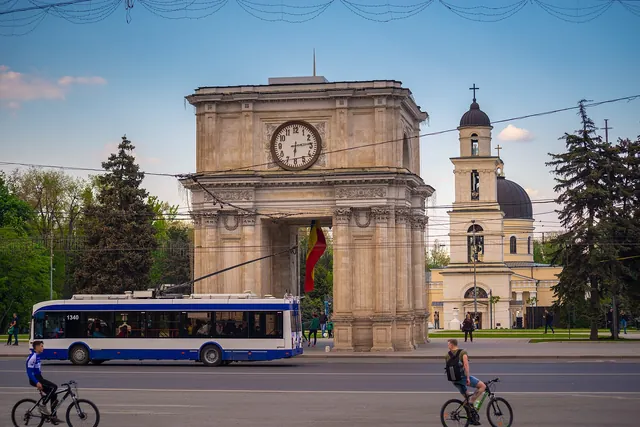
Photo: Myrabella, CC BY-SA 3.0, via Wikimedia Commons
Read the transcript EN
A city of white stone
Stand in the central square of Chișinău on a sunny morning and look at the façades. They are pale, almost white. That is limestone from the quarries of Cricova, fifteen kilometres away. This is why Moldovans call their capital the white stone city. Today about five hundred and sixty-seven thousand people live in the city itself, and more than seven hundred and twenty thousand in the municipality as a whole. Almost one in three of the country's people lives here.
From monastery village to capital
The first mention of Chișinău dates from fourteen thirty-six. At the time, it was a small village around a monastery, in the Principality of Moldavia. Everything changed in eighteen twelve. The eastern part of Moldavia passed to the Russian Empire and was given the name Bessarabia. Chișinău became the main town of the new province. A city plan from eighteen thirty-four laid out the long, straight avenues that still shape the centre today. In that period, the architect Alexander Bernardazzi designed, among other buildings, the city hall.
A poet in exile
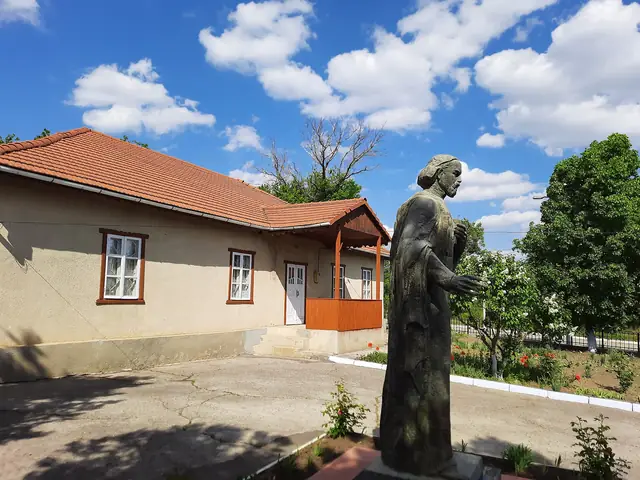
In eighteen twenty, a young Russian poet arrived here against his will. Alexander Pushkin had been banished to the south by the tsar. He lived in Chișinău for several years and wrote poems about the region. The small house where he stayed is now a museum. And so this provincial town found a place in Russian literature.
Destruction and rebuilding
The twentieth century hit hard. In November nineteen forty, a powerful earthquake struck the city. Then came the bombing of nineteen forty-one and the fighting of nineteen forty-four. Much of the centre lay in ruins. Between nineteen forty-seven and nineteen forty-nine, the architect Alexey Shchusev drew up a plan for its reconstruction. That is how Chișinău got its broad boulevards, its Soviet buildings and its concrete modernism, alongside the churches and houses that had survived the war.
Squares, parks and markets
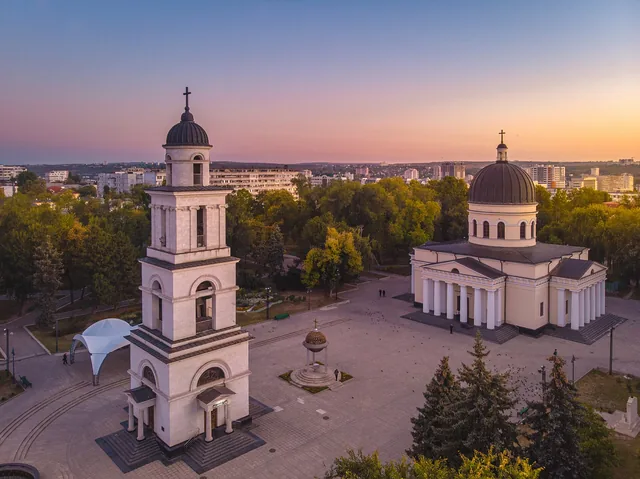
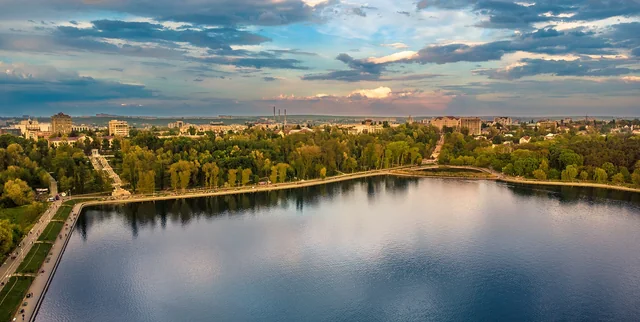
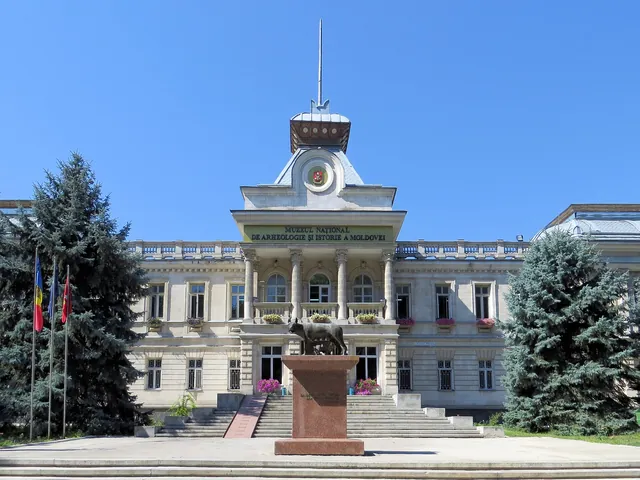
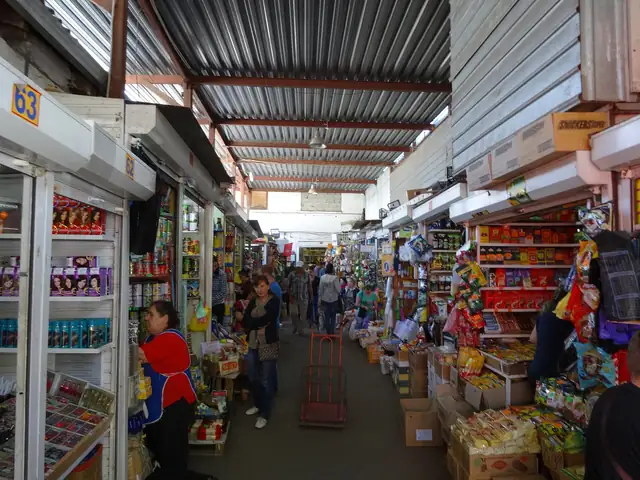
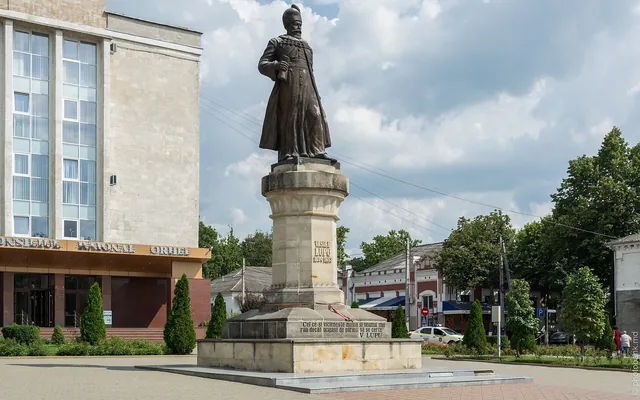
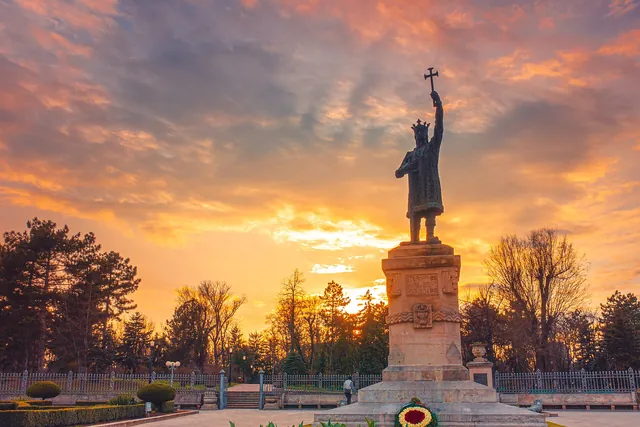
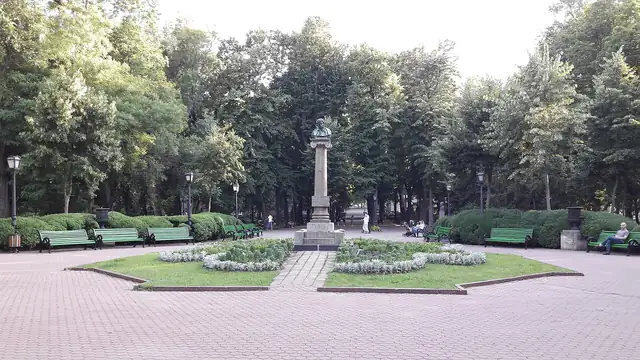
The heart of the city is the great square with the triumphal arch and the Cathedral of the Nativity of the Lord. Next to it lies Ștefan cel Mare Park, with the statue of the medieval prince. Walk on and you reach Valea Morilor, a green hollow around a lake. And at Piața Centrală, the big market, the city buys its sheep's cheese, walnuts and fruit. In the museums of history, art and ethnography, you can read the story of the whole country.
The gateway to Moldova
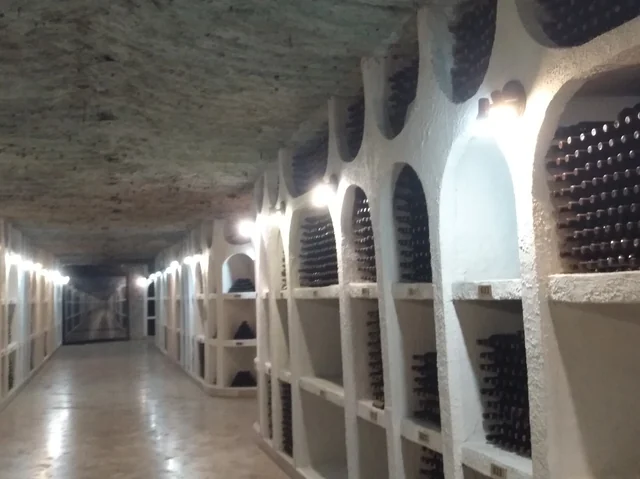
Since twenty twenty-five, the airport has borne the name of the composer Eugen Doga. For most travellers, Moldova begins here. From Chișinău, buses run to the north, to the south and to the Dniester, and the cellars of Cricova are a fifteen-minute drive away. A city that twice almost disappeared has become the starting point for everything the country has to offer. And it is still built from the white stone of its own ground.
Photos: Rodion Gavriloi (CC BY-SA 4.0), Rob from United Kingdom (CC BY 2.0), Harold (CC BY-SA 4.0), Alexander Murvanidze (CC BY-SA 3.0), Rodion Gavriloi (CC BY-SA 4.0), Alexander Murvanidze (CC BY-SA 3.0), Iurie Nistor (CC0), Ben1152000 (CC BY-SA 4.0), MOs810 (CC BY 4.0), Издатель неизвестен (Public domain), MOs810 (CC BY 4.0), Adam Jones from Kelowna, BC, Canada (CC BY-SA 2.0), Criss90kf (CC BY-SA 4.0), Mostafameraji (CC BY-SA 4.0), Adam Jones from Kelowna, BC, Canada (CC BY-SA 2.0), andrez1 (CC BY-SA 3.0), Zaynab J (CC BY-SA 4.0), Furkan Akkurt (CC BY-SA 4.0), Alexey Shchusev (Public domain), Mirek237 (Public domain), Pudelek (CC BY-SA 4.0), Tomasz Bladyniec (CC BY 4.0), Alexandru Panoiu from Bucharest, Romania (CC BY 2.0), Photobank MD from Chisinau, Moldova (CC0), Tomasz Bladyniec (CC BY 4.0), Simiprof (CC BY-SA 4.0), Gikü (CC0), Gikü (CC0), MOs810 (CC BY 4.0), User:Zserghei (Public domain). Voice: synthetic voice (AI).
Chișinău is the capital and by far the largest city of Moldova: according to the 2024 census, about 567,000 people live in the city and 720,128 in the municipality as a whole. First mentioned in 1436, it grew in the 19th century into the administrative centre of Russian Bessarabia and was largely rebuilt in Soviet style after 1944. It is also the obvious base for exploring the rest of the country.
Why go
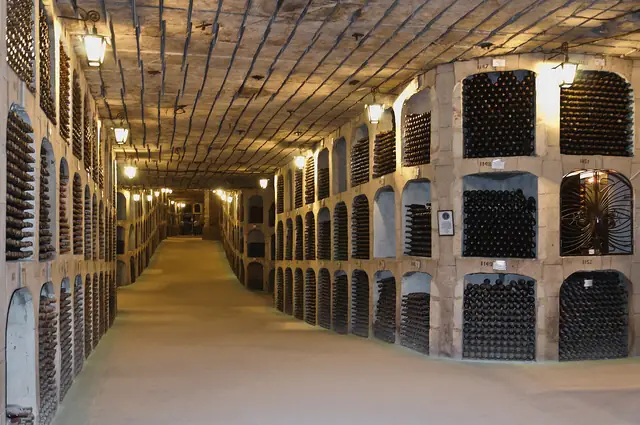
Chișinău is not a city of one great monument but a city of layers. On a short walk you see nineteenth-century limestone houses, Orthodox churches, post-war boulevards and concrete modernism side by side. Almost every trip through Moldova starts here: the international airport, the main bus stations and the country's only large railway station are all in the city, and the wine cellars of Cricova are barely 15 kilometres away.
History and character
The first mention dates from 1436, when Chișinău was a monastery village in the Principality of Moldavia. After 1812, when the eastern part of Moldavia passed to the Russian Empire as Bessarabia, it became the capital of the new province. A town plan of 1834 laid down the rectangular grid of long, wide streets that still shapes the centre today. In the same period the architect Alexander Bernardazzi designed, among other buildings, the city hall.
The twentieth century was hard on the city: a severe earthquake in November 1940, the bombing of 1941 and the fighting of 1944 destroyed much of the centre. Between 1947 and 1949 the architect Alexei Shchusev drew up a plan for its reconstruction. The nickname "city of white stone" refers to the limestone from the Cricova quarries used for many of the façades.
What to see and do
- The central square with the triumphal arch and the Nașterea Domnului Cathedral, next to Ștefan cel Mare Park and the statue of the prince.
- Valea Morilor Park, a green bowl around a lake just outside the centre.
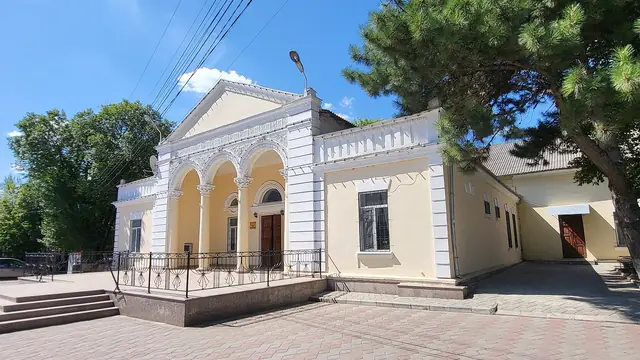
- The national museums of history, art and ethnography, the house where Pushkin lived in exile and the old water tower.
- Piața Centrală, the covered and open-air market where the city does its shopping.
Eating, drinking and sleeping
In the centre you will find everything from simple eateries serving plăcinte (filled pastries) and zeamă (sour chicken soup) to wine bars devoted to Moldovan grapes such as Fetească Neagră and Rară Neagră. At the market you can buy sheep's cheese, walnuts and seasonal fruit. Hotels and apartments are concentrated around the main boulevard, Ștefan cel Mare; if you want to explore the city on foot, that is where to stay.
Practical information and tips
The airport, named after the composer Eugen Doga since 2025, lies about 13 kilometres south-east of the centre, and trolleybus 30 runs straight there. For excursions you use the three bus stations: Gara de Nord for the north, Gara de Sud for the south and Gara Centrală for most domestic routes, including those to Transnistria. Trolleybuses and taxi apps make getting around the city easy. Allow two to three days for the city itself, plus day trips.
Highlights
- Central square with the triumphal arch and Nașterea Domnului Cathedral
- Valea Morilor Park around the lake
- National museums of history, art and ethnography
- Piața Centrală, the big city market
- Cricova wine cellars 15 km away