Cricova
Cricova wine cellars
Underground wine city with more than 120 kilometres of tunnels, just north of Chișinău
47.1330° N · 28.8500° E14 km from Chișinău
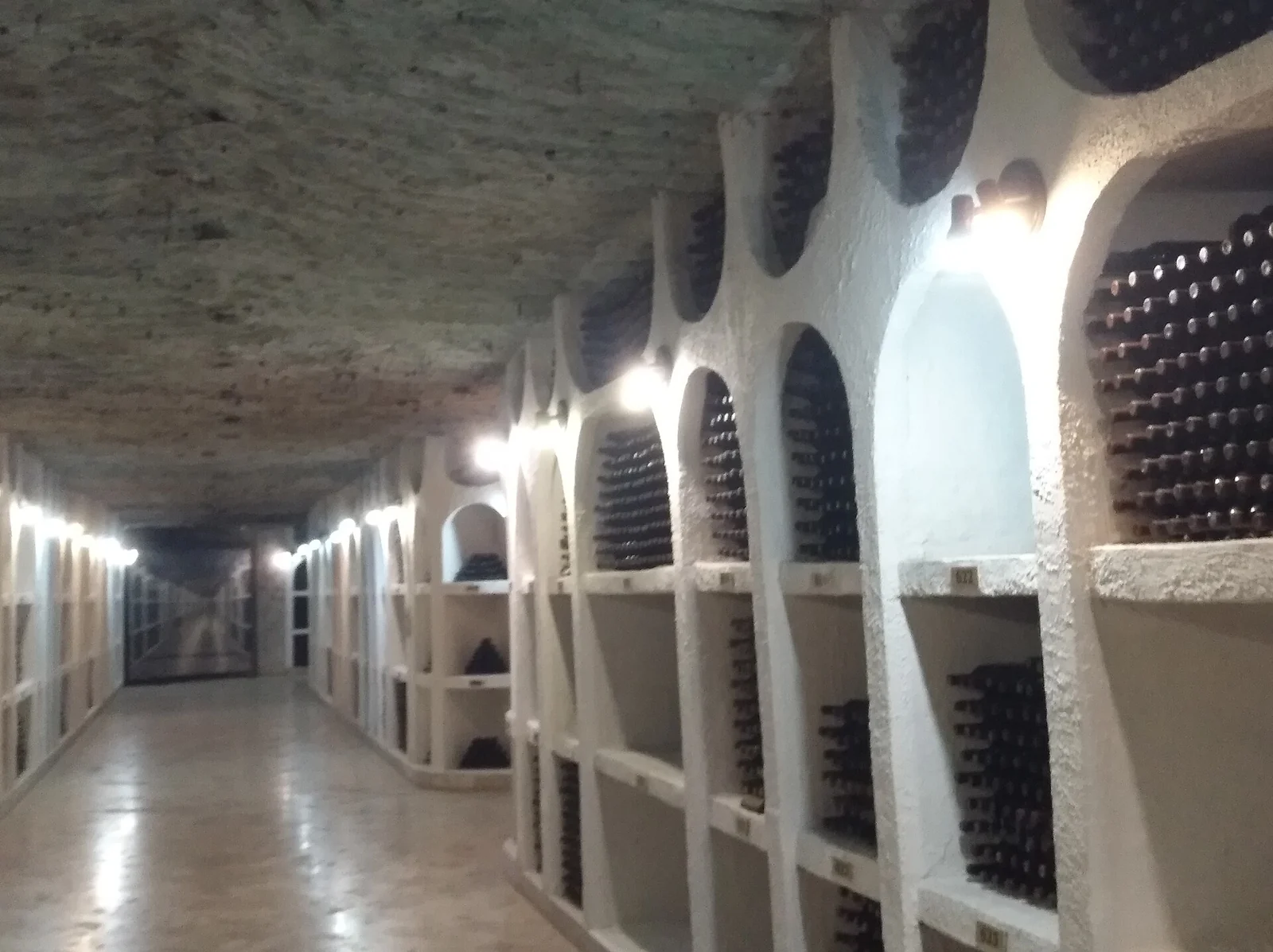
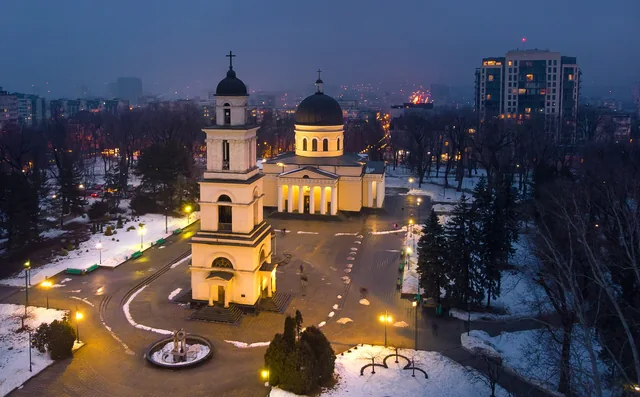
Photo: Visem, CC BY-SA 4.0, via Wikimedia Commons
Photo: Gikü (talk), CC0, via Wikimedia Commons
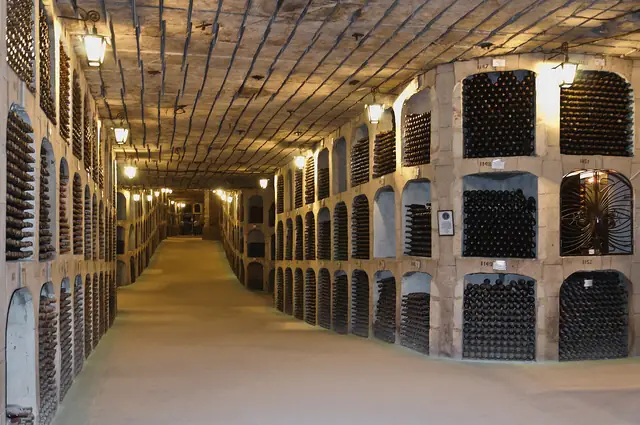
Photo: Izbişciuc, CC BY-SA 4.0, via Wikimedia Commons
Read the transcript EN
A city beneath the city
Fifteen minutes' drive north of Chișinău, a gate opens into a hillside. Behind it lies not an ordinary cellar, but a city. More than a hundred and twenty kilometres of tunnels, laid out like streets, wide enough for cars and a little electric train. All year round, the temperature stays between twelve and fourteen degrees. The air is damp and still. This is Cricova, one of the best known wine houses in Moldova, and almost everything that makes it special lies underground.
Stone for the capital
The tunnels are older than the winery. For centuries, limestone was quarried here, the pale stone that built much of Chișinău. What remained were empty quarries up to eighty metres deep. According to the Unesco application, the underground area covers almost eighty-five hectares. In nineteen fifty-two, someone saw something else in them: a natural cellar. A sparkling wine factory was set up there. The constant cool did the rest.
Bubbles the traditional way
Cricova makes sparkling wine by the traditional method. The second fermentation happens in the bottle itself, and the wine matures for months on its lees. The principle is the same as in Champagne, but here the cellars are naturally cool. The house calls itself the first producer in the country to work this way. According to the dossier Moldova submitted to Unesco, about two million bottles of sparkling wine leave these cellars every year.
A bottle from nineteen oh two
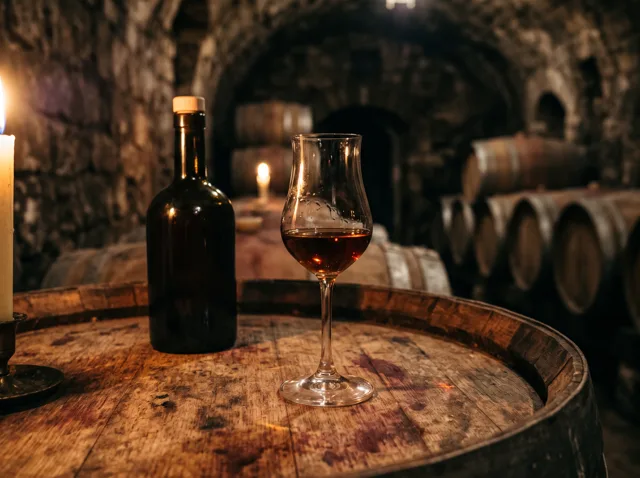
Deep in the tunnels lies the national wine collection. It was started in nineteen fifty-four and today holds almost one point three million bottles. Its showpiece is a red dessert wine from nineteen oh two, the last bottle of a batch of four hundred. A Czech herbal liqueur from the same year is kept here too. Another part of the collection has a darker past. These are wines attributed to Hermann Göring, which came to Cricova via Moscow after the Second World War.
Tasting underground
Visitors ride a little electric train through the underground streets. They watch a short film in a cinema below ground and finish in one of the tasting rooms. Tours must be booked in advance and are offered in several languages. According to the Unesco dossier, almost one hundred thousand visitors came in twenty nineteen. At the entrance, a restaurant serves Moldovan dishes with the house wines. If you come without a car, take a taxi. The ride from the centre takes about twenty minutes.
Heritage in the making
In two thousand and three, Cricova was declared national cultural heritage. In twenty twenty-five, Moldova placed its cellars, together with those of Mileștii Mici, on the Unesco tentative list for World Heritage. And so an old quarry, once dug out to build a capital, found a new role. Above ground, the city grows. Below it, in the same silence as seventy years ago, the wine matures.
Photos: Izbişciuc (CC BY-SA 4.0), Alexander Murvanidze (CC BY-SA 3.0), Mutialulu (CC0), Alexander Murvanidze (CC BY-SA 3.0), Cepaev (CC BY-SA 3.0), Thomas Bjørkan (CC BY-SA 3.0), Photobank MD (CC0), Mgalal20 (CC BY-SA 4.0), W.carter / Ann-Sophie Qvarnström (CC BY-SA 2.0), Amanda Slater (CC BY-SA 2.0), Tomas er (CC BY-SA 3.0), Craig Hatfield (CC BY 2.0), Cynwolfe (CC BY-SA 4.0), Robert Pitkin (CC BY-SA 2.0), daryl_mitchell from Saskatoon, Saskatchewan, Canada (CC BY-SA 2.0), Kolmkolm (CC BY-SA 4.0), Vyacheslav Argenberg (CC BY 2.0), Veni from New York, USA (CC BY 2.0), Missvain (CC BY 4.0), Missvain (CC BY 4.0), JIP (CC BY-SA 4.0), Randy OHC (CC BY 2.0), Danie van der Merwe (CC BY 2.0), Izbişciuc (CC BY-SA 4.0), Vladikh (CC BY-SA 4.0), USAID Digital Development (CC BY 2.0), Nixalsverdrus (CC BY-SA 3.0), Анатолий Зубанюк (CC BY 3.0), User:Zserghei (Public domain). Voice: synthetic voice (AI).
Cricova is a state-owned winery with more than 120 kilometres of underground tunnels in an old limestone quarry, a fifteen-minute drive north of Chișinău. It started in 1952 as a sparkling wine factory and keeps a collection of about 1.3 million bottles. Since 2025 it has been on UNESCO's Tentative List for World Heritage, together with Mileștii Mici.
The estate and its history
For centuries limestone was quarried beneath the small town of Cricova, the building material for much of Chișinău. In 1952 the abandoned quarries were given a new purpose: a sparkling wine factory was set up here, using the cool tunnels as its cellar. The tunnels are laid out like streets, wide enough for vehicles. In total the network is more than 120 kilometres long and in places lies up to 80 metres deep.
In 2003 Cricova was granted the status of national cultural heritage. In 2025 Moldova submitted the dossier The Underground Wineries of Moldova to UNESCO, nominating Cricova and Mileștii Mici together. According to that dossier, Cricova received almost 100,000 visitors in 2019.
The cellars and the wines
All year round the tunnels stay at 12 to 14 °C, with a humidity of 97 to 98%. These conditions are ideal for sparkling wine fermented in the bottle. Cricova describes itself as the first company in the country to make spumant by the traditional method, with the second fermentation in the bottle. The UNESCO dossier mentions a production of about two million bottles of sparkling wine a year.
The national wine collection, begun in 1954, holds almost 1.3 million bottles. Its showpiece is an Ierusalim de Paști, a red dessert wine from 1902 and the only remaining bottle of a batch of 400. Another part comes from the wine collection attributed to Hermann Göring, which ended up here via Moscow after the war.
Visiting and tasting
Visits are guided only and must be booked in advance through the Cricova website; simply turning up usually does not work. A small electric train takes you through the underground streets, and in an underground cinema you watch a short film about the house. Tastings are booked separately, in packages with different numbers of wines and snacks. Tours are available in several languages, including English. At the entrance is the Regatul Vinului restaurant, which serves Moldovan dishes with the house wines. From the centre of Chișinău the drive by taxi or car takes about 20 minutes.