Alexander Pushkin
The Russian poet who spent three years of exile in Chișinău
1799-1837
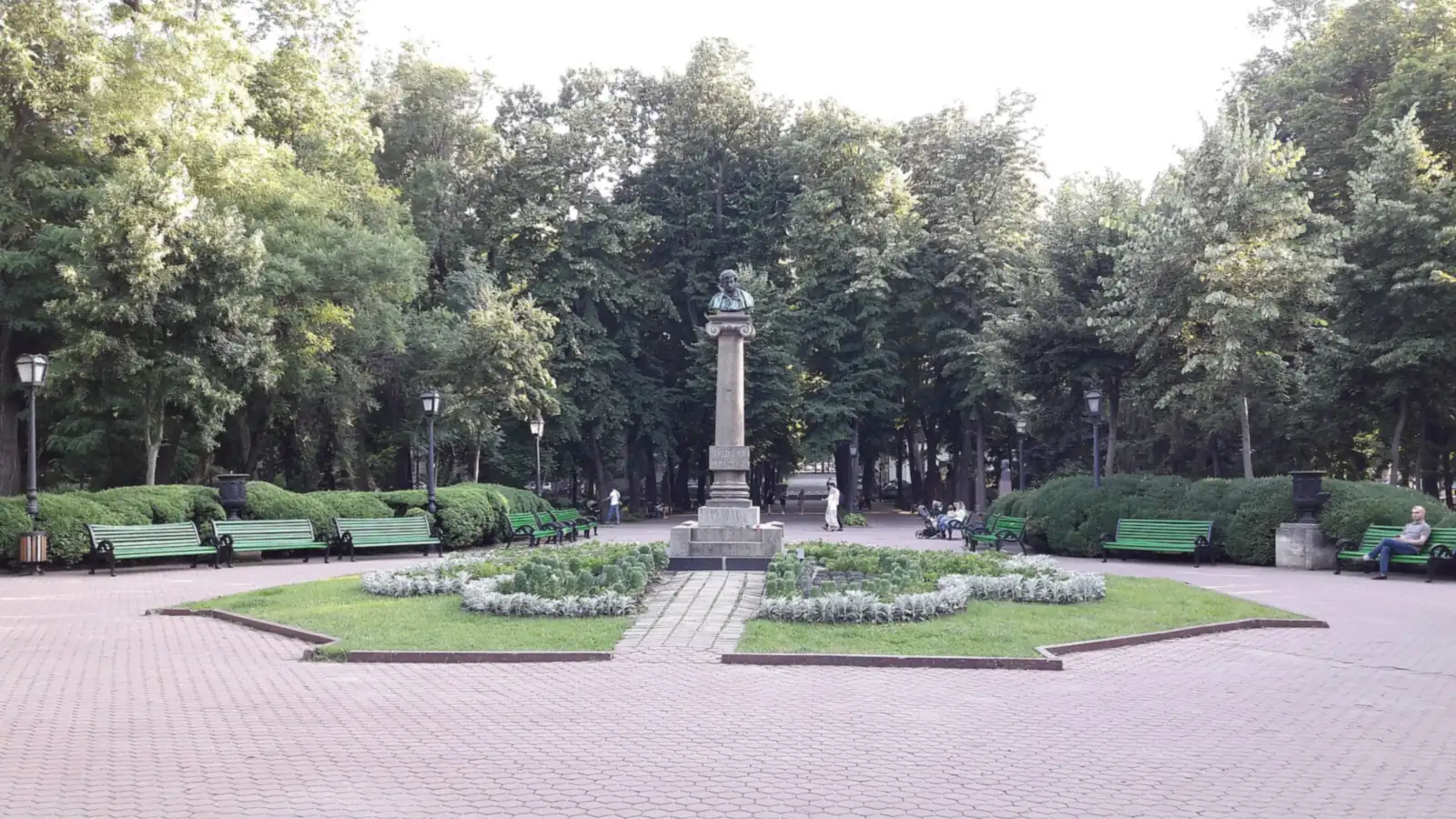
Photo: Tomasz Bladyniec, CC BY 4.0, via Wikimedia Commons
Photo: Adam Jones from Kelowna, BC, Canada, CC BY-SA 2.0, via Wikimedia Commons
Photo: TotalAnarchy, CC BY-SA 4.0, via Wikimedia Commons
Read the transcript EN
An unwanted journey
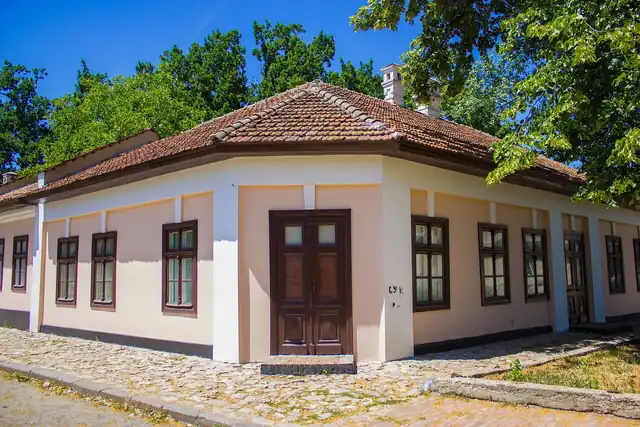
On the twenty-first of September eighteen twenty, a twenty-one-year-old poet arrives in Chișinău. He has not come of his own free will. Born in Moscow in seventeen ninety-nine, he is already known in the literary circles of the capital. His name is Alexander Pushkin, and the tsar wants to keep him as far from Saint Petersburg as possible. He will live in this city for three years. The house where he spent his first months is still standing.
Poems that offended
Pushkin had written political poems, such as his Ode to Liberty. He had also become a voice for radical young writers. Tsar Alexander the First was not amused. In May eighteen twenty, the young poet was transferred to the south. He travelled by way of the Caucasus and the Crimea. His destination was Chișinău, the capital of Bessarabia, the land between the Prut and the Dniester that Russia had annexed in eighteen twelve.
A city full of news
In Chișinău he worked under General Ivan Inzov, who governed the region. The city lay close to the Ottoman Empire. In eighteen twenty-one, the Greek uprising broke out, and Pushkin became involved with the Filiki Eteria, the secret society that had prepared it. He kept a diary about it.
Poems from the south
Here he worked on two long romantic poems, The Prisoner of the Caucasus and The Fountain of Bakhchisaray. They made him known to a wide public. The Prisoner of the Caucasus came out in eighteen twenty-two. These were stories of captivity and impossible love, written by a man who was not allowed to leave. In eighteen twenty-three, Pushkin moved on to Odessa, where he clashed with the authorities once again.
The house on Anton Pann Street
The small house at number nineteen, Anton Pann Street, became a museum on the tenth of February nineteen forty-eight. Pushkin lived there for about three months. Inside are prints and paintings, decorative art from his time, and editions of what he wrote in Bessarabia. The building is protected as an architectural monument of national importance. According to the city, it is one of only two houses in the world where Pushkin lived that survive.
A monument for the city
In eighteen eighty-five, Chișinău was given a monument to Pushkin, designed by the sculptor Alexander Opekushin. The townspeople paid for it themselves, with a thousand gold roubles. Only Moscow had a Pushkin monument earlier. The bust stands at the start of the Aleea Clasicilor, the avenue of bronze busts of Romanian and Moldovan writers. After Chișinău and Odessa came one more exile, to his mother's estate near Pskov. Pushkin died in Saint Petersburg in eighteen thirty-seven, after a duel. His bust in the park is now the oldest surviving monument in the city that once received him against his will.
Photos: Adam Jones from Kelowna, BC, Canada (CC BY-SA 2.0), DIMSFIKAS (CC BY-SA 3.0), Orest Kiprensky (Public domain), Lev Lagorio (Public domain), Adam Jones from Kelowna, BC, Canada (CC BY-SA 2.0), Aleksander Ludwik Molinari (Public domain), Vyacheslav Bukharov (CC BY-SA 4.0), Vyacheslav Argenberg (CC BY 2.0), Alex Zelenko (CC BY-SA 4.0), Franciszek Ksawery Lampi (Public domain), Eugène Delacroix (CC BY-SA 4.0), Joseph Denis Odevaere (Public domain), Johann Georg Christian Perlberg (Public domain), A.Savin (CC BY-SA 3.0), Tiia Monto (CC BY-SA 3.0), Oleksandr Malyon (CC BY-SA 4.0), Alexey Gomankov (CC BY-SA 3.0), Adam Jones from Kelowna, BC, Canada (CC BY-SA 2.0), TotalAnarchy (CC BY-SA 4.0), Adam Jones from Kelowna, BC, Canada (CC BY-SA 2.0), Alexander Murvanidze (CC BY-SA 3.0), Adam Jones from Kelowna, BC, Canada (CC BY-SA 2.0), Myrabella (CC BY-SA 3.0), Adam Baker (CC BY 2.0), Criss90kf (CC BY-SA 4.0), Giku (Public domain), Dror Feitelson (CC BY-SA 3.0). Voice: synthetic voice (AI).
Alexander Pushkin, the founder of modern Russian literature, was banished from St Petersburg in 1820 for his political poems and so ended up in Chișinău. He stayed until 1823 and wrote The Prisoner of the Caucasus and The Fountain of Bakhchisaray there, among other works. The house where he lived for the first few months has been a museum since 1948.
Link with MoldovaAlexander Pushkin lived in Chișinău as an exiled poet from September 1820 to 1823, when the city was the capital of the Russian province of Bessarabia.
Pushkin was born in Moscow on 6 June 1799. His Ode to Liberty and other political poems angered Tsar Alexander I, and in May 1820 he was transferred to the south. By way of the Caucasus and Crimea he reached Chișinău, the capital of Russian Bessarabia, on 21 September 1820. General Ivan Inzov, who governed the region, was his superior there.
In Chișinău he worked on the romantic narrative poems The Prisoner of the Caucasus and The Fountain of Bakhchisaray, which made his name. He also came into contact with circles around the Filiki Eteria, the secret society that was preparing the Greek uprising against the Ottomans. In 1823 he left for Odesa. He died in St Petersburg on 10 February 1837, after a duel.
The link with Moldova
His years in Bessarabia coincide with the southern poems that brought his breakthrough. That makes Chișinău a fixed stop on the map of his life, and the city has a street named after him.
Where you will find him
The house museum at Strada Anton Pann 19, where he lived for about three months, was given museum status on 10 February 1948 and shows prints, paintings and editions from his Bessarabian period. In Ștefan cel Mare Park stands the monument by Alexander Opekushin from 1885, paid for by the townspeople. It is the oldest surviving monument in Chișinău.
Key facts
- Arrived in Chișinău on 21 September 1820
- Left for Odesa in 1823
- House museum in Chișinău since 10 February 1948
- Opekushin monument in the city park, dating from 1885