Château Purcari
Purcari wine estate
Wine estate on the Dniester dating from 1827, home of the historic blend Negru de Purcari
46.5390° N · 29.8570° E114 km from Chișinău
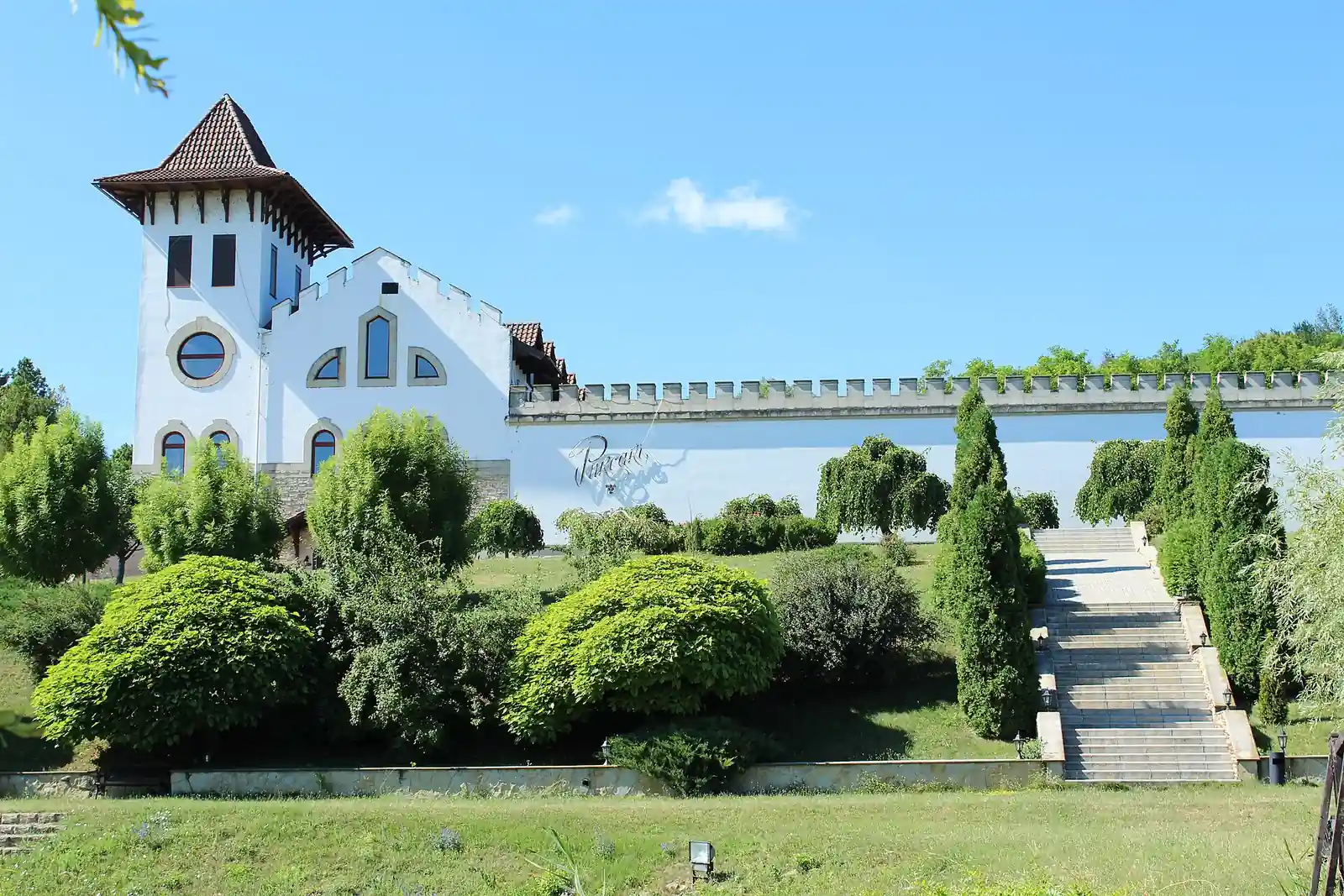
Photo: Diana.moraru, CC BY-SA 4.0, via Wikimedia Commons
Read the transcript EN
Tasted blind in Paris
Paris, eighteen seventy-eight. At the Universal Exhibition, judges taste a dark red, dry wine blind. They agree: this must be a Bordeaux. They are wrong. The wine comes from a small village on the Dniester, in the south-east of what was then called Bessarabia. Its name is Negru de Purcari, and it wins a gold medal. To the outside world, it is a surprise. For Purcari, it is the start of a reputation.
A decree from the tsar
By then the estate was just over half a century old. In eighteen twenty-seven, a decree from Tsar Nicholas the First made Purcari the first specialist winery in Bessarabia, then part of the Russian Empire. Bessarabia had joined that empire in eighteen twelve, and winegrowing in the new province expanded quickly. The cellars date from that time too, and old vintages of the house still lie there today.
Between river and sea
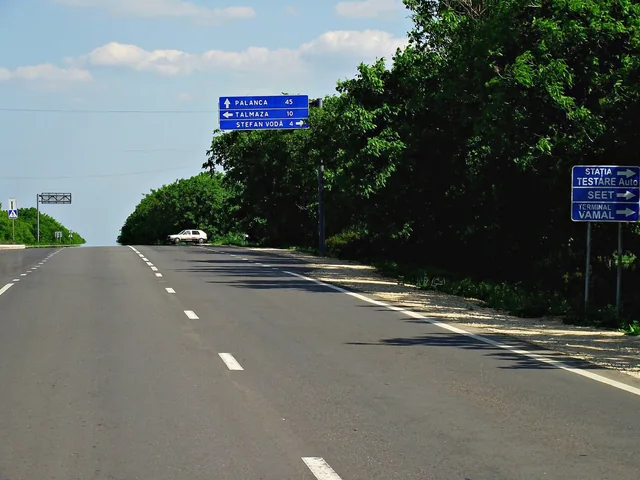
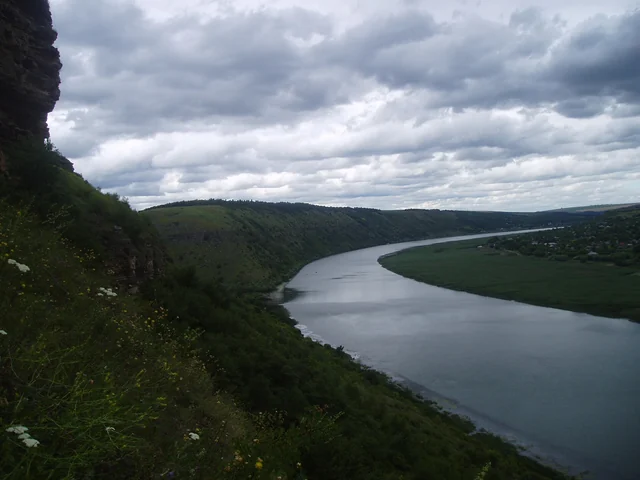
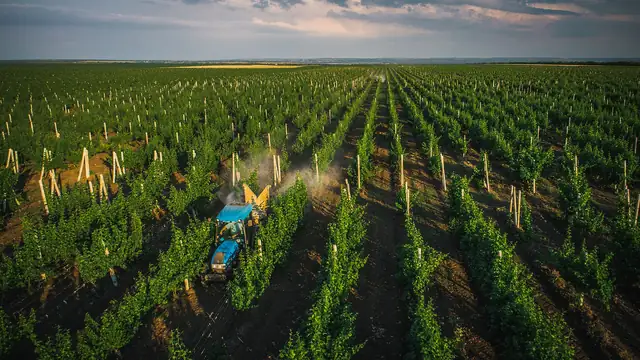
Purcari lies in the Ștefan Vodă district, on the hills above the Dniester. The Ukrainian border is a few kilometres away, and the Black Sea about sixty kilometres. That sea softens the climate. The slopes lie at about a hundred and twenty to a hundred and sixty metres above sea level. The vineyards cover several hundred hectares and supply the grapes for the wines that made the house famous.
Three grapes in one bottle
Negru de Purcari is a blend of Cabernet Sauvignon, Saperavi and the native Rară Neagră. It ages for years in oak. Locally it is known as the wine of the Queen of England, because, so the story goes, Elizabeth the Second ordered it regularly. Since twenty eleven, the house has also made the Freedom Blend, with grapes from Moldova, Georgia and Ukraine, three former Soviet republics. The blend was created to mark twenty years of freedom since the end of the Soviet Union.
A second life
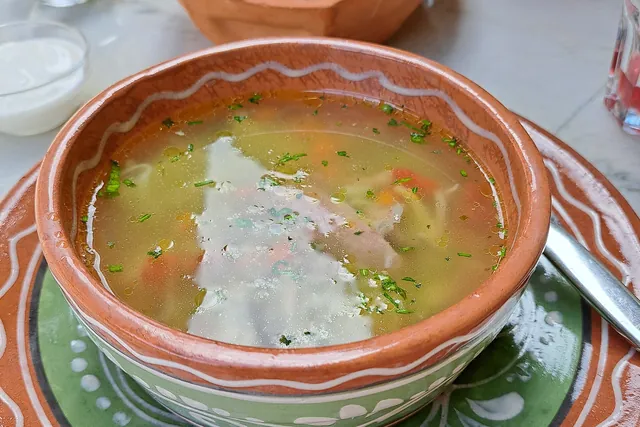
In the Soviet era, Purcari lost its independence. Only in two thousand and three did the estate get a fresh start. The old cellars were renovated, and the historic blends returned. Around Purcari grew a wine group with houses in Moldova and Romania. In twenty twenty-five, the Polish company Maspex became its majority shareholder. Today visitors can stay in chalets, eat in the restaurant, where Moldovan classics such as plăcinte and zeamă are on the menu, and tour the cellars with a guide.
A name that stayed
Purcari has survived shifting borders and a century of change. What remained is a name on a label and a wine that still points to the same village. The cellars from eighteen twenty-seven are still in use. Almost two centuries after the tsar's decree, Negru de Purcari is back on the wine lists. The Paris jury got the origin wrong. About the quality, it was right.
Photos: Diana.moraru (CC BY-SA 4.0), Isidore Laurent Deroy (Public domain), Wikimedia Commons (CC BY-SA 3.0), Unknown author (Public domain), various (Public domain), AnonymousUnknown author (Public domain), John F. Francis (Public domain), Vyacheslav Argenberg (CC BY 4.0), Byrdyak (CC BY-SA 4.0), LiliaCurchi (CC BY-SA 4.0), USAID Digital Development (CC BY 2.0), Mykola Swarnyk (CC BY-SA 3.0), Fabio Ingrosso (CC BY 2.0), Vyacheslav Argenberg (CC BY 4.0), Rob & Lisa Meehan (CC BY 2.0), congerdesign (CC0), Roderich Kahn (CC BY-SA 4.0), Rusnac Valeriu (Public domain), Lebowskyclone (CC BY-SA 3.0), Rusnac Valeriu (Public domain), Gikü (CC0), Gikü (CC0), Анатолий Зубанюк (CC BY 3.0), Gudyma s (CC BY-SA 4.0), User:Zserghei (Public domain), Мокрицький Павло (CC BY-SA 4.0), Rbrechko (CC BY-SA 4.0). Voice: synthetic voice (AI).
Château Purcari is a wine estate in the village of Purcari, in south-eastern Moldova, founded in 1827 by decree of Tsar Nicholas I as the first specialist winery in Bessarabia. Its red blend Negru de Purcari won gold at the 1878 Universal Exhibition in Paris. The estate has a hotel, a restaurant and cellars dating from its foundation.
The estate and its history
Purcari lies in the Ștefan Vodă district, on the bank of the Dniester and a few kilometres from the Ukrainian border; the Black Sea is about 60 kilometres away and tempers the climate. In 1827 a decree of Tsar Nicholas I made Purcari the first specialist winery in Bessarabia, then a province of the Russian Empire.
At the 1878 Universal Exhibition in Paris, judges at a blind tasting took a dark red dry wine for a Bordeaux. It turned out to be Negru de Purcari, which won a gold medal there. In the Soviet era the estate lost its independence; in 2003 Vinăria Purcari took it over and the old cellars were renovated. Purcari Wineries grew into a group that includes Bostavan in Moldova and Crama Ceptura in Romania. In August 2025 the Polish company Maspex became the majority shareholder.
The cellars and the wines
The historic cellars from 1827 hold a collection of old vintages from the house. The vineyards cover several hundred hectares on the hills above the Dniester. Negru de Purcari is a blend of Cabernet Sauvignon, Saperavi and Rară Neagră that ages for years in oak. Locally it is known as the wine of the Queen of England, because, so the story goes, Elizabeth II regularly ordered the 1990 vintage. The house also makes Roșu de Purcari and, since 2011, the Freedom Blend, a blend of Saperavi from Georgia, Bastardo from Ukraine and Rară Neagră from Moldova, three former Soviet republics.
Visiting and tasting
The estate welcomes guests with tours of the production areas and the historic cellar, followed by a tasting. There is a hotel with chalet-style rooms, ponds with water lilies and a restaurant serving European dishes and Moldovan classics such as plăcinte, zeamă and sarmale wrapped in Chardonnay leaves. Bookings are made through Purcari's tourism department (turism@purcari.wine); a transfer from Chișinău airport can be arranged on request. By car it is about 115 kilometres from Chișinău; allow two hours for the drive.