Mămăligă
Maize porridge
Firm maize porridge that replaced bread in Moldova for centuries, cut with a thread
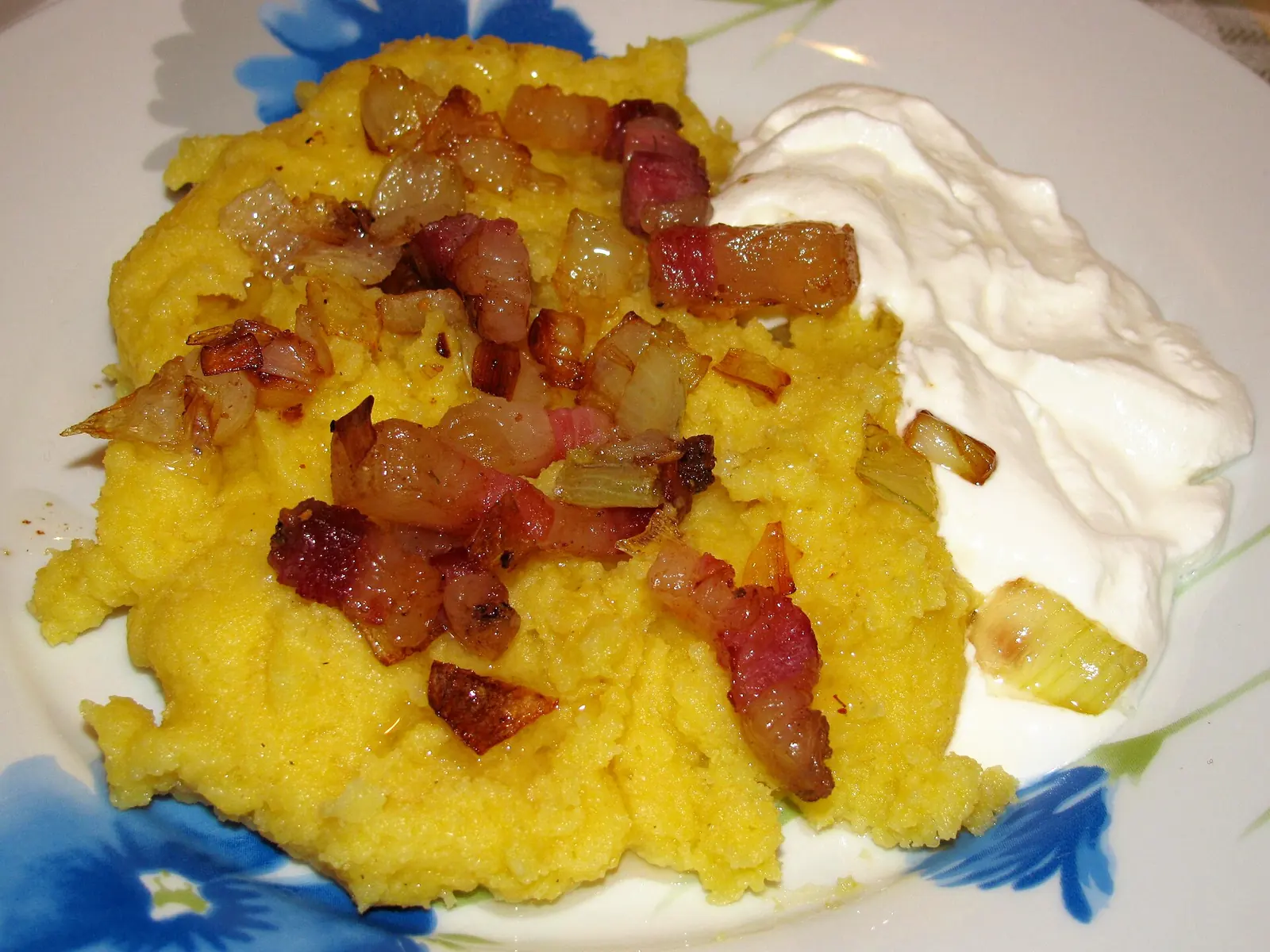
Photo: Kagor, CC BY-SA 3.0, via Wikimedia Commons
Photo: Victor (comradevik), Public domain, via Wikimedia Commons
Photo: Tiia Monto, CC BY-SA 4.0, via Wikimedia Commons
Read the transcript EN
A thread for a knife
In a Moldovan kitchen, the most important food of the day is not cut with a knife, but with a thread. On a wooden board lies a round, steaming cake, golden yellow and firm. This is mămăligă, a porridge of maize flour, water and salt. For centuries it replaced bread in the countryside, and it still appears at almost every traditional meal. It is a dish made from nothing: three ingredients and half an hour's work. Yet it tells the story of a whole country.
From millet to maize
Long before maize, farmers here cooked millet porridge. The Romans knew such a dish as pulmentum. Maize only reached Europe from America in the sixteenth century. According to historian Nicolae Iorga, farmers in the Romanian principalities, Moldavia included, were already growing it in the first half of the seventeenth century. In the hungry years that followed, maize became the staple food of the countryside. In Moldova the plant is still called păpușoi.
The ceaun and the spoon
Making it takes patience and a strong arm. The flour is poured in a thin stream into boiling salted water, traditionally in a cast iron pot called a ceaun. Then comes almost half an hour of stirring. The porridge is ready when a wooden spoon stands upright in it. It is turned out onto the board in one movement. Because it sticks to metal, slices are cut with a thread. To go with a stew, it is made softer, almost like a purée. The thicker the porridge, the more it resembles bread, and the better it carries a meal.
Cheese, cream and garlic
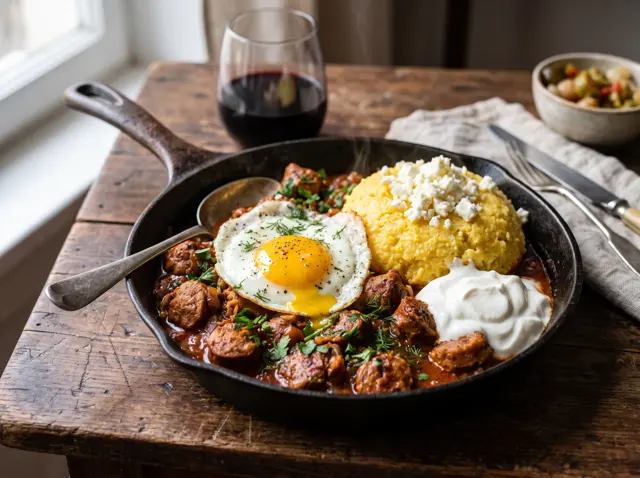
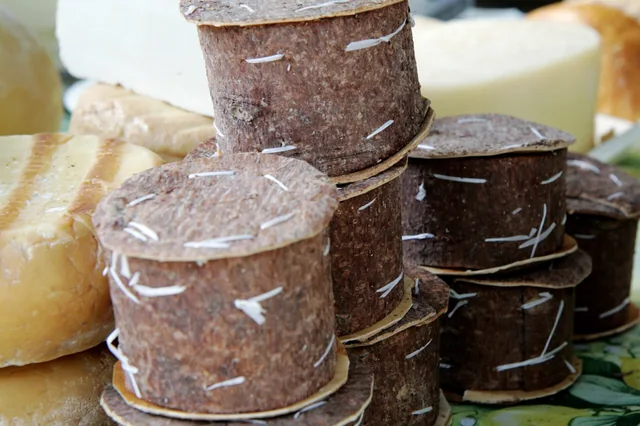
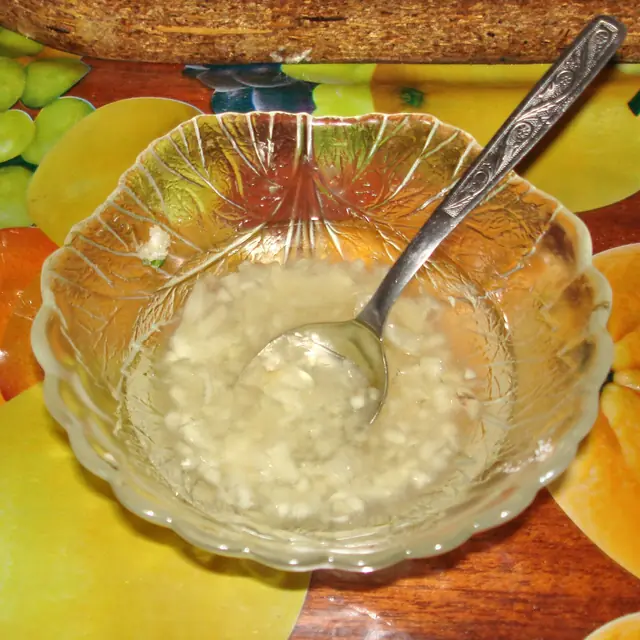
Mămăligă rarely comes alone. The classic pairing is brânză, a white salted sheep's cheese, with smântână, sour cream. Alongside there is often mujdei, a sharp sauce of crushed garlic. It goes with tochitură, pork braised in its own fat, with sarmale and with fried fish. With scrambled eggs or a vegetable stew, it makes a full meal without meat. Leftovers are fried in slices the next day, or crumbled into warm milk.
From peasant food to symbol
What began as poor people's food grew into a national symbol, on both banks of the river Prut. Historian Alex Drace-Francis of the University of Amsterdam wrote a whole book about it in twenty twenty-two. And when Moldova hosted the summit of the European Political Community in June twenty twenty-three, forty-seven heads of state and government found mămăligă on their plates, filled with cheese and finished with black truffle.
Four centuries on a board
Romanians eat the same dish, Ukrainians know a related maize porridge, and in the Balkans it is called kačamak. Yet every Moldovan mămăligă holds a piece of its own history: that of a plant from America that was given its own name here, and of a peasant porridge that four centuries later is still cut with a thread.
Photos: Victor (comradevik) (Public domain), Wikimedia Commons (CC BY-SA 3.0), Ion.bostan (CC BY-SA 3.0), dronepicr (CC BY 2.0), Nicubunu (CC BY-SA 3.0), Roger Culos (CC BY-SA 4.0), Nandhinikandhasamy (CC BY-SA 4.0), Roger Culos (CC BY-SA 3.0), Wikimedia Commons (Public domain), Shixart1985 (CC BY 2.0), Lily15 (CC BY-SA 3.0), Popo le Chien (CC BY-SA 3.0), Miansari66 (Public domain), Obsidian Soul (CC0), Nicubunu (CC BY-SA 3.0), Peachyeung316 (CC BY-SA 4.0), jules (CC BY 2.0), E4024 (CC BY-SA 4.0), T.Tseng (CC BY 2.0), Julian Nyča (CC BY-SA 4.0), Diego Delso (CC BY-SA 3.0), Tomasz Bladyniec (CC BY 4.0), Sietske (CC BY-SA 3.0), Tiia Monto (CC BY-SA 4.0), Peace Batuma (CC BY-SA 4.0), edykbo (CC BY 3.0), Stiopa (CC BY-SA 3.0). Voice: synthetic voice (AI).
Mămăligă is a firm porridge of maize flour, water and salt that for centuries took the place of everyday bread in the Moldovan countryside. It comes to the table hot with brânză (salted sheep's cheese), smântână (soured cream) and often mujdei, a strong garlic sauce. Moldova shares the dish with Romania; related maize porridges exist in Ukraine and the Balkans.
Origins and history
Long before there was maize, farmers in the region cooked a porridge of millet flour, which the Romans called pulmentum. Maize reached Europe in the 16th century. According to the historian Nicolae Iorga, farmers in the Romanian principalities, Moldavia included, were already growing the crop in the first half of the 17th century. In the famine years of the 17th and 18th centuries maize became the staple food of the countryside. In Moldova the plant is still called păpușoi, whereas in Transylvania people say cucuruz.
In The Making of Mămăligă (2022), the historian Alex Drace-Francis described how the peasant porridge grew into a national symbol. When Moldova hosted the European Political Community summit on 1 June 2023, the 47 heads of state and government were served a reworked mămăligă with burduf cheese and black truffle.
How it is made
The maize flour is sprinkled into boiling salted water while stirring, traditionally in a cast-iron pot, the ceaun. After almost half an hour of stirring, the porridge is firm enough to be turned out onto a wooden board as a round, golden cake. Because it sticks to metal, it is cut into slices with a thread rather than a knife. A softer version is served as a side with stews. Leftovers are fried in slices or crumbled into warm milk, as mămăligă cu lapte.
Where and how to try it
Mămăligă goes with tochitură, sarmale, fried fish and all kinds of stews. The classic combination is mămăligă cu brânză și smântână: crumbled sheep's cheese and soured cream on the side, with mujdei for garlic lovers. Restaurants serving Moldovan food in Chișinău almost always have it on the menu, and in village guesthouses it comes to the table as a matter of course. With scrambled eggs or a vegetable stew it makes a complete vegetarian meal. The difference from Italian polenta lies mainly in how it is eaten: here mămăligă is not a side dish but the foundation of the meal.
Mămăligă
Ingredients
Method
- Bring the water and salt to the boil in a heavy, thick-bottomed pan.
- Sprinkle the maize flour into the boiling water in a thin stream, stirring constantly with a wooden spoon so that no lumps form.
- Turn the heat down low and let it cook gently for 25 to 30 minutes. Stir regularly, pressing the porridge against the side of the pan each time.
- Stir in the butter. The mămăligă is ready when it comes away from the side of the pan and a spoon stands upright in it.
- Turn the porridge out onto a wooden board, leave it to rest for 2 minutes and cut it into slices with a strong thread.
- Serve hot with crumbled brânză, soured cream and mujdei if you like.