Plăcinte
Filled flatbreads
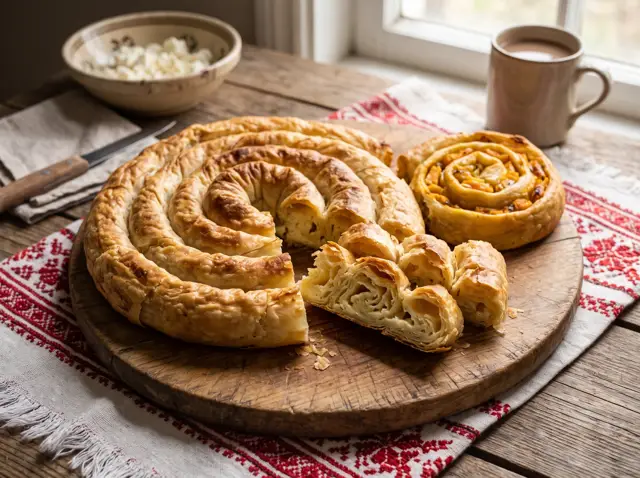
Flat pastries filled with cheese, cabbage, potato or cherries, pan-fried or baked
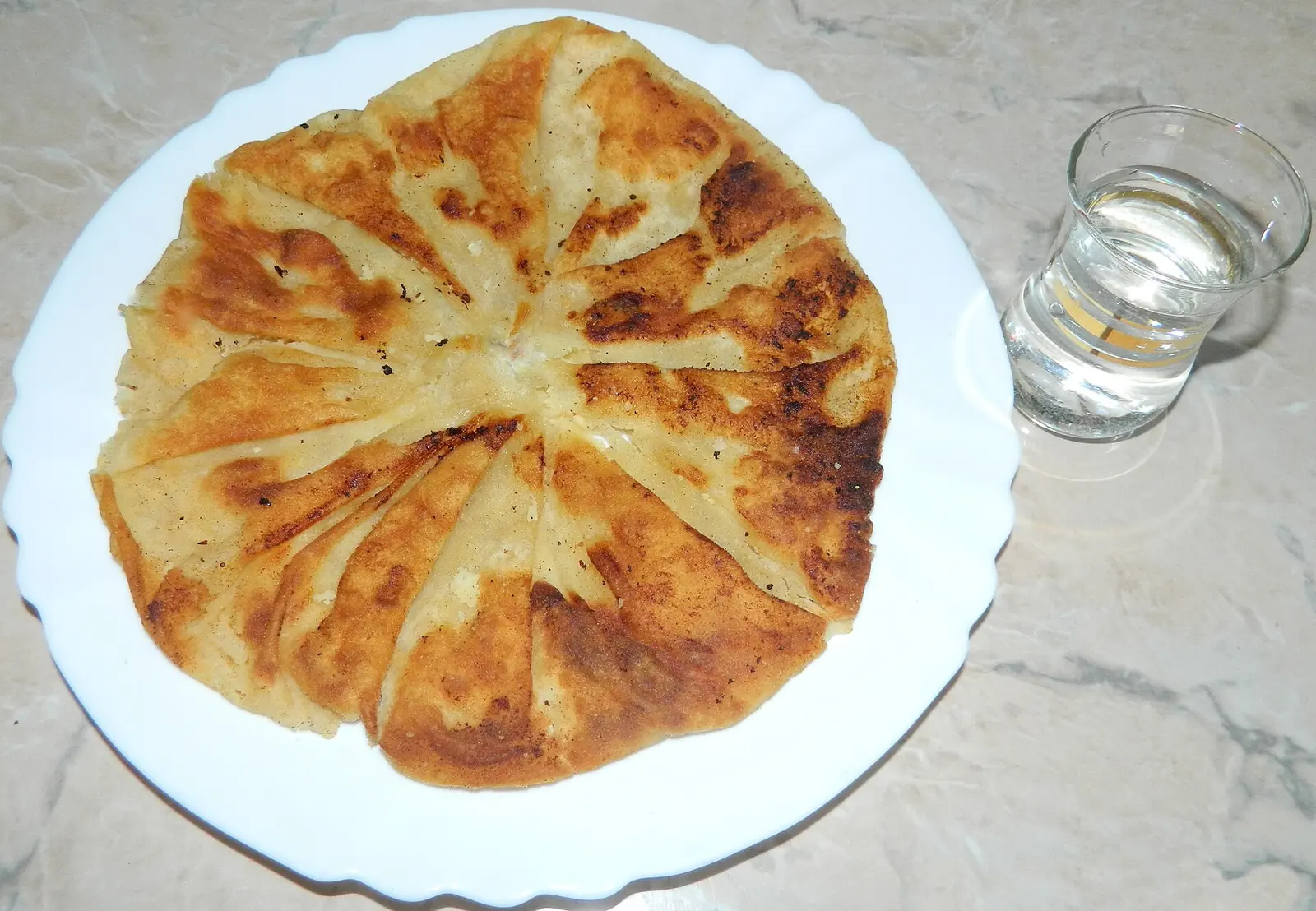
Photo: Mr mircear, CC BY-SA 3.0, via Wikimedia Commons
Photo: Stuhrchacz, CC BY-SA 4.0, via Wikimedia Commons
Photo: Keksanda, CC BY-SA 4.0, via Wikimedia Commons
Read the transcript EN
The smell of morning
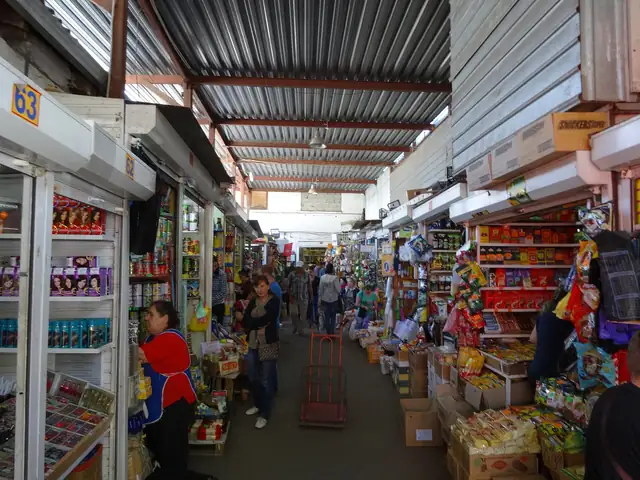
In Chișinău, the morning smells of fried dough. At kiosks, bakeries and market stalls, flat filled pastries pass across the counter, warm and wrapped in paper. They are called plăcinte. According to Moldova's national tourism office, no dish better symbolises the Moldovan people and their traditions. A plăcintă with cheese and a bowl of sour cream makes a full lunch here, eaten by hand on the go.
A Latin name
The name is older than the country. Plăcintă comes from the Latin placenta, meaning cake, and that word goes back to the Greek plakous, a flat cake. A distant ancestor often mentioned is the Roman placenta, a cake of cheese and honey described by the statesman Cato the Elder more than two thousand years ago. By the early nineteenth century, plăcintă was already on the menus of Odesa, next to dishes from the Balkans. From Bessarabia, the pastry spread across the steppe of southern Ukraine.
Dough, filling, folding
The classic pan-fried version starts with a simple dough of flour, warm water, oil and salt, left to rest for half an hour. Each ball is rolled out thin. The filling goes in the middle, and the edge is folded over it in flaps, like the petals of a flower. Then the pastry is pressed flat and fried golden brown on both sides in a pan with a little oil. Other versions go in the oven, made with puff pastry or with dough stretched paper thin.
What goes inside
The filling follows the season and the larder. Crumbled brânză with dill is the best known. There are also plăcinte with braised cabbage, with potato and fried onion, or with pumpkin. Sweet versions get apple, cherries or sweet fresh cheese. During the fasting periods of the Orthodox Church, when dairy stays off the table, people choose cabbage, potato or pumpkin. At home, a spoonful of sour cream comes with it, and a cup of tea or a glass of wine.
From kitchen to chain
In Moldova, whole restaurants are named after the pastry. The chain La Plăcinte, founded in Moldova, already had three branches in Bucharest by twenty fourteen. The neighbours claim the pastry too. In twenty twenty-two, Ukraine added its platsynda tradition to the national list of intangible heritage, and Romania obtained European protection for the plăcintă from Dobruja.
Small but old
A plăcintă is small, cheap and quickly eaten. But break one open and you hold a piece of history. The name comes from the Latin of Rome, the pastry travelled as far as Odesa and the steppe by the Black Sea, and the filling still comes from the vegetable garden and the sheepfold. Three countries call the pastry their own, and in Moldova it is simply everyday food.
Photos: Mr mircear (CC BY-SA 3.0), Glavior (CC BY-SA 3.0), Nicubunu (CC BY-SA 3.0), Mr mircear (CC BY-SA 3.0), Samurai2593 (CC BY-SA 4.0), Unknown ancient Roman artist (Public domain), Internet Archive Book Images (No restrictions), wgauthier (CC BY-SA 2.0), Vyacheslav Argenberg (CC BY 4.0), Chris 73 (CC BY-SA 3.0), James Petts from London, England (CC BY-SA 2.0), photochem_PA from State College, PA, USA (CC BY 2.0), George Chernilevsky (Public domain), Jörg Hempel (CC BY-SA 2.0), JLPC (CC BY-SA 3.0), jules (CC BY 2.0), böhringer friedrich (CC BY-SA 2.5), Julian Nyča (CC BY-SA 4.0), UeArtemis (CC BY 4.0), Stuhrchacz (CC BY-SA 4.0), Sietske (CC BY-SA 3.0), marktristan from Bristol, UK (CC BY-SA 2.0), Keksanda (CC BY-SA 4.0), photobankmd (CC0), Jerzy Hatłas (CC BY-SA 4.0). Voice: synthetic voice (AI).
Plăcinte are flat, filled pastries and Moldova's best-known everyday snack. Fillings range from brânză with dill to cabbage, potato, pumpkin, apple or sour cherries; they are fried in a pan or baked in the oven. Romania and southern Ukraine know them too, but in Moldova entire restaurant chains are named after them.
Origins and history
The name goes back via the Latin placenta (cake) to the Greek plakous, flat cake. The Roman placenta of cheese and honey described by Cato the Elder around 160 BC is often cited as a distant ancestor. What is certain is that plăcintă was already on menus in Odesa in the early 19th century and spread across Bessarabia and the southern steppe of Ukraine. On moldova.travel, the national tourism office calls plăcinte the dish that best symbolises the Moldovan people and their traditions. The neighbours lay claim to the pastry too: in 2022 Ukraine added its platsynda tradition to its national list of intangible heritage, and Romania obtained European protection for plăcintă dobrogeană.
How it is made
For the classic pan-fried version, a supple dough of flour, warm water, oil and salt is kneaded and left to rest for half an hour. Each ball of dough is rolled out thinly, the filling goes in the middle and the edge is folded over the filling in flaps. The pastry is then pressed flat and fried golden brown on both sides in a pan with a little oil. Oven versions more often use puff pastry or thinly stretched dough. The best-known fillings are crumbled brânză with dill, braised cabbage, potato with fried onion, and pumpkin; sweet versions are filled with apple, cherries or sweetened curd cheese.
Where and how to try it
In Chișinău you will find plăcinte at bakeries, kiosks and market stalls, hot and wrapped in paper. The La Plăcinte chain, which started in Moldova, already had three restaurants in Bucharest by 2014, a sign that the Moldovan version is seen as something distinct on the other side of the Prut too. At home people eat them with a spoonful of smântână, with tea or with a glass of wine. A plăcintă with brânză and a bowl of soured cream makes a complete lunch.
Plăcinte
Ingredients
Method
- Mix the flour and salt, add the water and 3 tbsp oil and knead for 5 minutes into a supple dough that does not stick. Cover and leave to rest for 30 minutes.
- Crumble the brânză and mix it with the quark, egg and dill.
- Divide the dough into 8 balls and roll each one out into a thin sheet of about 20 cm.
- Place a generous spoonful of filling in the middle, make a few cuts in the edge and fold the flaps over the filling. Gently press the pastry flat to about 15 cm.
- Fry the plăcinte in a pan with a thin layer of oil over a medium-high heat, 2 to 3 minutes per side, until golden brown.
- Serve hot with soured cream.