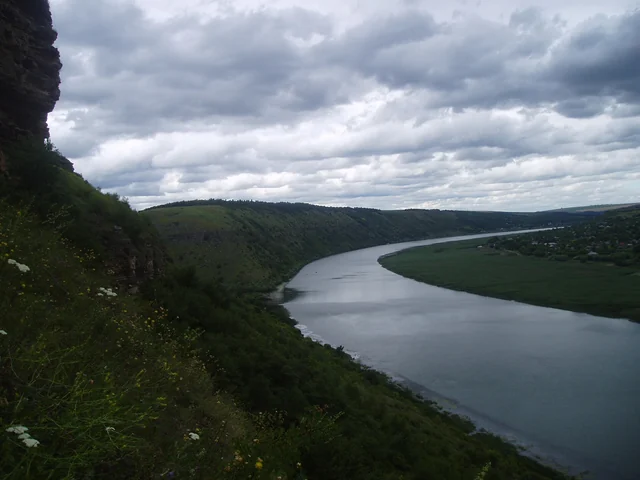
Mănăstirea Saharna
Saharna Monastery
A pilgrimage monastery in a wooded gorge above the Dniester, with a footprint in the rock
47.6949° N · 28.9651° E98 km from Chișinău
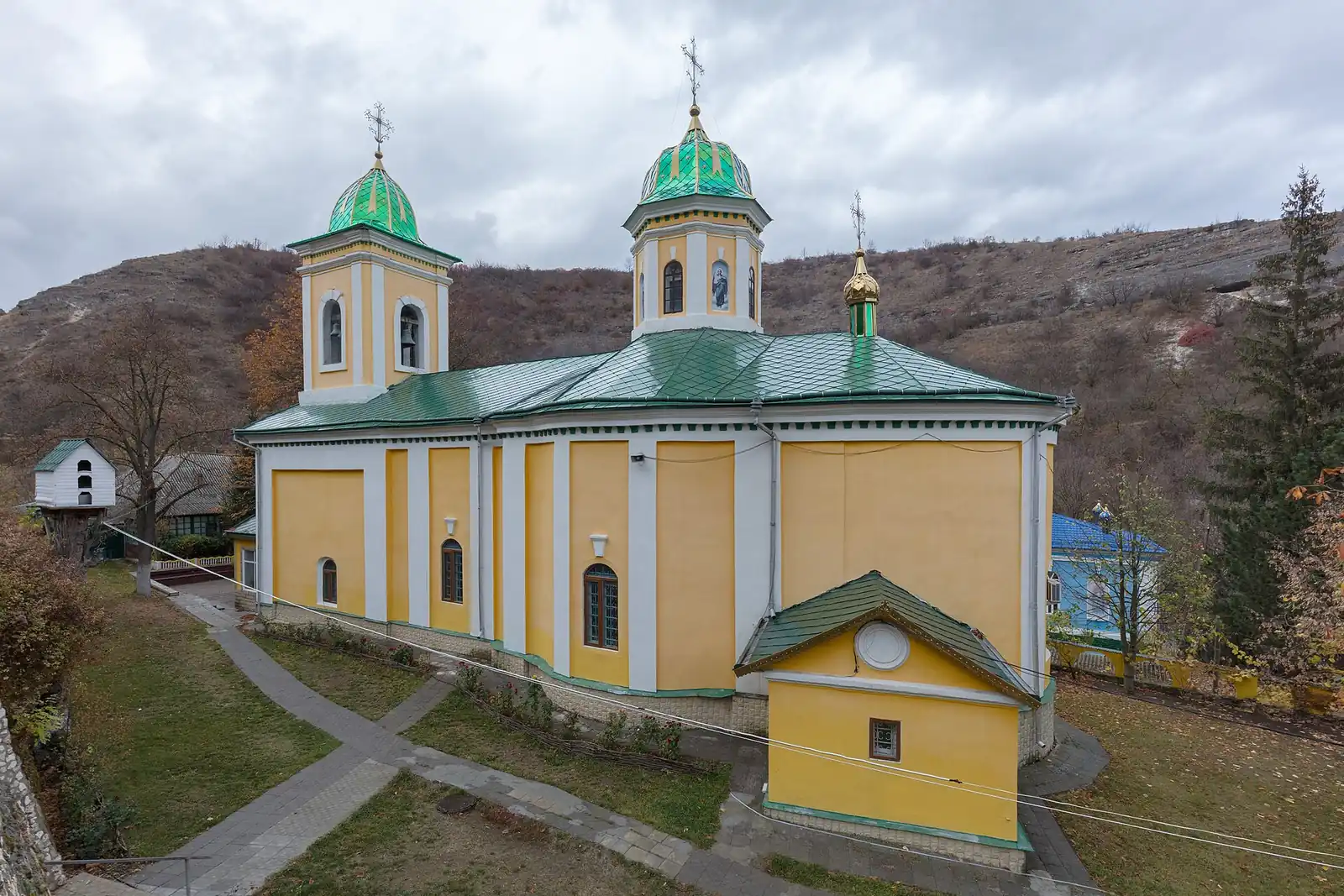
Photo: Diego Delso, CC BY-SA 4.0, via Wikimedia Commons
Photo: Andrei Szocs, CC BY-SA 4.0, via Wikimedia Commons
Photo: TotalAnarchy, CC0, via Wikimedia Commons
Read the transcript EN
A footprint in the stone
On a rock above a wooded gorge stands a small chapel. Inside there is no treasure and no tomb, only a hollow in the stone. Pilgrims kneel there and touch it. According to tradition, it is the footprint of the Virgin Mary. The rock is called Grimidon, and the gorge below belongs to Saharna Monastery, in the Rezina district, close to the Dniester. It is one of Moldova's largest pilgrimage sites.
The cliff monastery
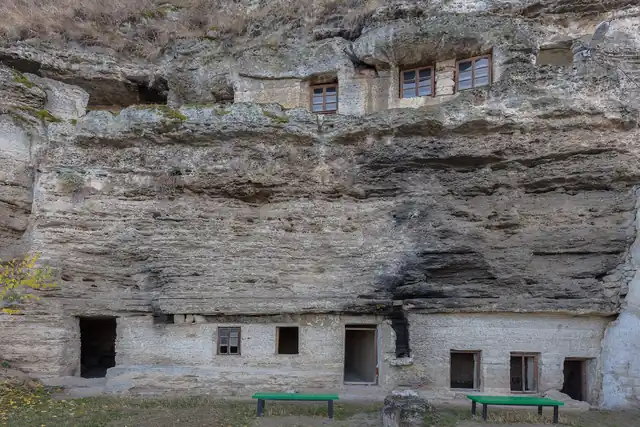
Long before churches stood on the valley floor, monks lived in the cliff face. Their monastery was dedicated to the Annunciation. No one knows when it began. The village of Saharna itself appears in a charter of Ștefan cel Mare from fourteen ninety-five. The cells and the church in the rock are still there. They were restored in the nineteenth century and can be visited again today. A path and steps lead up the cliff from the valley. On the way, you mostly hear water and birds.
The monk Vartolomeu
On the twenty-fifth of March seventeen seventy-six, a monk arrived in the deserted gorge. He was called Vartolomeu, nicknamed Ciungu. After forty days of fasting and prayer, so tradition says, he saw the Virgin Mary on the Grimidon rock. Her footprint remained there. On the flat ground, Vartolomeu founded a new monastery, dedicated to the Holy Trinity. He led it until his death in seventeen ninety-eight.
Churches and silence
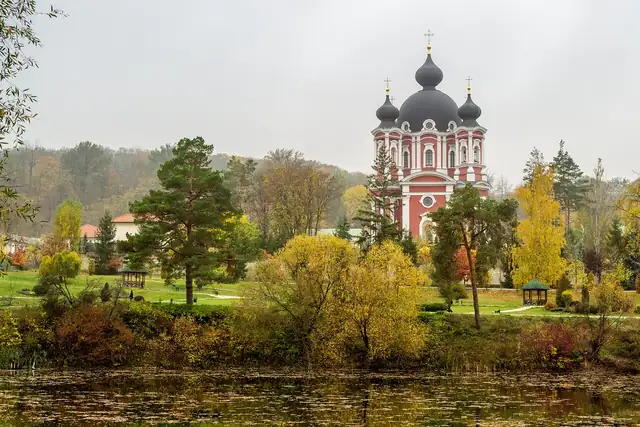
Between eighteen eighteen and eighteen twenty-one, the summer church of the Trinity was built. In eighteen eighty-three came a winter church, dedicated to the Nativity of the Mother of God. Then came the twentieth century. In nineteen sixty-four, the Soviet authorities closed the monastery. It became a psychiatric hospital. The summer church became a storehouse, the winter church a house of culture. Where monks had sung for centuries, patients and nurses now walked. For almost three decades, no liturgy was heard in the gorge.
The return
On the nineteenth of April nineteen ninety-one, the monks came back. In the years that followed, the summer church was restored. The old paintings had been lost, so Vladimir Lazăr from Rezina painted new saints on the walls. Pilgrims now come for the relics of Saint Macarie, which are kept in the winter church during the cold months. Walk into the gorge and you will find small waterfalls along the stream. On major feast days, believers gather here from all over Moldova and beyond.
A place that endured
Saharna saw Bessarabia pass from one empire to another, and it survived a Soviet hospital. What remained is the gorge itself: the cliff with its cells, the forest, the stream and that one hollow in the stone. Monks came and went. But for two hundred and fifty years, people have climbed the same steps to Grimidon, to touch a footprint that seems older than the monastery itself.
Photos: Andrei Szocs (CC BY-SA 4.0), Diego Delso (CC BY-SA 4.0), Guttorm Flatabø from Sogndal, Norway (CC BY 2.0), Bagriton (CC BY-SA 3.0), Guttorm Flatabø from Sogndal, Norway (CC BY 2.0), Botnari Stefan (CC BY-SA 4.0), Анатолий Зубанюк (CC BY 3.0), Guttorm Flatabø from Sogndal, Norway (CC BY 2.0), Alexander Murvanidze (CC BY-SA 3.0), Bertramz (CC BY-SA 3.0), Smacovei (CC BY-SA 4.0), Guttorm Flatabø from Sogndal, Norway (CC BY 2.0), Bagriton (CC BY-SA 3.0), Kamen Tabakov from Stara Zagora, Bulgaria (CC BY-SA 2.0), Guttorm Flatabø from Sogndal, Norway (CC BY 2.0). Voice: synthetic voice (AI).
Mănăstirea Saharna is a monastery complex in a wooded gorge near the Dniester, in Rezina district, and one of the largest places of pilgrimage in Moldova. It consists of an older rock monastery and a monastery on the valley floor founded by the monk Vartolomeu in 1776. Pilgrims come for the relics of Saint Macarie and for a footprint in the rock attributed to the Virgin Mary.
What you see
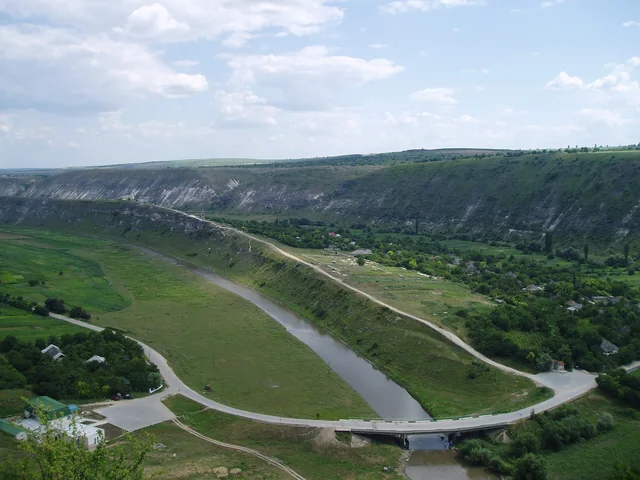
Saharna lies at the bottom of a narrow green gorge that opens onto the Dniester. On the valley floor stands the Holy Trinity Monastery, with a summer church from 1818-1821 and a winter church from 1883, dedicated to the Nativity of the Mother of God. In the cliff above lies the older rock monastery of the Annunciation (Buna Vestire), with cells and a church in the stone.
Higher up the slope, on the Grimidon rock, a chapel stands over a hollow in the stone that is venerated as the footprint of Mary. A forest path links the different parts; small waterfalls tumble along the stream in the gorge. During the cold months the monastery keeps a reliquary with the relics of Saint Macarie in the winter church.
History
When the rock monastery came into being is unknown. The village of Saharna already appears in a charter of Ștefan cel Mare from 1495. According to his own inscription, quoted on the Romanian-language Wikipedia, the monk Vartolomeu, nicknamed Ciungu (1739-1798), arrived in the deserted gorge on 25 March 1776. Tradition has it that after forty days of fasting and prayer he saw the Virgin Mary on the Grimidon rock, where her footprint remained. He founded the monastery on the valley floor and led it until his death.
In 1964 the Soviet authorities closed the monastery: it became a psychiatric hospital, the summer church a storehouse and the winter church a house of culture. On 19 April 1991 the monks returned. Between 1992 and 1998 the summer church was restored; the old paintings could no longer be saved and were replaced with new work by the painter Vladimir Lazăr from Rezina.
Tips for your visit
Wear sturdy shoes: the climb to the rock chapel and the footprint follows steps and forest paths. On major church feast days a lot of pilgrims come here; if you are looking for peace and quiet, choose an ordinary weekday. Combine Saharna with the rock monastery of Țipova, half an hour's drive further south along the Dniester.
Highlights
- Chapel over the footprint on the Grimidon rock
- Rock monastery of the Annunciation in the gorge wall
- Holy Trinity summer church (1818-1821)
- Forest paths and small waterfalls in the Saharna gorge