Mănăstirea Țipova
Țipova cave monastery
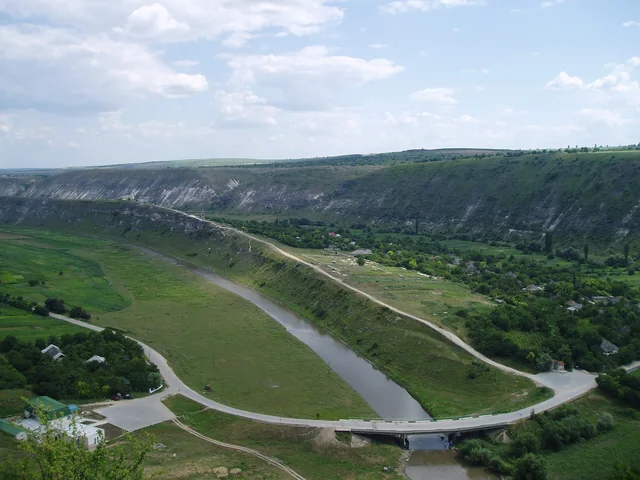
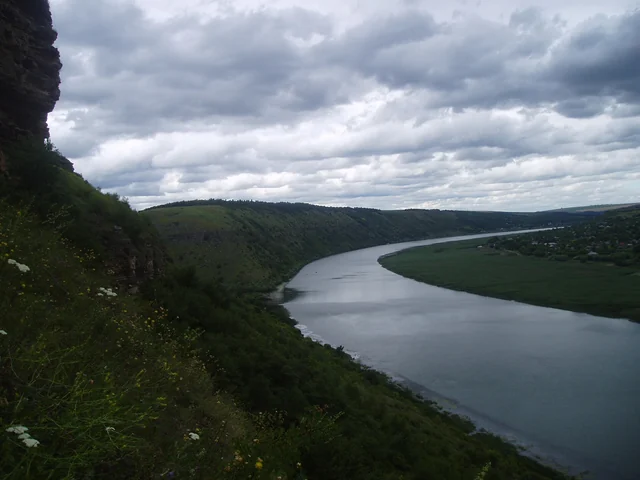
Churches and cells carved into a cliff above the Dniester, with a waterfall nearby
47.6031° N · 28.9848° E93 km from Chișinău
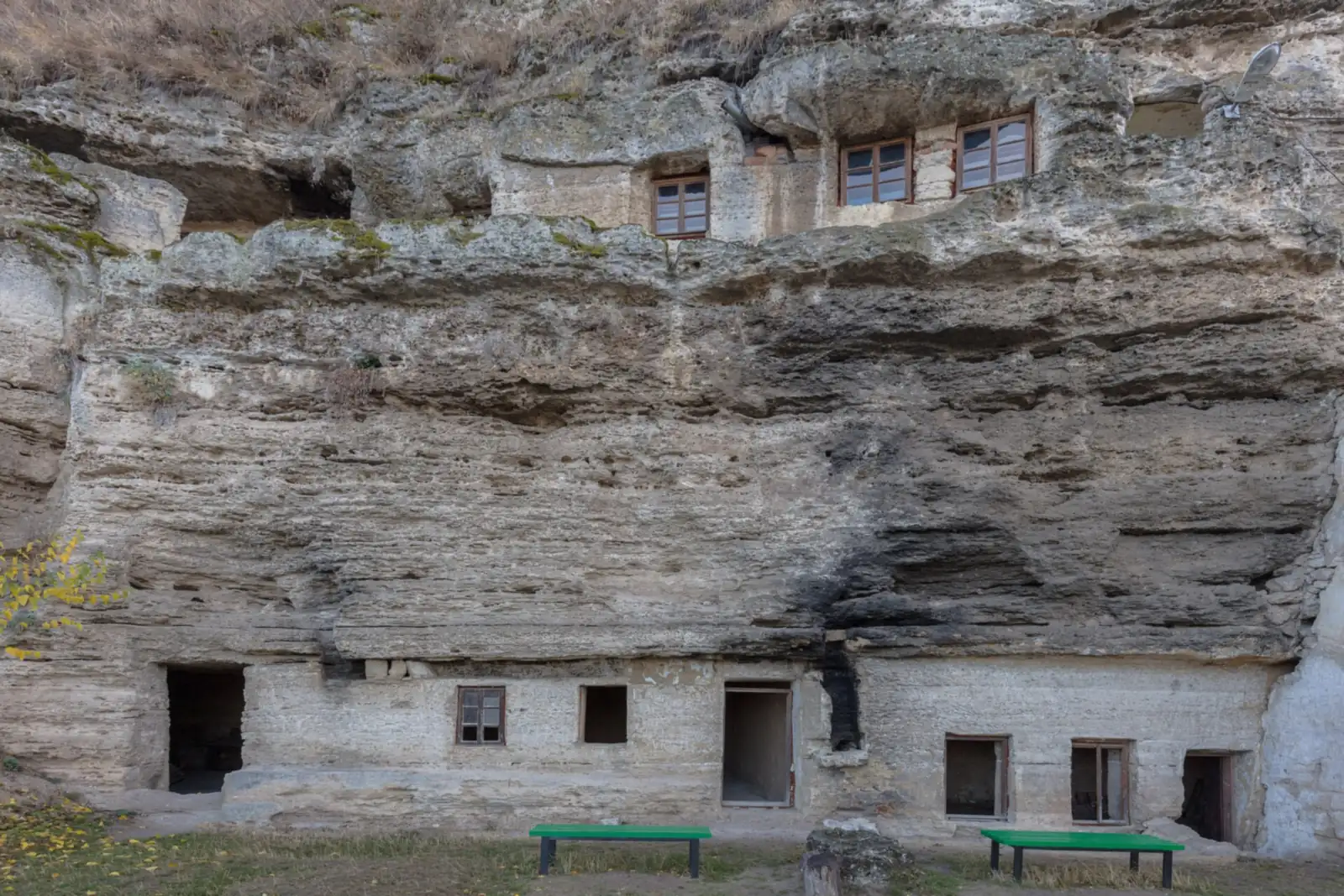
Photo: Diego Delso, CC BY-SA 4.0, via Wikimedia Commons
Photo: Diego Delso, CC BY-SA 4.0, via Wikimedia Commons
Mănăstirea Țipova is a rock monastery carved into a cliff on the right bank of the Dniester, some 90 metres above the river, in Rezina district. The complex has three rock churches and more than twenty rooms that took shape over several centuries. It is considered the largest rock monastery in Moldova and is once again a working monastery.
What you see
From the village of Țipova, a path with steps cut into the stone descends to the cliff face. There, three groups of caves lie at different heights, linked by passages and galleries. The churches are simple spaces in the rock, with icons, candles and small windows looking out over the broad Dniester and the Ukrainian bank. According to the national tourism portal, the complex has more than twenty interconnected rooms.
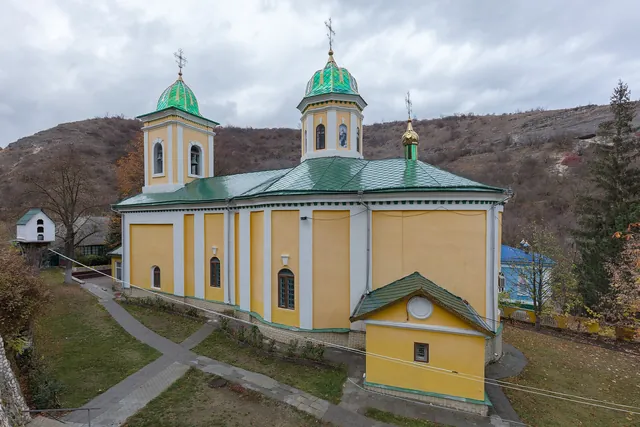
A little further on, the Țipova stream plunges over a rocky ledge into a basin: the waterfall is about 16 metres high. An above-ground church stands on the plateau.
History
The dating is uncertain. Some researchers place the oldest group, with the Church of the Holy Cross, as early as the 11th or 12th century; the Church of St Nicholas is said to date from the 14th century. The largest group, around the Church of the Dormition, grew between the 16th and 18th centuries and was restored and enlarged in 1765. A monastic community is first documented in 1699.
Stories that cannot be proven surround the monastery. One local tradition holds that Ștefan cel Mare married Maria Voichița here in 1478; another places the tomb of the mythical singer Orpheus in a niche by the waterfall. What is historically certain is that the Soviet authorities closed the monastery in 1949. The caves were looted and the complex fell into decay. Monastic life returned in 1993-1994.
Tips for your visit
The descent is steep and slippery after rain. Sturdy shoes are essential, and anyone with limited mobility will find the caves hard to reach. Take water with you in summer: the climb back up is in full sun.
Țipova and Saharna lie close to each other along the Dniester and together make a day trip from Chișinău; allow about an hour and a half's drive each way. The road to the village is narrow but passable in an ordinary car. Respect the silence in the rock churches, where monks live once more.
Highlights
- Three rock churches in a cliff above the Dniester
- More than twenty rooms linked by passages
- Waterfall of about 16 metres on the Țipova stream
- Legends about Ștefan cel Mare and Orpheus